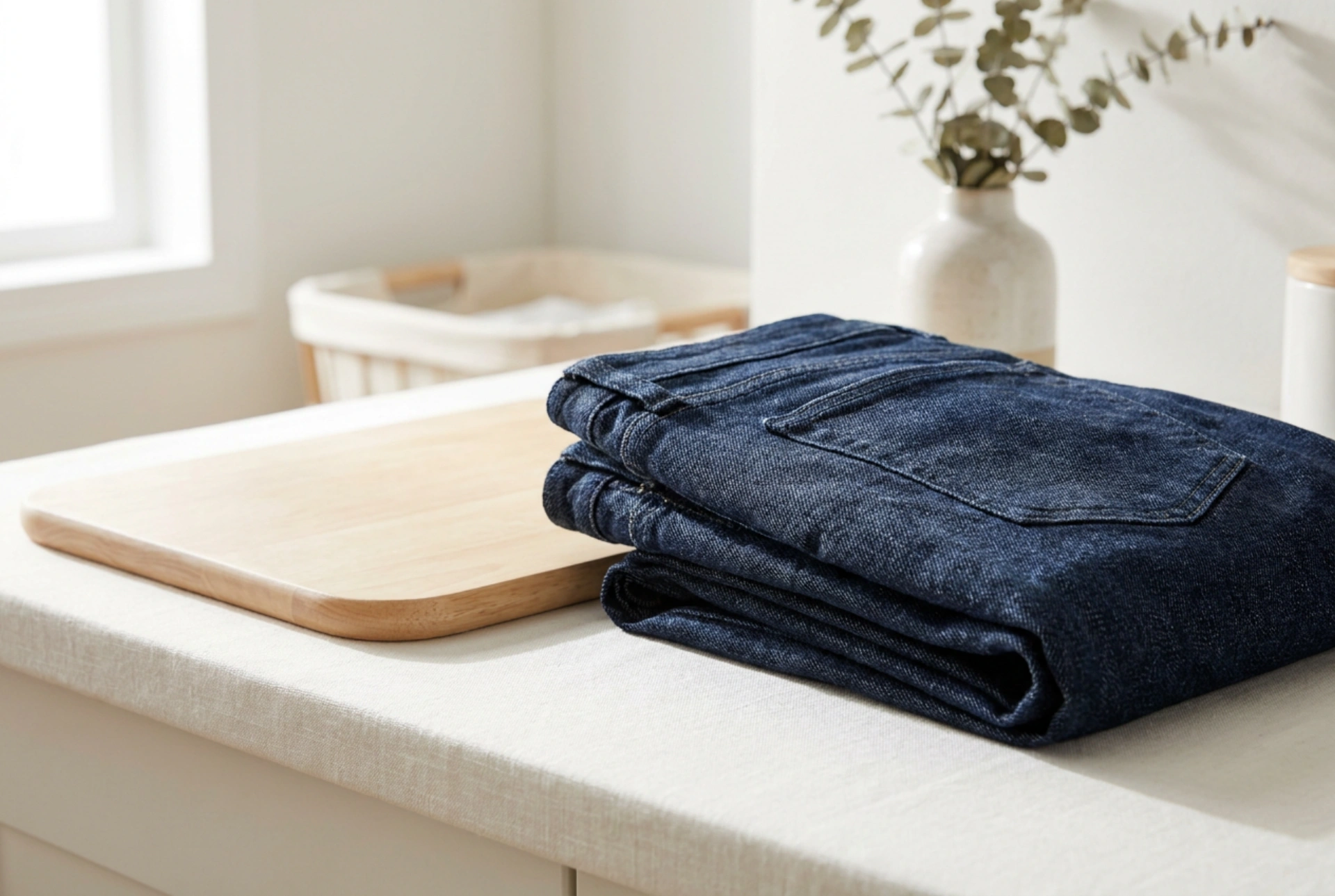


Maintaining the deep indigo hue and perfect fit of denim requires understanding the physical properties of cotton fibres and the chemistry of textile dyes. Uncontrolled washing breaks down the surface-level pigments and damages the elastic threads, leading to premature fading and structural sagging.
The Chemistry of Indigo: Why Denim Loses Colour
Unlike reactive dyes that chemically bond with the interior of cotton fibres, indigo is a vat dye that primarily adheres to the surface of the yarn. This means the pigment is highly susceptible to mechanical abrasion and chemical stripping. Every time denim rubs against the washing machine drum or other garments, microscopically small layers of dye are scraped away—a process known as crocking. To minimise this, always turn your jeans inside out before washing. This simple physical barrier shields the outer, visible face of the fabric from direct friction, preserving the concentration of dye on the exterior threads.
Temperature and Fibre Swelling
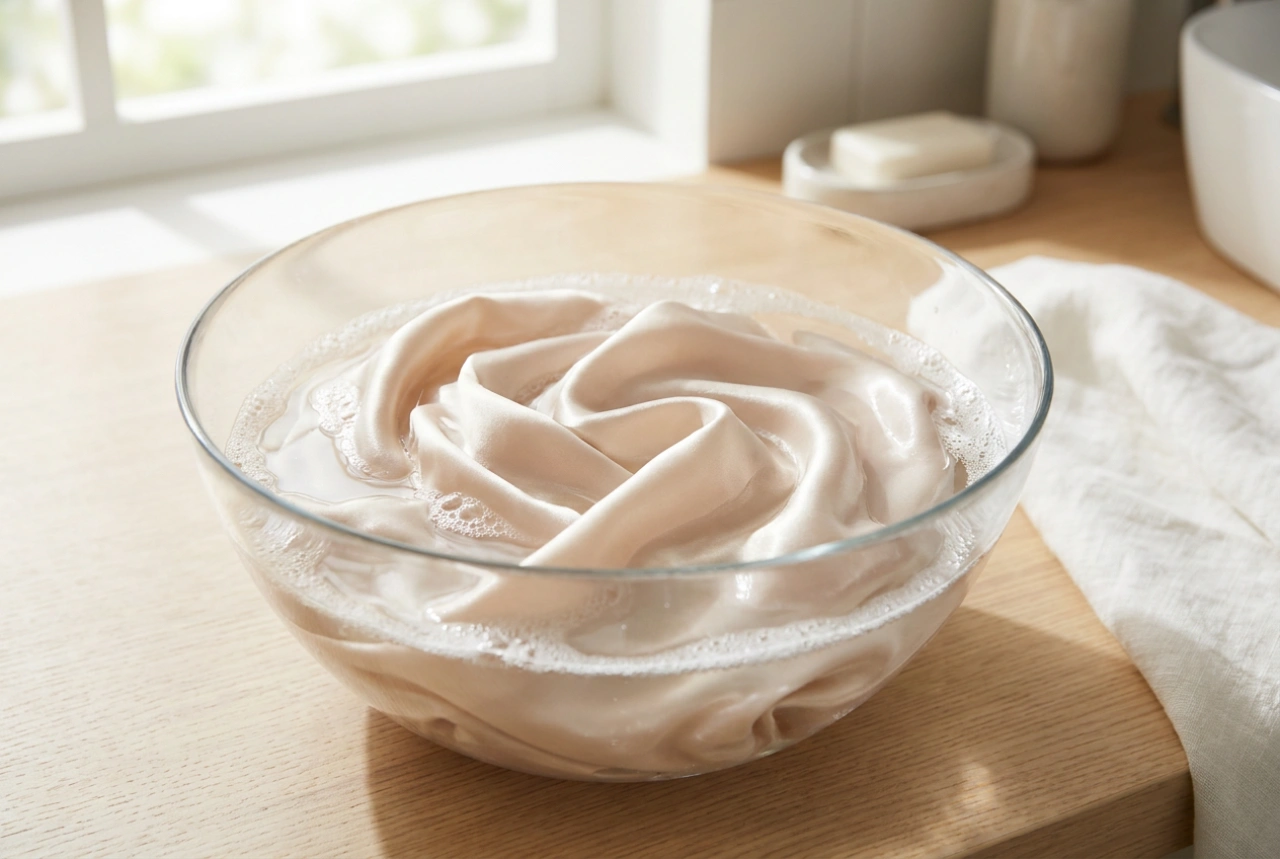
Water temperature plays a critical role in structural preservation. High temperatures cause cotton fibres to swell and expand. When fibres swell, the spaces between them widen, allowing the weakly bound indigo molecules to escape into the wash water. Washing denim at temperatures no higher than 30°C prevents this thermal expansion, keeping the structure tight and locking the pigment in place. Additionally, cold water protects elastane—the synthetic polyurethane stretch fibre found in modern form-fitting jeans. Heat degrades elastane, leading to irreversible loss of elasticity, which manifests as baggy knees and a loose waistband.
Choosing the Right Detergent and Cycle
Standard laundry detergents often contain optical brighteners, bleaching agents, or enzymes designed to break down organic matter. While highly effective for whites, these chemicals break the chemical bonds of indigo dye, causing rapid fading. Opt for a mild, liquid detergent formulated for dark colours, which is free from bleaching agents and dissolves completely in cold water without leaving abrasive powder residues. When selecting a machine cycle, choose a delicate or wool cycle with a low spin speed (no higher than 800 RPM). High-speed spinning forcefully compresses the wet denim against the drum, creating sharp, permanent crease marks where the dye has been physically squeezed and rubbed out of the fabric creases.
The Acetic Acid Rinse for Colour Setting
Household chemistry offers a simple solution for locking in dye: acetic acid, commonly known as white vinegar. During the final rinse cycle, adding 100 ml of white vinegar acts as a natural fabric softener and dye stabiliser. The mild acidity neutralises the alkaline residues left behind by detergents, which can otherwise dull the fabric over time. Furthermore, acetic acid helps bind the dye molecules to the cotton fibres, reducing future bleeding without leaving any residual scent once the fabric dries.
Drying Mechanics: Preserving the Fit
The thermal and mechanical stress of a tumble dryer is the primary enemy of denim longevity. The intense heat shrinks the cotton fibres unevenly and melts the delicate elastane threads, permanently altering how the jeans fit. Instead, adopt these drying practices:
- Reshape while damp: Gently pull the waistband, inseams, and legs to restore the original dimensions before hanging.
- Air dry away from direct heat: Hang the jeans by the belt loops or lay them flat on a drying rack. Keep them out of direct sunlight, as ultraviolet radiation breaks down chemical dye bonds, causing rapid photo-bleaching.
- Avoid wringing: Never twist or wring denim forcefully, as this warps the weave and damages the internal structural fibres.