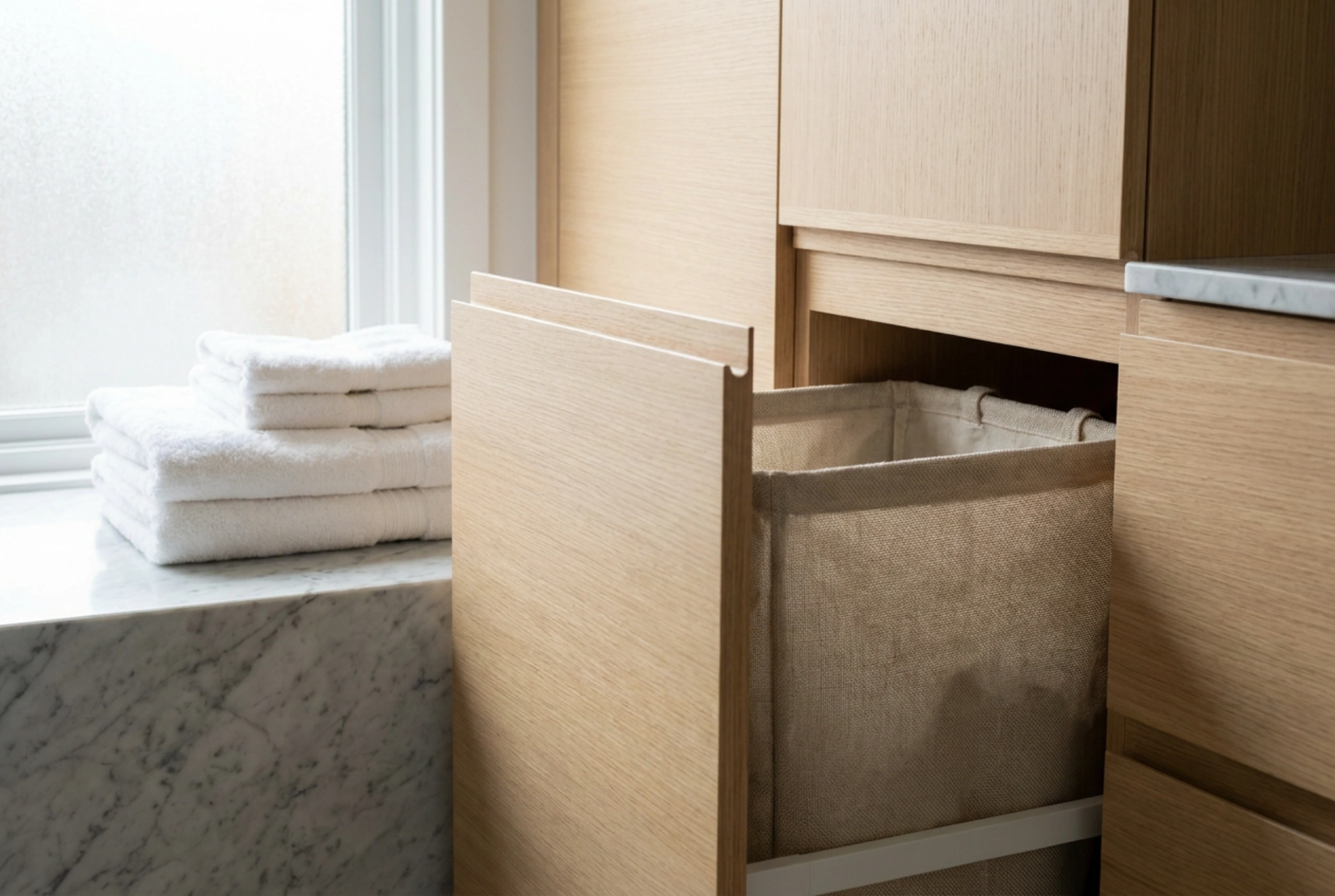


Managing soiled textiles in a high-humidity environment like a bathroom requires a systematic approach to prevent microbial growth, unpleasant odours, and visual clutter. Integrating a built-in pull-out laundry basket directly into bathroom cabinetry offers a sophisticated engineering solution that optimises space while protecting both your garments and the air quality of your home.
The Microclimate of Closed Laundry Storage
Bathrooms are inherently high-humidity zones where relative humidity frequently spikes during bathing. When damp towels or sweat-laden garments are discarded into an unventilated, enclosed cabinet, they create a highly fertile microclimate for microscopic fungi and anaerobic bacteria. Microbial metabolism thrives in dark, warm, and humid environments, breaking down organic substances like sweat, skin cells, and sebum. This process produces volatile organic compounds (VOCs) that manifest as musty, sour odours.
To mitigate this chemical and biological process, built-in laundry systems must rely on continuous passive ventilation. Unlike solid plastic hampers that trap moisture, high-quality pull-out systems utilise open wire mesh or heavily perforated polymer bins. This structure facilitates air circulation via natural convection. As warmer air rises and cooler air falls, a continuous exchange occurs, lowering the relative humidity inside the drawer and arresting the reproductive cycles of odour-causing bacteria.
Material Science of Bathroom Cabinetry and Baskets
The materials selected for a hidden laundry system must withstand constant exposure to moisture and potential chemical contact from residual laundry detergents or fabric softeners. Standard carbon steel will oxidise rapidly when exposed to damp laundry, leading to rust stains on fabrics. Therefore, the metal components of your pull-out system should ideally be made from grade 304 stainless steel or high-grade aluminium coated with an electrostatic powder finish. This powder coating provides a non-porous, hydrophobic barrier that prevents water molecules from reaching the underlying metal.
If polymer bins are used, high-density polyethylene (HDPE) or polypropylene (PP) are the preferred materials. These polymers possess high chemical resistance, meaning they do not degrade when exposed to acidic or alkaline substances. They are also non-porous, preventing bacteria from colonising microscopic surface crevices. For maintenance, these surfaces should be wiped down bi-weekly using a mild surfactant solution followed by a diluted isopropyl alcohol spray to denature any lingering microbial proteins, ensuring a completely sanitised storage environment.
Mechanical Dynamics and Load Distribution
A built-in laundry basket is subjected to significant mechanical stress. A single load of damp laundry can easily weigh between five and ten kilograms. When placed inside a drawer, this mass exerts a downward force that translates into torque on the cabinet slides. To ensure longevity, the cabinet must be equipped with heavy-duty, full-extension ball-bearing runners rated for at least thirty kilograms. Full extension is critical; it allows the basket to be pulled entirely clear of the countertop overhang, allowing for vertical lifting without straining the back or scraping the cabinet frame.
Furthermore, integrating soft-close dampers is not merely an aesthetic choice but a structural necessity. The dampening mechanism absorbs the kinetic energy of the heavy drawer as it closes, preventing forceful impacts that could misalign the cabinet doors, loosen the mounting screws, or damage the internal slides over time. Proper installation requires ensuring the runners are perfectly level in both axes to prevent uneven wear on the bearings.
The Efficiency of Pre-Sorting and Workflow Chemistry
Implementing a double or triple pull-out basket system fundamentally transforms the efficiency of your household cleaning routine. By separating textiles at the point of disposal, you eliminate the need to handle soiled laundry multiple times, reducing the spread of airborne dust mites and allergens. This separation should be based on wash temperatures and fabric chemistry:
- Cellulose-based fibres (cotton, linen): These can tolerate higher wash temperatures and stronger detergents, making them suitable for one dedicated compartment.
- Protein-based fibres (wool, silk): Highly sensitive to heat and alkaline pH; these require separate, gentle handling to prevent fibre shrinkage and damage.
- Synthetic polymers (polyester, nylon): These tend to attract lipophilic soils (oils and grease) and should be washed with specific surfactants to prevent graying.
Dividing these fabrics immediately into dedicated built-in bins ensures that each load is washed at its optimal thermal and chemical threshold, preserving the structural integrity of your wardrobe while maintaining a seamless, pristine bathroom aesthetic.