

Maximising the efficiency of a top-loading washing machine requires a clear understanding of its drum physics, water dynamics, and mechanical action. By mastering the loading order, balancing the centrifugal forces, and applying basic household chemistry, you can achieve cleaner laundry while extending the lifespan of both your fabrics and the appliance.
The Mechanical Action of Top-Loaders: Agitators vs Impellers
Top-loading washing machines generally utilise one of two mechanisms to move clothes through the wash liquor: a central agitator column or a low-profile bottom impeller. An agitator uses tall fins to twist and pull clothes through the water, creating high mechanical friction. While highly effective for heavy-duty soils, this motion exerts significant tensile stress on delicate fibres. An impeller, by contrast, relies on a spinning disc at the bottom of the drum to create a high-velocity vortex, forcing clothes to rub against each other rather than a central post.
To prevent fabric damage in both systems, proper load distribution is critical. When clothes are packed too tightly, they cannot circulate. Instead of rotating through the water, the fabrics remain stationary against the moving agitator or impeller, resulting in localised friction, pilling, and uneven soil removal. Always leave at least one-third of the drum capacity free to allow the water currents to lift and tumble the load naturally.
The Chemistry of Loading: Order of Operations
The sequence in which you add water, detergent, and laundry to a top-loader directly affects chemical dissolution and stain removal. In traditional top-loaders, water fills from the bottom. If you place clothes in first and pour detergent directly over them, the concentrated chemicals can saturate dry fabrics, leading to chemical scorching, colour bleeding, or stubborn residue spots.
- Phase 1: Dissolution. Start by adding your water softener (such as sodium carbonate) and detergent to the bottom of the empty drum. This ensures that as the water enters, it immediately dissolves and distributes the active surfactants.
- Phase 2: Hydration. Allow the drum to fill partially with water to create a uniform wash liquor before introducing the fabrics.
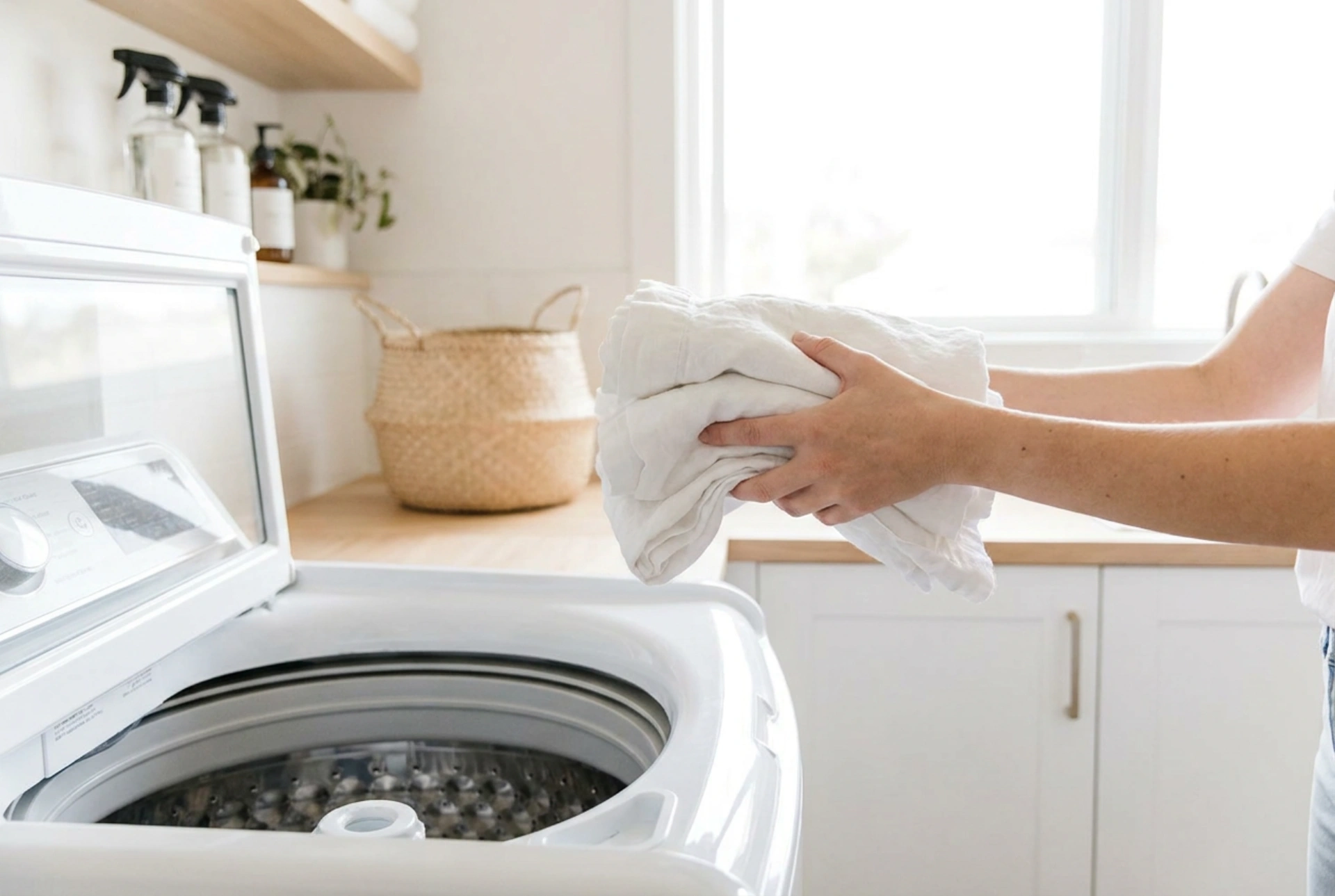
- Phase 3: Balanced Distribution. Place dry items loosely around the central column or over the impeller. Unravel coiled items like trousers or sheets to prevent them from tangling and creating an off-centre mass during the high-speed spin cycle.
Optimising Temperature and Surfactant Performance
Water temperature plays a decisive role in the kinetic energy of the wash cycle. While cold water saves energy, surfactants require thermal energy to lower the surface tension of water efficiently. For routine cottons and synthetic blends, a temperature of 30°C to 40°C offers the optimal balance, liquefying sebaceous oils and body grease without causing thermal shrinkage in natural fibres.
For sanitisation or heavily soiled whites, higher temperatures are necessary to trigger specific chemical reactions. Oxygen bleach (sodium percarbonate) requires a minimum temperature of 40°C, and ideally 60°C, to break down into sodium carbonate and hydrogen peroxide. This peroxide release is what oxidises organic stains and eliminates bacteria. If you must wash at lower temperatures, ensure you use a liquid detergent specifically formulated with enzymes that remain active in cold water.
Preventing Biofilm and Drum Imbalance
Because top-loading washing machines feature a lid on the upper horizontal plane, they are highly susceptible to moisture retention. When the lid is closed immediately after a wash cycle, warm, humid air rises and condenses on the underside of the lid and the upper rim of the drum. This creates a perfect microclimate for anaerobic bacteria and mould, leading to biofilm formation and unpleasant odours.
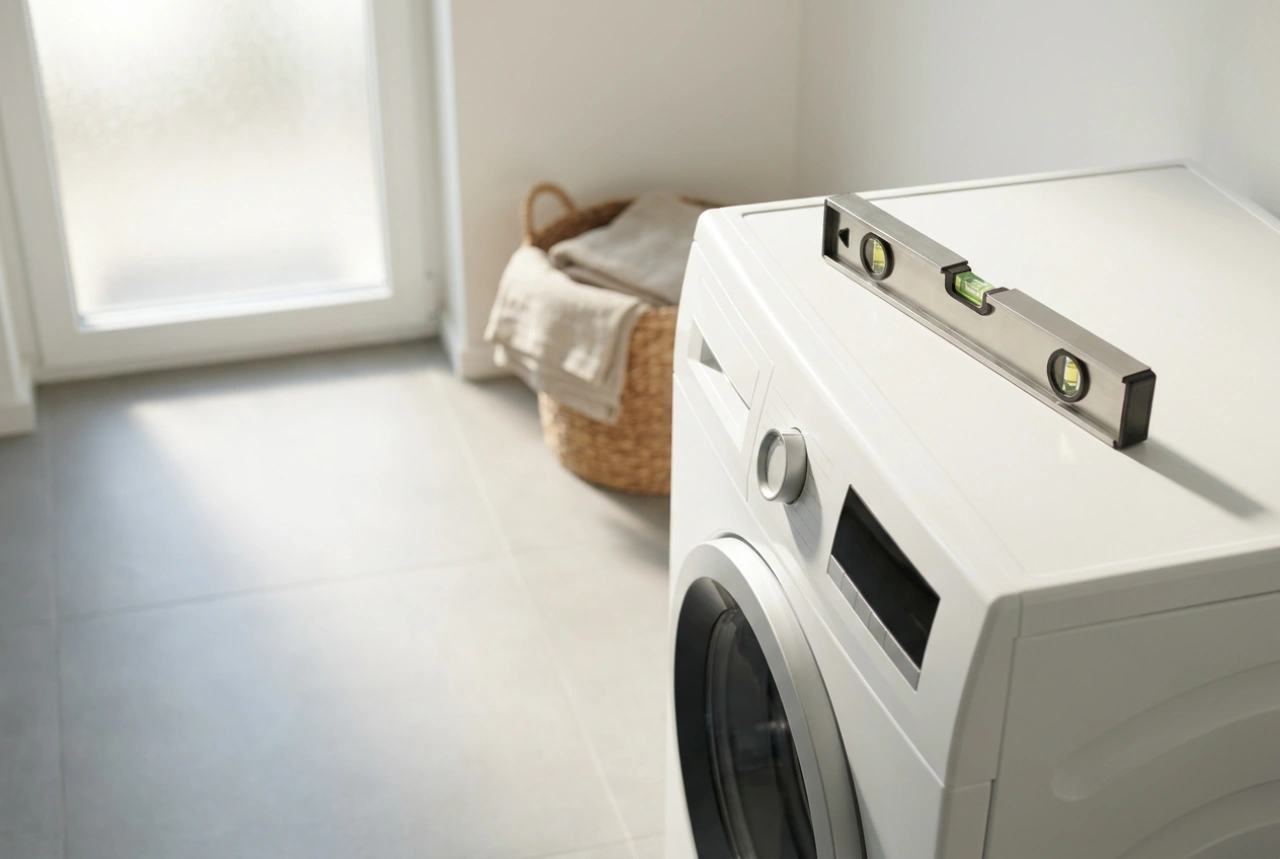
To combat this, always leave the lid fully open after use to facilitate complete evaporation. Additionally, run a monthly maintenance cycle at 60°C or higher with a cup of oxygen bleach or citric acid. This chemical treatment dissolves mineral scale, strips away accumulated soap scum, and sanitises the outer tub where stagnant water often settles. Finally, always monitor the balance of your machine; an imbalanced drum creates severe kinetic forces during the spin cycle, accelerating wear on the suspension rods and dampening springs.