

Achieving perfectly clear, streak-free glass without the exhausting physical effort of dry polishing relies entirely on understanding household chemistry and fluid dynamics. By controlling water quality, evaporation rates, and mechanical tools, you can eliminate the residue that causes stubborn haze and streaks.
The Chemistry of Glass Streaks
To prevent streaks, it is crucial to understand what they actually are: leftover solid residues. When tap water evaporates from a glass surface, it leaves behind dissolved minerals, primarily calcium carbonate and magnesium. Standard household detergents also contain thickeners and artificial fragrances that remain on the glass as a thin, light-refracting film. When sunlight hits this film, it creates a visible haze.
To eliminate these residues, professional glass cleaning relies on high-purity water and volatile solvents. Using distilled or demineralised water is the most effective foundational step, as it contains zero dissolved minerals. When distilled water evaporates, it leaves absolutely nothing behind, eliminating the root cause of water spots.
The Science-Backed Cleaning Formula
An effective, non-residue cleaning solution can be formulated using simple, highly volatile ingredients that evaporate quickly and dissolve both organic and inorganic soils:
- Isopropyl Alcohol: This serves as a rapid-evaporating solvent. It dissolves greasy fingerprints and oily residues by breaking down lipid molecules, and its low boiling point ensures the solution evaporates before water beads can form.
- Acetic Acid (White Vinegar): An acidic agent (with a pH of around 2.5) that chemically breaks down alkaline mineral deposits, such as limescale, converting them into highly soluble salts that are easily wiped away.
- Distilled Water: The pure carrier medium that prevents any new mineral deposits from being introduced to the glass.
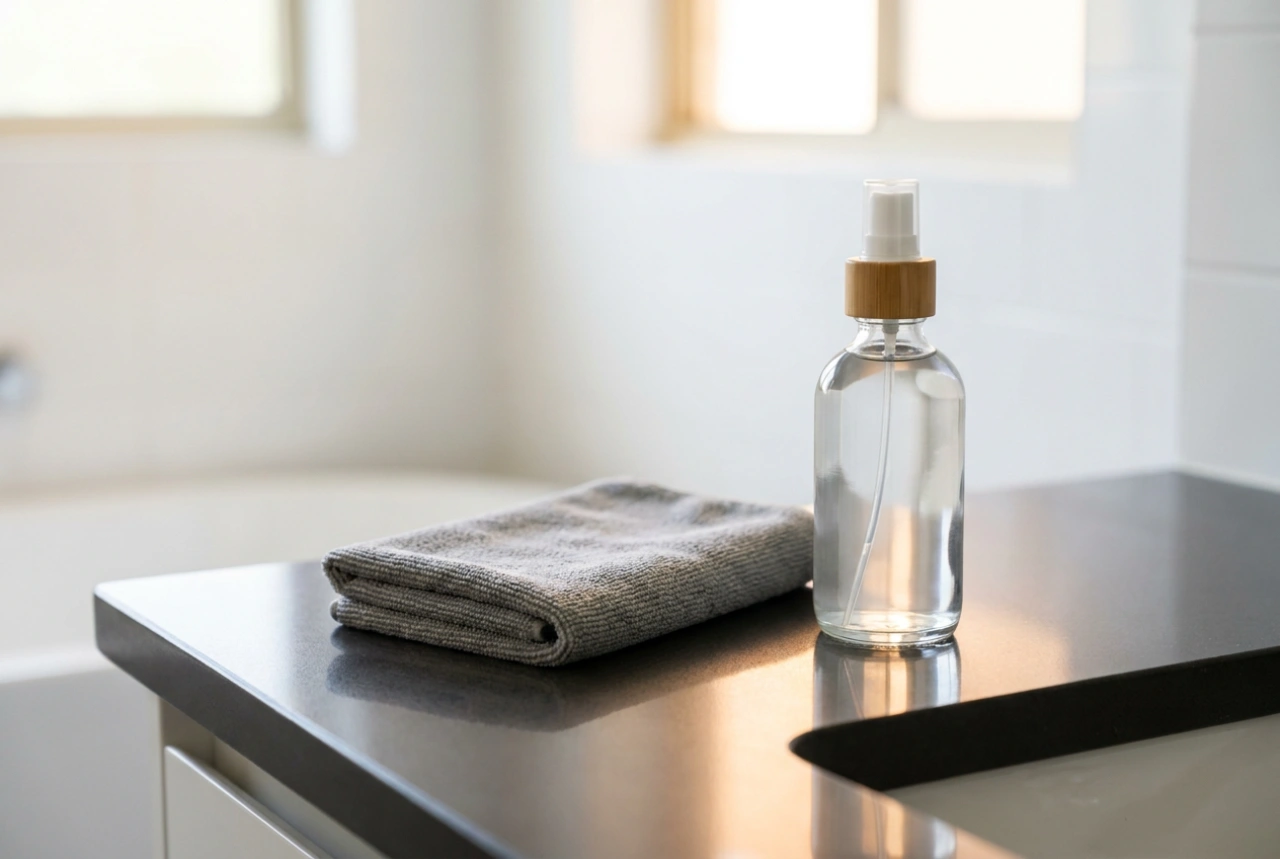
Mix equal parts of distilled water and isopropyl alcohol (70% concentration), then add one tablespoon of white vinegar per half-litre of solution. This combination lowers the surface tension of the liquid, allowing it to sheet off the glass rather than forming droplets.
Mechanical Control: The Dry-Blade Technique
Eliminating the need for polishing requires moving the dissolved dirt off the glass rather than letting it dry in place. This is where physical mechanics supersede chemical solutions. The most efficient tool for this is a high-quality squeegee with a sharp, flexible natural rubber blade.
The key is the dry-blade technique. Before every stroke of the squeegee, the rubber edge must be wiped completely dry with a lint-free microfibre cloth. If the blade is wet when it touches the glass, it will leave a line of water at the starting point. Pull the squeegee in a continuous, overlapping S-motion or straight vertical columns, maintaining consistent, light pressure at a 45-degree angle to the glass surface. This action physically shears the liquid film off the glass, taking all suspended dirt particles with it.
The Role of Temperature and Environment
The environment in which you clean glass dictates the success of your efforts. Cleaning windows in direct sunlight or on hot days is the primary cause of immediate streaking. High temperatures cause the cleaning solution to evaporate instantly upon contact with the glass. This rapid evaporation prevents the chemical solvents from fully dissolving the oils and leaves both the dirt and the cleaning agents dried onto the surface before you can squeegee them off.
Always clean windows when the glass is cool to the touch—ideally on an overcast day, in the early morning, or in the late evening. This keeps the cleaning solution in a liquid state longer, giving the surfactants time to lift the soil and allowing the squeegee to smoothly glide across the surface.
Execution Checklist for a Flawless Finish
Follow this precise order of operations to achieve clear glass without polishing:
- Remove loose debris: Use a dry, soft brush to sweep away dust and cobwebs from the window frame and sills to prevent creating mud during the wet phase.
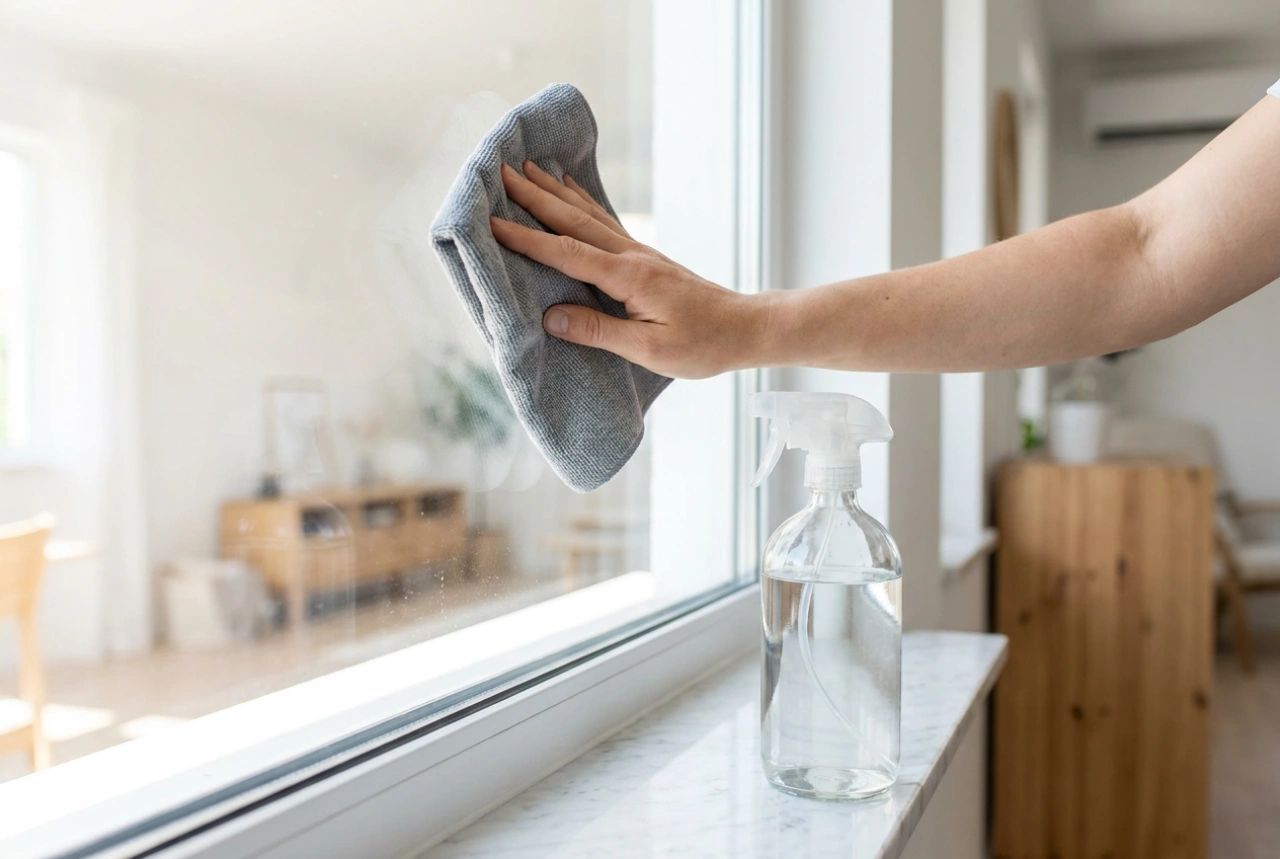
- Apply the solution: Mist the glass lightly with the alcohol-vinegar-distilled water mixture. Avoid oversaturating, which leads to dripping and runs.
- Agitate: Gently scrub the glass with a microfibre washer sleeve to loosen stubborn grime.
- Squeegee pull: Pull the liquid off the glass in single, continuous strokes, wiping the blade dry after each pass.
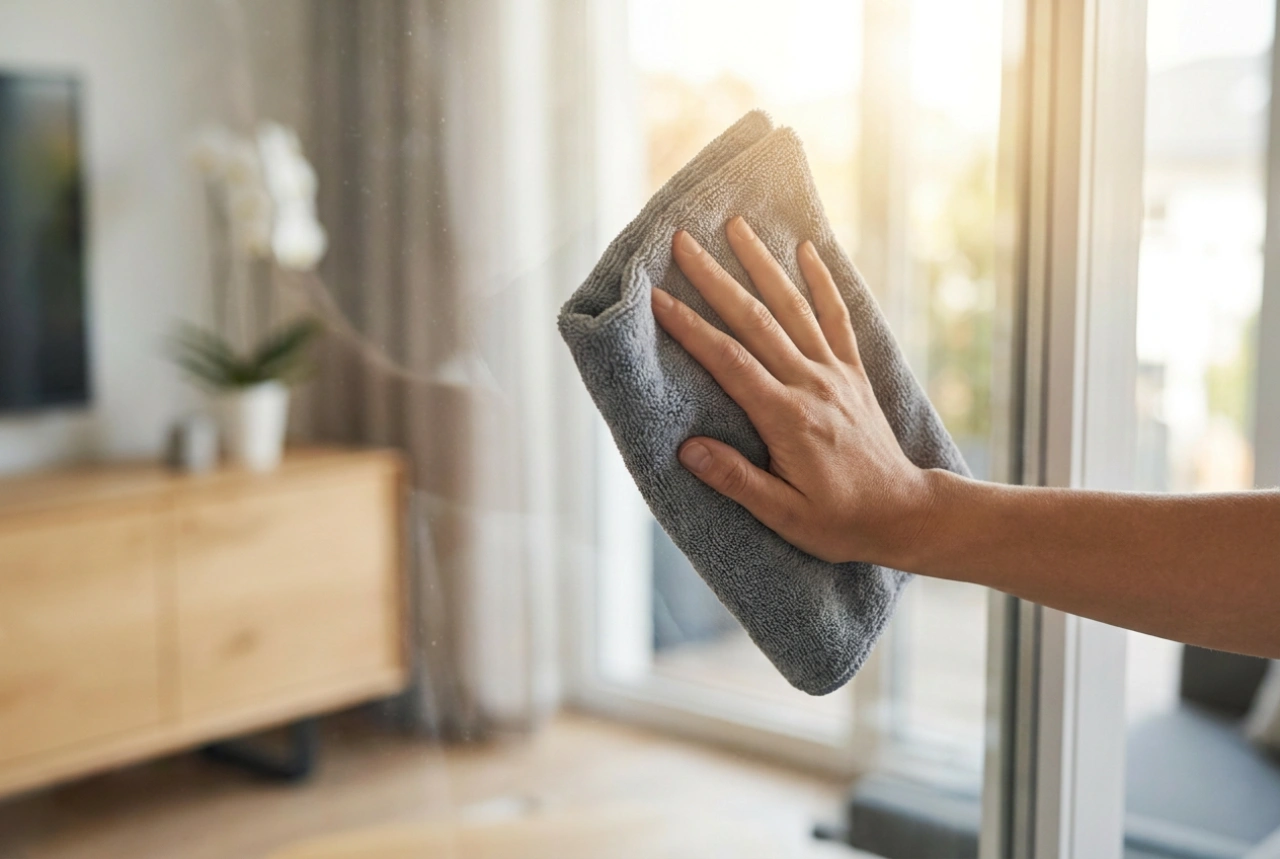
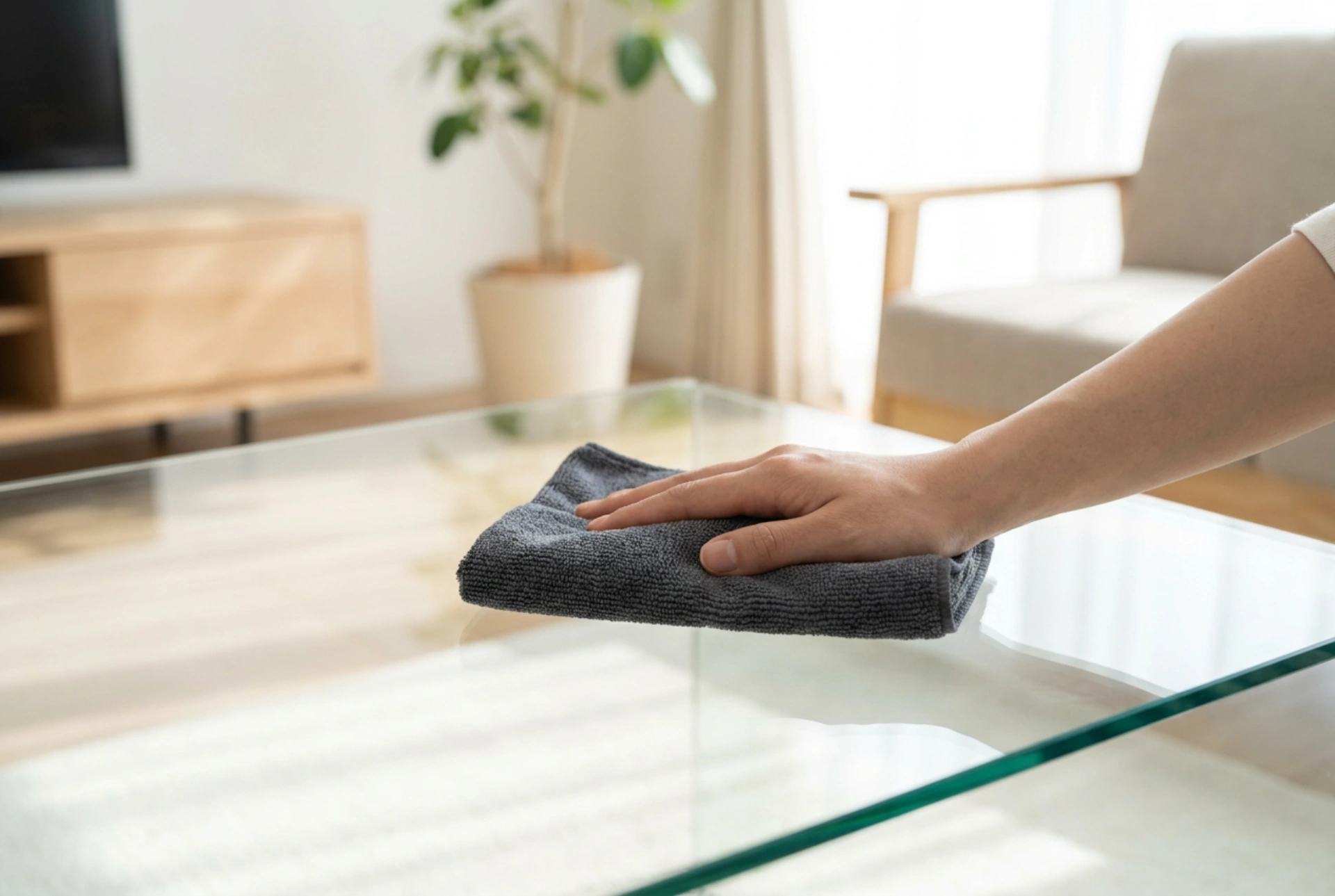
- Detail the edges: Use a dry, tightly-woven waffle-weave microfibre cloth to wipe the perimeter of the frame where the squeegee cannot reach.