

Storing handbags incorrectly can lead to permanent creasing, stretched straps, and lost structural integrity. Using the correct hanging systems and understanding the physical forces acting on your bags ensures they remain in pristine condition for years.
The Physics of Strap Tension and Material Creep
When a handbag is suspended by its straps, gravity pulls the mass of the bag downward, creating localized tension. The critical factor in preserving strap integrity is the surface area of the hook or hanger. According to basic physics, pressure is force divided by area. A thin metal wire hanger concentrates all the weight onto a tiny surface area, leading to high pressure that compresses and deforms the leather or synthetic fibers. Over time, this localized stress causes a phenomenon known as material creep—the gradual, permanent deformation of solid materials under mechanical stress.
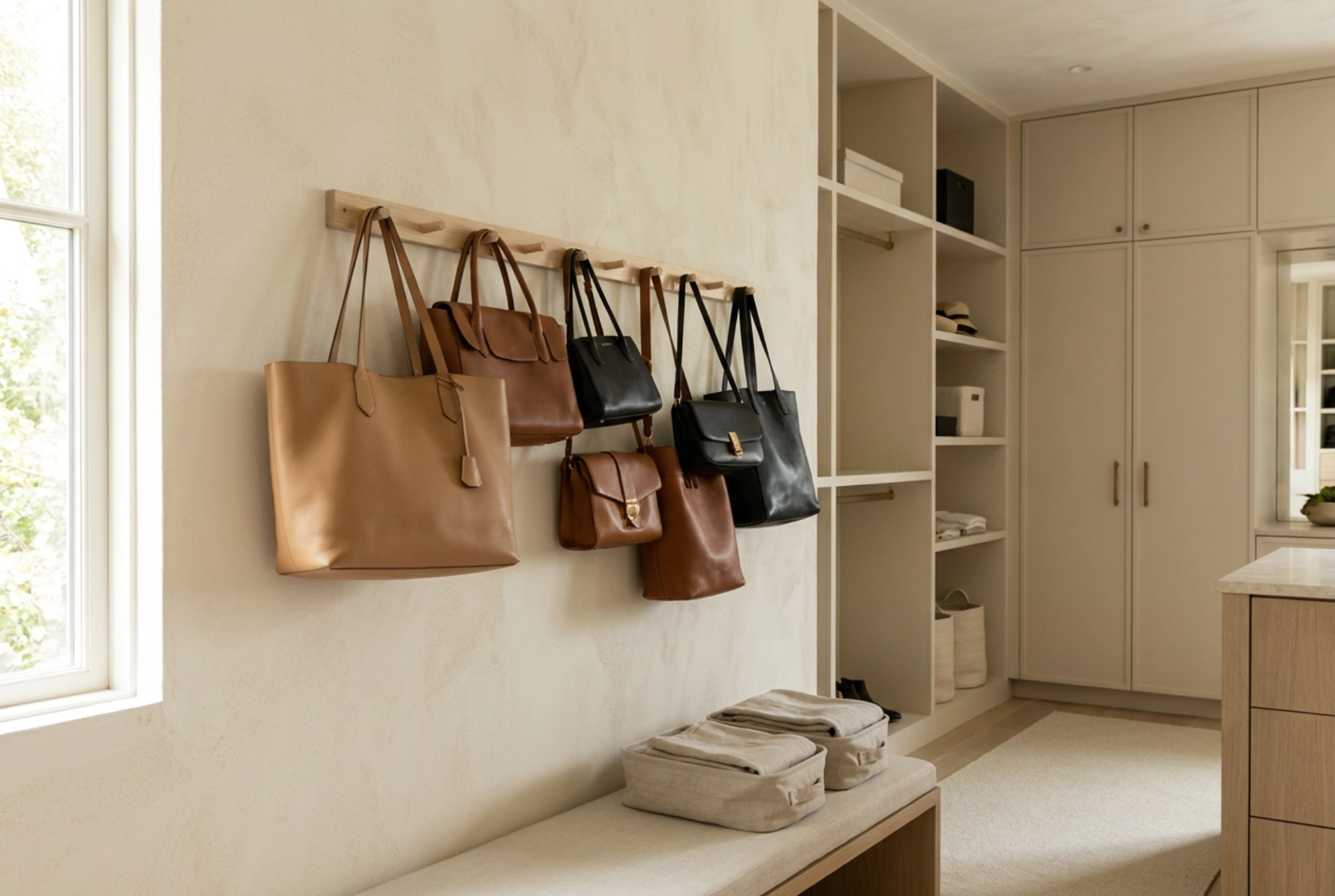
To prevent this, hangers designed for handbags feature wide, curved surfaces. A broad, smooth arc distributes the load evenly across the entire width of the strap. This minimizes pressure, prevents the internal padding of the handle from collapsing, and eliminates sharp creases that can crack delicate finishes or weaken stitching.
Selecting the Optimal Hanger Materials
The choice of hanger material is crucial for preventing chemical damage to your bags. Leather and synthetic polymers can react with certain metals and plastics over time, especially in closed environments with variable humidity.
- Polished Hardwood: High-density woods like beech or maple are ideal. They are chemically inert, meaning they will not bleed oils or finish chemicals into the handbag straps. The natural weight of wooden hanger systems also provides stability inside the wardrobe.
- Anodized Aluminum: Unlike unfinished iron or low-grade steel, anodized aluminum does not corrode or rust. Moisture in the air can cause untreated metals to oxidize, leaving permanent rust stains on light-colored leather or fabric linings.
- Padded Fabric Hangers: For extremely delicate evening bags with silk or satin straps, padded hangers wrapped in unbleached cotton provide a soft, high-friction surface that prevents slipping without compressing the fibers.
Step-by-Step Hanging Technique and Weight Management
Simply hanging your bags on any hook is not enough; you must prepare each bag to balance the gravity vector. Follow these steps to optimize your wardrobe setup:
First, empty the contents of each handbag. Leaving heavy items inside—such as wallets, cosmetics, or water bottles—constantly exerts unnecessary downward force on the handles. Over several weeks, this constant pull will permanently stretch leather straps and weaken the attachment points where the hardware meets the body of the bag.
Second, insert a lightweight acid-free tissue paper stuffer into the main compartment. This maintains the bag's three-dimensional shape, preventing the sides from collapsing inward while it hangs. Do not use newspaper, as the ink can transfer to the inner lining.
Third, align the straps symmetrically over the wide curve of the hanger. Ensure the straps are not twisted, as twist points create asymmetrical stress, causing one side of the strap to stretch more than the other.
Maximizing Vertical Space and Airflow
An organized wardrobe relies on efficient spatial distribution. Utilizing multi-tiered vertical hangers allows you to stack several bags vertically without them touching or compressing one another. However, you must maintain a physical gap of at least two to three centimeters between suspended bags.
Air circulation is vital for organic materials like leather. In a stagnant environment, moisture can become trapped between closely packed bags, creating a microclimate ripe for mold and mildew growth. Furthermore, direct contact between different leather finishes can lead to plasticizer migration—a chemical process where finishes or dyes from one bag physically fuse or transfer to an adjacent bag under slight pressure.
Protecting Accessories from Friction and Light
While organizing your handbags, consider the effects of light and physical friction. When sliding hangers along a closet rod, choose systems with smooth-gliding hooks to prevent sudden, jerky movements that cause bags to swing and collide. If your wardrobe has glass doors or receives direct sunlight, ensure your most valuable leather pieces are hung inside breathable, unbleached cotton dust bags. These bags protect the materials from ultraviolet photolytic degradation, which fades dyes and dries out the natural oils in leather, leading to premature cracking.