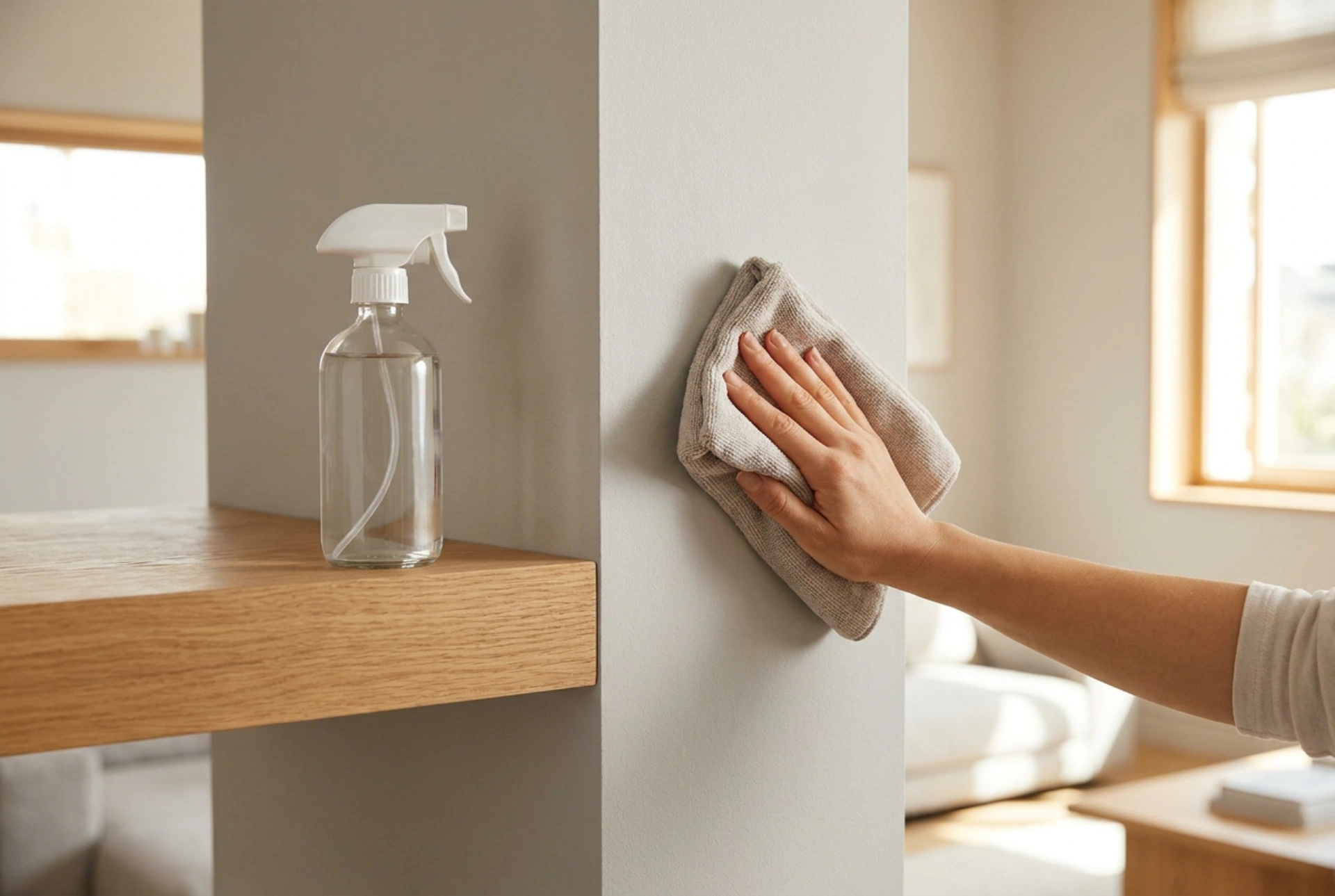


Cleaning walls without stripping binder layers, dulling matte finishes, or dissolving plaster requires a careful balance of chemistry and physical technique. Utilizing the wrong detergent or excessive mechanical scrubbing can permanently alter the surface tension and texture of paint, leaving unsightly shiny spots or bare plaster patches.
Understanding Paint Chemistry and Binder Susceptibility
Before applying any liquid to a wall, it is essential to understand the material science of the surface coating. Modern interior paints typically consist of pigments, fillers, and binders (such as acrylic, vinyl, or latex polymers) suspended in a carrier liquid. The ratio of pigment to binder determines the paint's gloss level and its vulnerability to moisture and abrasion.
- Matte and Flat Paints: These surfaces have a high pigment-to-binder ratio. Because there is less resin covering the pigment particles, matte finishes are highly porous and susceptible to burnishing (developing shiny patches from friction) and pigment loss when exposed to harsh liquids.
- Satin, Eggshell, and Semi-Gloss Paints: These contain a higher concentration of polymer binders, creating a continuous, hydrophobic film. This barrier protects the pigments, making the paint far more resilient to liquid penetration and light scrubbing.
- Silicate and Mineral Paints: Often used on plaster, these paints chemically bond with the substrate through silicification. While highly breathable, they can react poorly to acidic cleaners, which degrade the mineral structure.
The Role of pH and Surfactant Chemistry
The chemical composition of your cleaning agent dictates how it interacts with the paint's polymer matrix. The golden rule of wall cleaning is to maintain a neutral pH (around 7.0 to 8.0). Deviating into highly acidic or highly alkaline ranges can trigger chemical reactions that compromise the wall's integrity.
Alkaline agents (pH above 8.5) are highly effective at emulsifying grease, but they also undergo a process called saponification with certain paint resins, effectively dissolving the binder. This leads to a chalky residue and paint thinning. Conversely, acidic solutions (pH below 6.0), such as concentrated vinegar or citric acid, can break down calcium carbonate fillers in plaster and weaken silicate-based paints.
To lift dirt safely, rely on non-ionic surfactants. These molecules possess both a hydrophilic (water-attracting) head and a lipophilic (fat-attracting) tail. When diluted in water, they lower the surface tension, allowing the solution to spread evenly and lift oily residues, dust, and soot from the microscopic pores of the paint without chemically attacking the polymer film itself.
The Physics of Mechanical Action: Preventing Burnishing
Even a chemically neutral solution can ruin a wall if paired with improper mechanical force. Kinetic energy applied during wiping must be minimized. Abrasive sponges, melamine foam (which acts as a micro-sandpaper), or stiff brushes physically shear the delicate microscopic structure of matte paint, smoothing out the surface and creating permanent shiny spots.
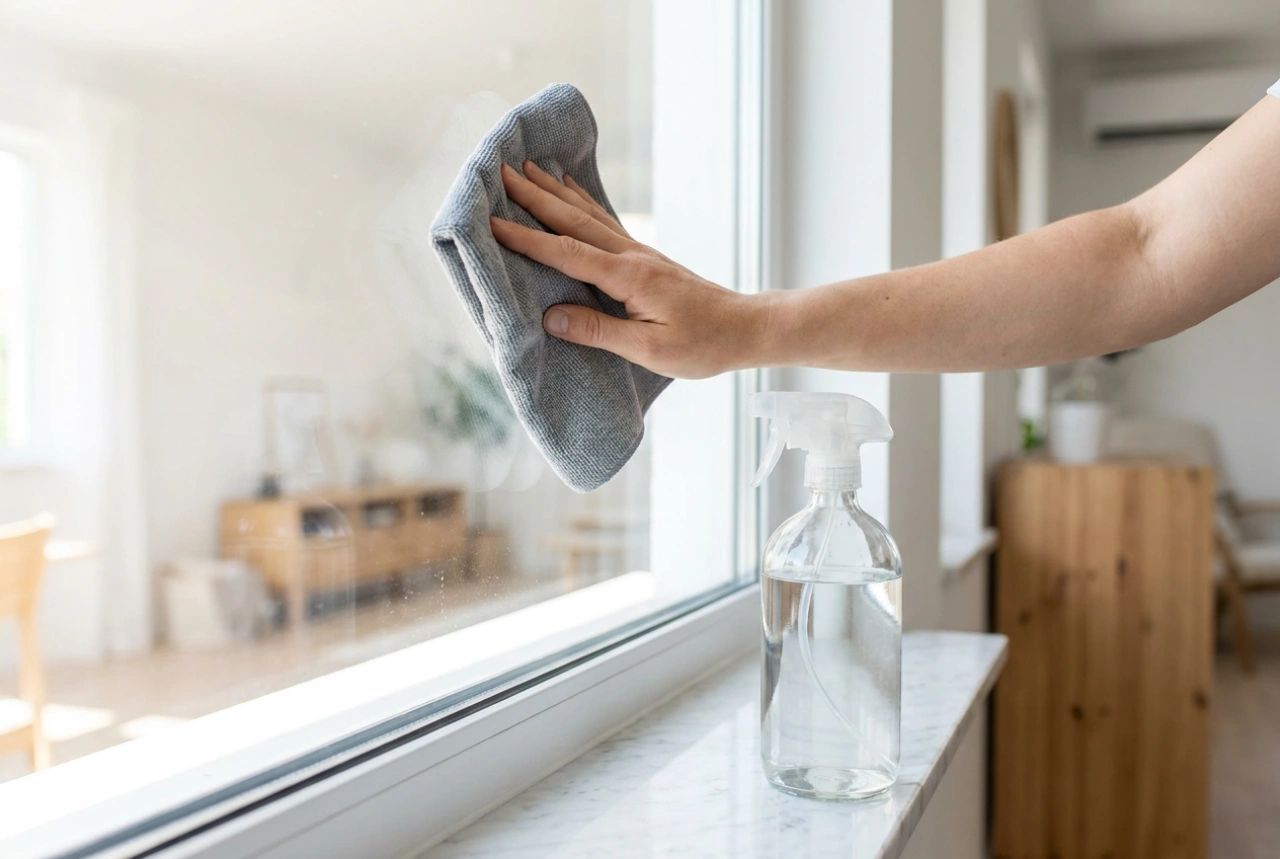
Always use clean, high-density microfiber cloths. Microfiber possesses split fibers that create a vast surface area capable of trapping dirt particles through capillary action and weak van der Waals forces, removing the need for heavy scrubbing. The motion should always be gentle, circular, and distributed over a wide area to avoid concentrated pressure points.
The Bottom-Up Technique and Temperature Control
The order of operations and water temperature play crucial roles in preventing permanent water marks and structural damage to the plaster beneath the paint.
- Always Wash Bottom to Top: It seems counterintuitive, but dirty water running down a dry wall will penetrate the porous paint and leave permanent, dark streak marks that are nearly impossible to clean. By washing from the baseboard upward, any drips run down a pre-dampened, clean surface, preventing them from soaking in.
- Temperature Control: Use lukewarm water (around 30°C to 35°C). Most wall paints rely on thermoplastic binders. High water temperatures can soften these polymers, making them extremely susceptible to scratching and lifting during the wiping process.
- Drying: Never leave a wall to air-dry slowly if it has absorbed significant moisture. Excessive water can penetrate the paint film, causing the plaster underneath to soften, leading to bubbling, cracking, or delamination. Gently pat the area dry with a clean, dry microfiber towel immediately after cleaning.