

Ironing in confined living spaces demands a balance between mechanical efficiency and material science to achieve crisp, wrinkle-free garments without cluttering your home. Understanding the physics of compact folding mechanisms and the thermodynamics of heat-reflective surfaces allows you to optimize both your storage and your ironing technique.
Mechanical Design: How Compact Boards Save Space
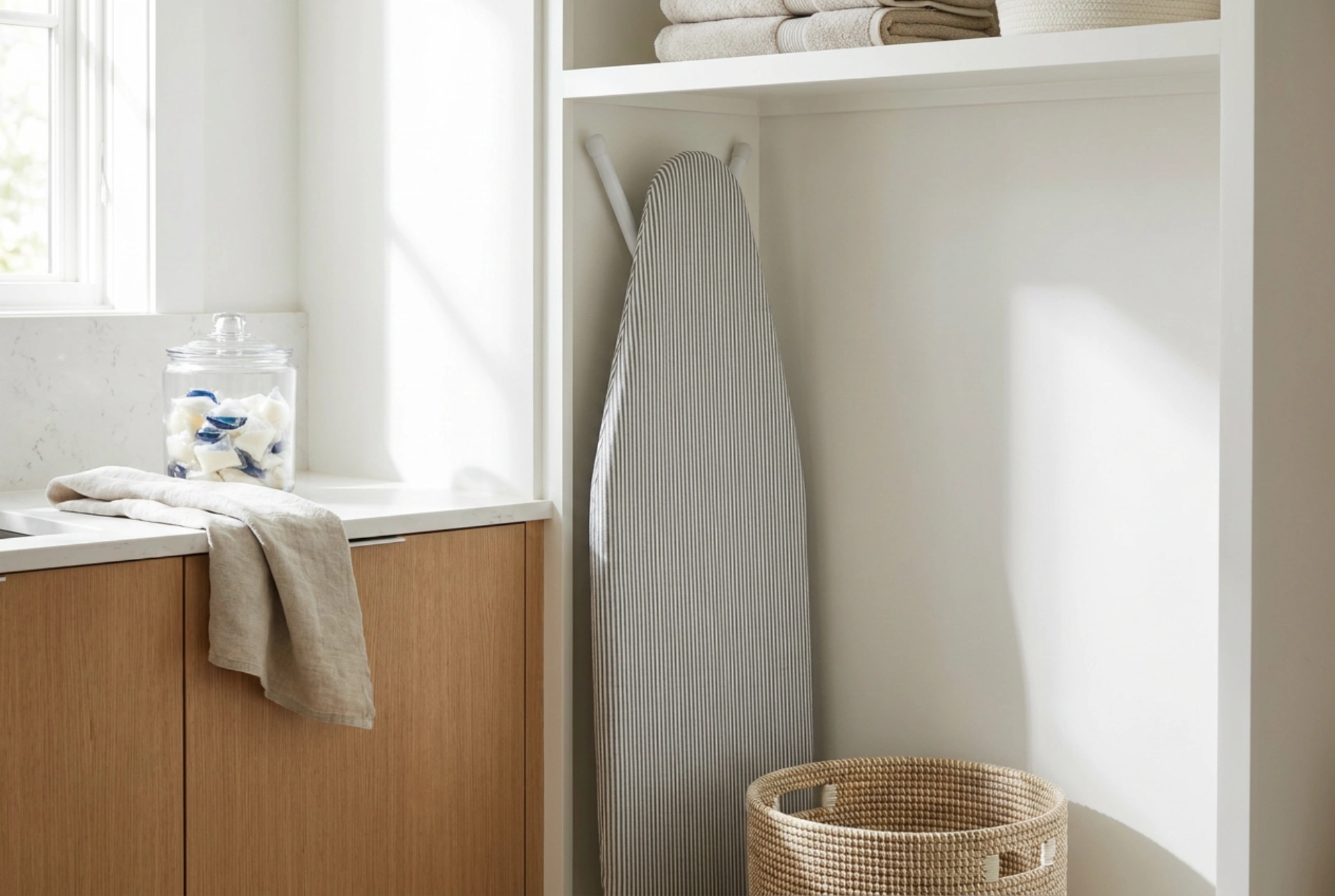
Standard ironing boards rely on long, scissor-leg mechanisms that require significant physical clearance to deploy and store. In contrast, compact boards engineered for tight spaces utilize advanced kinematics to reduce their footprint. The most common designs include multi-segment folding frames, telescoping supports, and wall-mounted pivot systems.
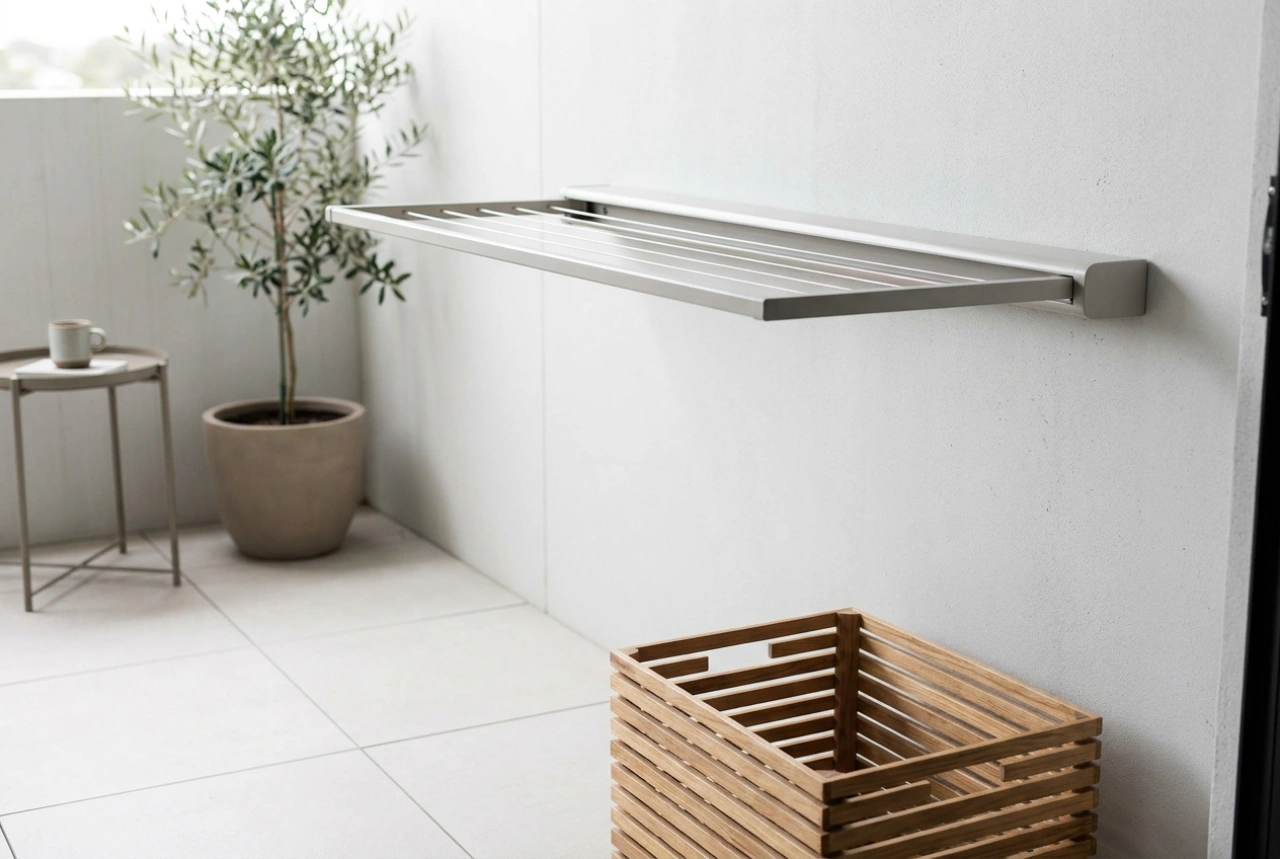
Multi-segment folding boards split the primary ironing surface into two or three hinged sections. When folded, the overall length is reduced by up to sixty percent, allowing the board to fit into standard cabinet drawers or narrow gaps between appliances. The stability of these boards depends on mechanical latches that lock the hinges under tension, preventing the joints from buckling when downward force is applied during pressing. Wall-mounted pivot systems utilize heavy-duty bracket hinges that rotate 180 degrees. This allows the board to be folded flat against the wall or inside a shallow cabinet, utilizing vertical space that is otherwise wasted.
Thermodynamics of the Ironing Surface: Padding and Covers
A smaller ironing surface means you have less area to dissipate heat and moisture. When ironing, steam is forced through the garment to relax the polymer chains in the fabric fibers. If this steam cannot escape, it condenses back into water, dampening the ironing board pad and creating a breeding ground for rust or mold within the board's metal frame.
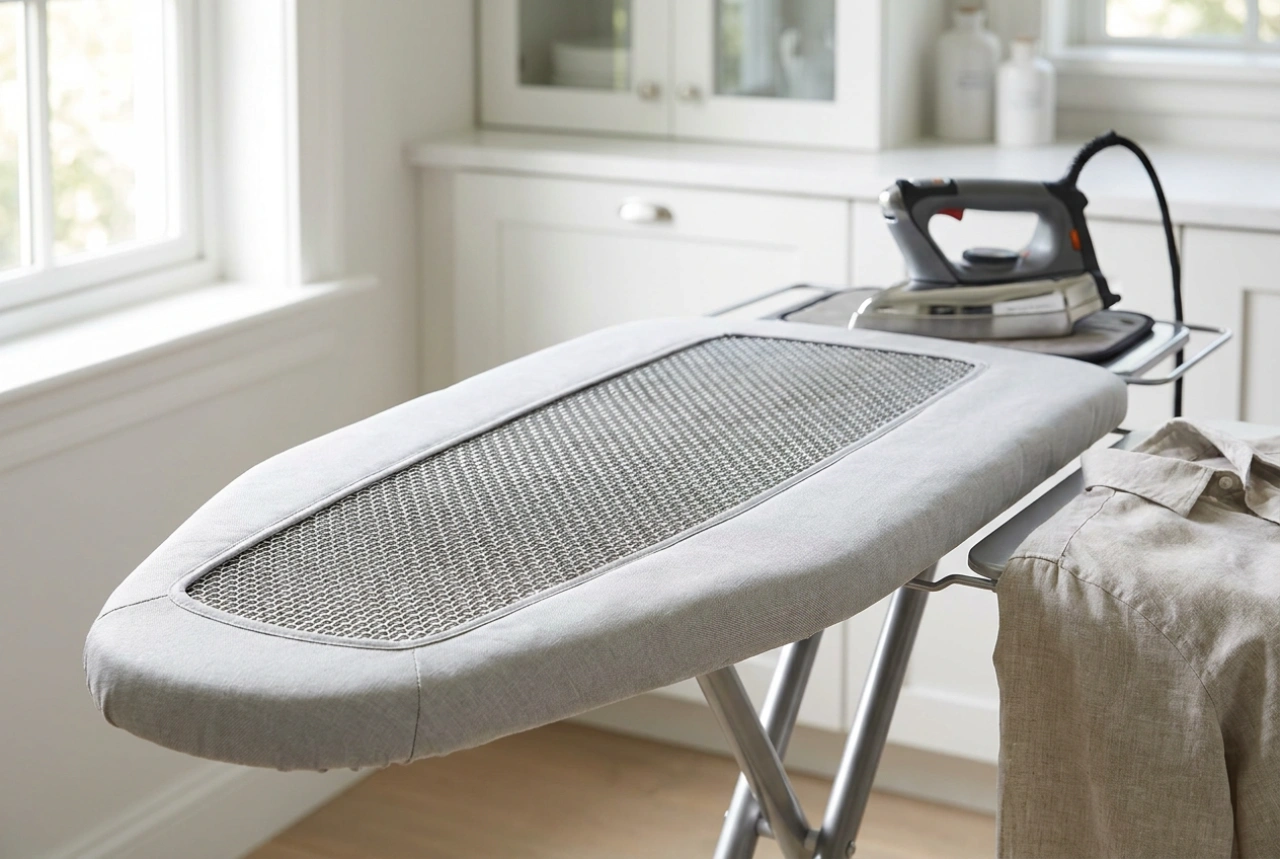
To prevent condensation build-up in a compact setup, the board's substrate must be perforated—typically using an expanded steel mesh or high-density polymer grid. This structure allows steam to pass completely through the board. Above this mesh, the padding material plays a critical role. Cheap foam padding degrades rapidly under high heat, losing its elasticity and allowing the grid pattern of the metal to imprint onto your clothes. High-density needle-punched felt is the superior choice for compact boards. It retains its loft under pressure and absorbs minimal moisture, facilitating faster steam evaporation.
The top cover should ideally feature a heat-reflective metallic coating, often containing microscopic aluminum particles. This coating reflects thermal energy back up through the bottom of the garment. Effectively, this creates a double-sided heating effect, which increases ironing efficiency and compensates for the reduced surface area of a compact board.
Strategic Techniques for Pressing on a Compact Board
Ironing on a smaller surface area requires a structured order of operations to prevent already-pressed sections of a garment from re-wrinkling as you work. Because you cannot lay an entire shirt flat on a compact board, you must feed the fabric through the board systematically.
- Start with detailed structures: Always iron collars, cuffs, and button plackets first. These small, stiff sections can hang off the edges of the board without losing their shape while you press the larger panels.
- The shoulder-first method: Slip the shoulder yoke over the tapered end of the board. Rotate the garment around the board to press the upper back and front panels. This movement utilizes the board's natural geometry to hold the fabric taut.
- Sleeve management: Lay the sleeves flat along the length of the board. If the board is shorter than the sleeve, press the lower half first, then slide the sleeve forward to complete the shoulder seam area.
- Vertical drafting: Allow the ironed portions of long garments, like trousers or dresses, to drape over the far end of the board. Ensure the floor below is clean, or place a clean sheet on the floor to catch the fabric as it descends.
Maintenance, Joint Care, and Moisture Control
The longevity of a folding or wall-mounted ironing board depends on regular maintenance of its moving parts. Friction at pivot points can lead to wear and misalignment over time. Periodically inspect the hinges and apply a dry PTFE-based lubricant to the joints. Unlike standard oils, dry lubricants do not attract dust, lint, or fabric fibers, which can clog the folding mechanism.
After each ironing session, never fold and store the board immediately. Residual heat and moisture trapped within the padding must be allowed to dissipate. Leave the board open in a well-ventilated area for at least fifteen minutes. This simple step prevents the steel frame from oxidizing and ensures the padding remains hygienic and resilient for years to come.