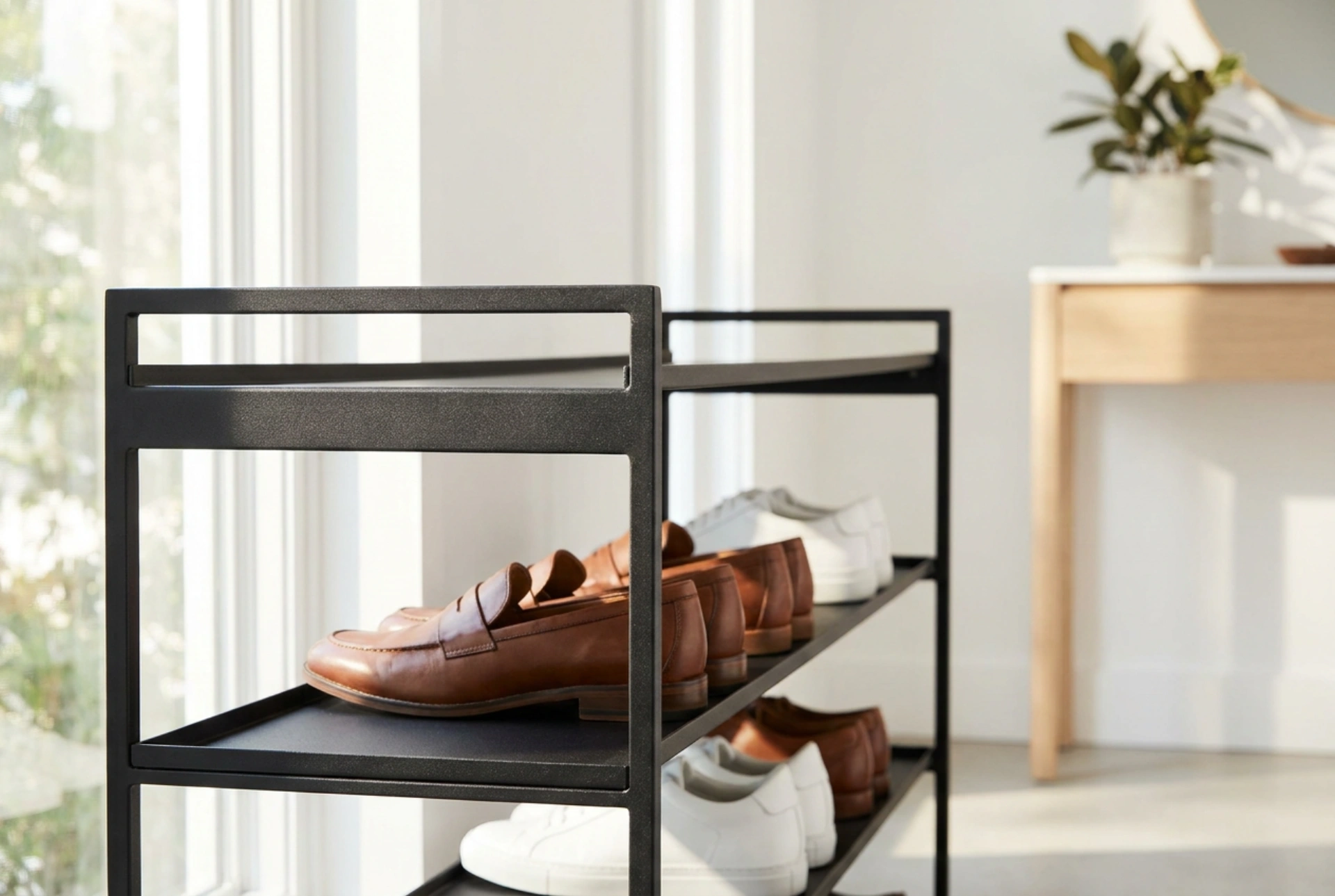


Transitioning entryway storage to a heavy-duty metal shoe rack eliminates the sagging, moisture retention, and structural wear typical of wood or plastic alternatives. By understanding metal finishes and structural mechanics, you can establish an enduring organization system that withstands daily high-traffic demands.
The Material Science of Entryway Metal
Entryway furniture must endure extreme conditions: wet footwear, abrasive grit, salt deposits from winter roads, and constant mechanical impact. Traditional wood can warp or rot when exposed to damp soles, while cheap plastics degrade under UV light and physical stress. High-grade metal, particularly powder-coated steel or anodised aluminium, offers unmatched durability.
The secret to the longevity of high-quality metal racks lies in the surface treatment. Powder coating involves applying a dry thermosetting polymer electrostatically, which is then cured under heat to form a hard, non-porous skin. This barrier prevents oxygen and moisture from contacting the underlying iron, effectively eliminating the risk of oxidation (rust). When choosing a metal rack, opt for textured matte powder finishes; they hide scratches from grit and offer superior resistance to impact compared to high-gloss painted surfaces.
Maximising Air Circulation and Evaporative Drying
Wet footwear is a breeding ground for bacteria and fungi, which thrive in stagnant, humid environments. A solid shelf traps damp air underneath the sole, prolonging the drying process and accelerating the breakdown of shoe adhesives and stitching.
Open metal geometries—such as wire mesh, slatted grates, or parallel tubular bars—solve this through passive thermodynamic air circulation. Air can flow freely around the entire shoe, promoting rapid evaporation of moisture from both the upper leather and the outsole. Additionally, wire mesh prevents the accumulation of loose dirt, sand, and dried mud on the shelves. Instead of settling around the shoes, debris falls through to the floor, where it can be easily swept or vacuumed, keeping the storage units hygienic.
Structural Mechanics and Load Distribution
Over time, the combined weight of heavy boots and trainers can cause poorly engineered shelves to bow. This structural deformation alters the centre of gravity of the unit, leading to instability or tipping hazards.
To ensure absolute stability, look for shoe racks constructed with welded joint frames rather than purely friction-fit plastic connectors. Welded steel transfers load forces continuously throughout the frame to the floor. Furthermore, units featuring cross-bracing (diagonal metal tension bars on the rear) utilise triangulation to resist lateral shear forces. This prevents the rack from swaying or loosening when side-loaded or accidentally bumped by heavy traffic in a narrow hallway.
Optimising the Entryway Workflow
A durable storage system relies as much on logical spatial organisation as it does on robust materials. To maintain the system, categorise shelf height and placement based on weight distribution and gravity:
- The Bottom Tier: Reserve the lowest shelf for heavy, wet footwear, such as work boots or rain boots. This prevents dirty water, salt, or mud from dripping onto clean shoes stored below.
- The Middle Tiers: Allocate these shelves for daily footwear like trainers or casual loafers. Ensure spacing allows at least 5 cm of clearance above the shoe collar to maintain optimal airflow.
- The Top Tier: Use the highest shelf for delicate leather shoes or seasonal footwear. Being furthest from the floor, these items remain safe from accidental kicks, dust, and water splashes.
To maintain the metal surface, wipe the shelves down monthly with a dry microfibre cloth to remove abrasive grit. For salt deposits, a damp cloth with a mild, pH-neutral soap solution is sufficient; avoid acidic or chlorinated cleansers, which can microscopic-crack the protective powder coat over time.