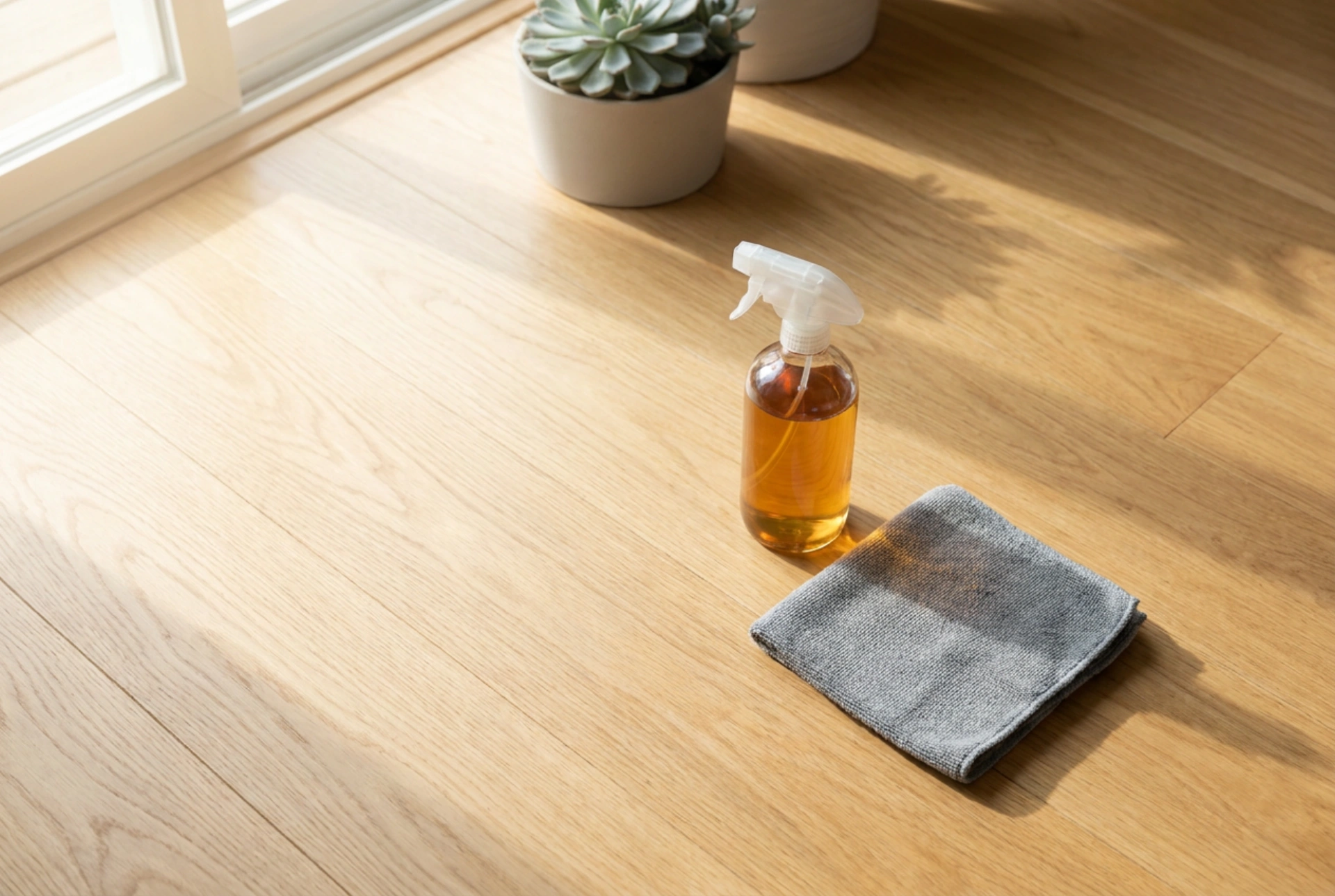


Sticky residues on cleaned floors are almost always the result of surfactant buildup and slow evaporation rates. By understanding the simple chemistry of cleaning agents and material interactions, you can create a highly effective homemade floor cleaner that leaves surfaces completely streak-free.
The Chemistry of Sticky Floors: Why Film Occurs
To eliminate sticky floors, we must first understand why they happen. Most commercial cleaners, and many poorly formulated DIY recipes, rely heavily on surfactants. Surfactants are molecules with a hydrophilic (water-attracting) head and a lipophilic (fat-attracting) tail. They work by surrounding oil and dirt particles, lifting them from the floor so they can be wiped away.
However, surfactants do not evaporate. When you use too much soap or fail to rinse the surface, a microscopic layer of active molecules remains on the floor. This layer acts like a magnet for dust and foot traffic oils, creating a dull, tacky film over time. Hard water compounds this issue; calcium and magnesium ions in tap water react with anionic surfactants to form insoluble soap scum, which bonds tightly to the flooring material.
Key Ingredients for an Evaporative Cleaner
The secret to a streak-free finish is formulating a cleaner that performs its mechanical duty of lifting dirt and then evaporates rapidly without leaving non-volatile solutes behind. Three key ingredients achieve this balance:
- Distilled Water: Tap water contains dissolved minerals that leave white spots when dry. Distilled or demineralised water serves as a pure solvent, maximising the cleaner's capacity to dissolve soil.
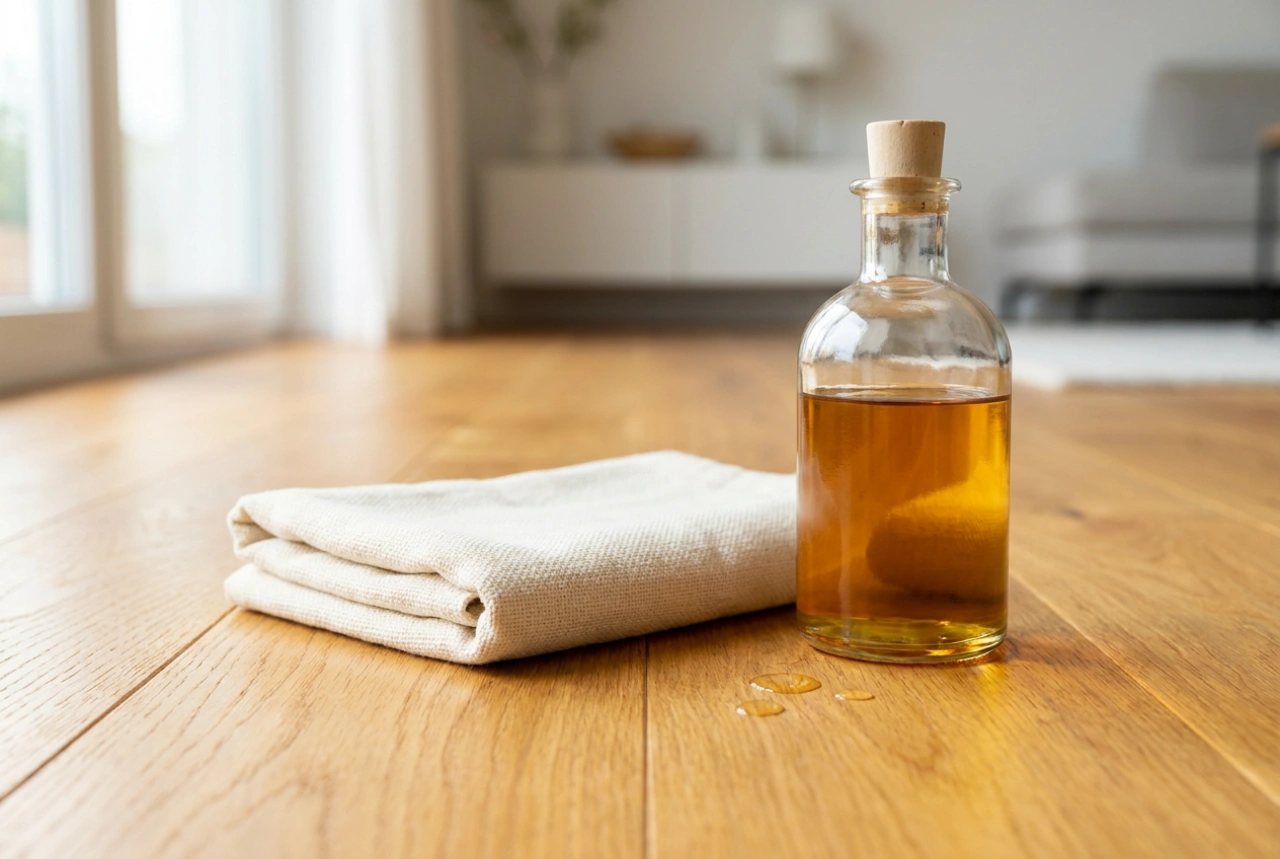
- Isopropyl Alcohol (Rubbing Alcohol): Alcohol acts as a fast-evaporating solvent that lowers the surface tension of the water. This allows the liquid to spread evenly (wetting) rather than pooling, accelerating the drying process before streaks can form.
- Acetic Acid (White Vinegar): A mild acid that neutralises alkaline salt deposits and cuts through light grease. Note that acid should never be used on natural stone like marble or limestone, as it reacts chemically with calcium carbonate, causing permanent etching.
The Residue-Free Formulation
For most sealed floors (excluding unsealed wood and natural stone), this balanced formula provides excellent degreasing power and a perfectly dry finish:
- 450 ml of distilled water
- 50 ml of isopropyl alcohol (70% concentration)
- 1 tablespoon of white vinegar (5% acidity)
- 2 to 3 drops of a mild, non-ionic surfactant (such as decyl glucoside or a gentle dish soap)
The inclusion of only a few drops of surfactant is critical. This concentration is high enough to reduce surface tension and emulsify light oils, but low enough that the physical action of wiping removes the molecules entirely, leaving no sticky residue behind.
Application Physics: The Role of Microfibre
Even the best chemical formula will fail if the application method is flawed. Traditional cotton string mops tend to saturate the floor and redistribute suspended dirt rather than lifting it. As the excess water evaporates, the concentrated dirt settles back onto the surface.
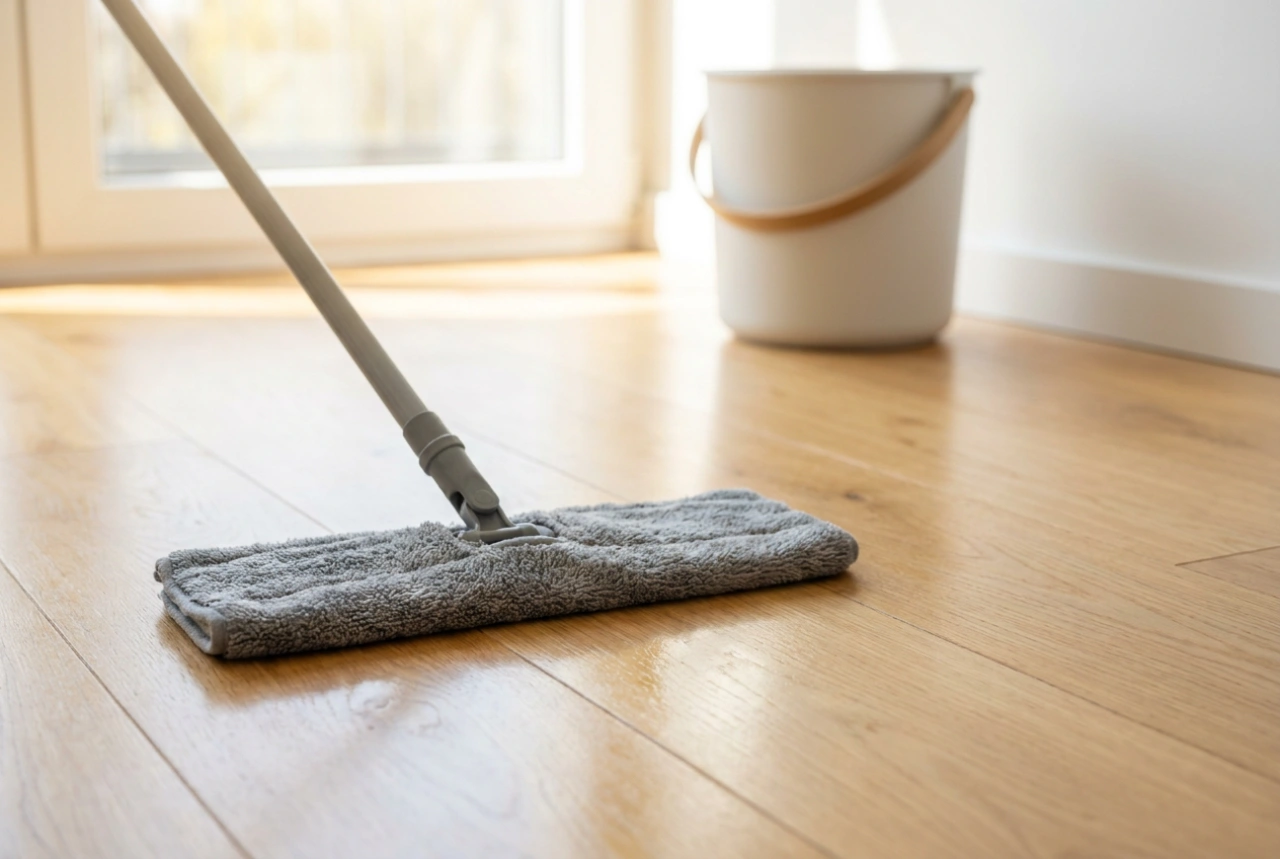
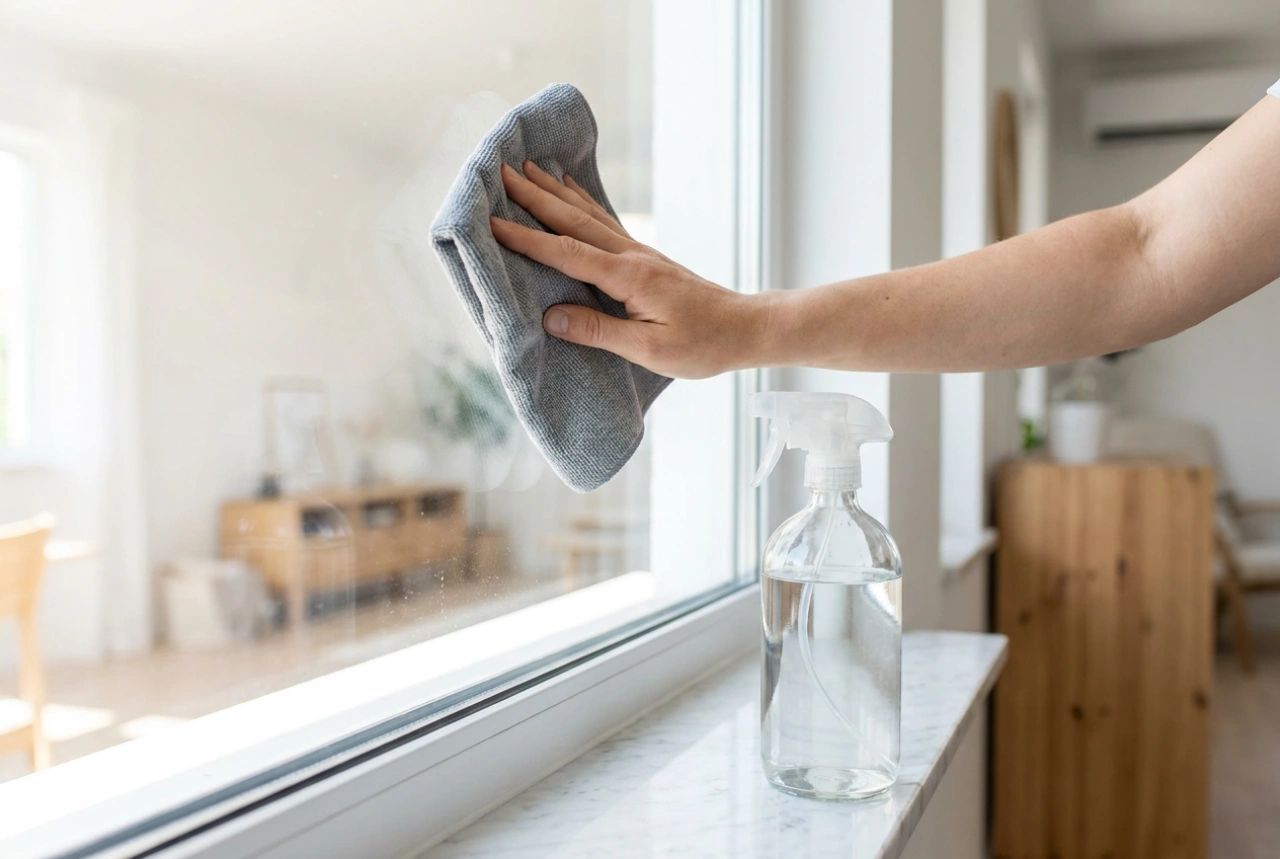
For a truly residue-free clean, use flat microfibre pads. Microfibre is composed of polyester and polyamide fibres split to a fraction of the width of a human hair. This structure creates millions of tiny hooks that physically trap dirt and absorb moisture via capillary action. Dampen the pad slightly with the cleaning solution—never soak it. The goal is to apply a micro-layer of liquid that dissolves surface grime and is instantly absorbed back into the dry channels of the microfibre cloth as you glide it across the floor.
Step-by-Step Technique for Streak-Free Success
First, thoroughly vacuum or sweep the floor to remove dry particulate matter; wiping a wet cloth over loose dust creates an abrasive paste that dulls the finish. Spray the homemade solution sparingly onto the floor or directly onto the microfibre pad. Work in a consistent "S" pattern, pulling the dirty edge of the mop backward so you do not re-contaminate clean areas. For high-shine finishes like polished porcelain or high-gloss laminate, follow immediately with a dry microfibre cloth to guarantee a flawless finish.