

A burnt iron soleplate reduces glide, stains delicate fabrics, and can permanently ruin garments if not addressed. Restoring the smooth surface requires understanding the chemical nature of the residue and the material properties of your iron’s soleplate.
Understanding the Burnt Residue: Chemistry and Materials
The dark, sticky buildup on an iron plate typically consists of carbonised organic matter, such as burnt starch from laundry sprays, or melted synthetic polymers from polyester and nylon fabrics. When heated beyond their thermal tolerance, these materials undergo pyrolysis, bonding tightly to the metal or ceramic surface of the soleplate.
Iron soleplates generally fall into three categories: stainless steel, ceramic, and non-stick fluoropolymer coatings. Stainless steel is highly durable but prone to micro-scratches if harsh abrasives are used. Ceramic and non-stick coatings are extremely sensitive; any scratches compromise their glide and lead to faster buildup in the future. Therefore, the cleaning strategy must rely on chemical softening and gentle mechanical action rather than aggressive scraping.
The Acetic Acid Method: Dissolving Carbon and Minerals
For light to moderate scorch marks and mineral scaling, diluted acetic acid (white vinegar) is highly effective. Acetic acid reacts with mineral deposits (calcium carbonate) and softens scorched starch residues by breaking down their polymer chains.
- Preparation: Ensure the iron is completely cool, unplugged, and the water reservoir is empty.
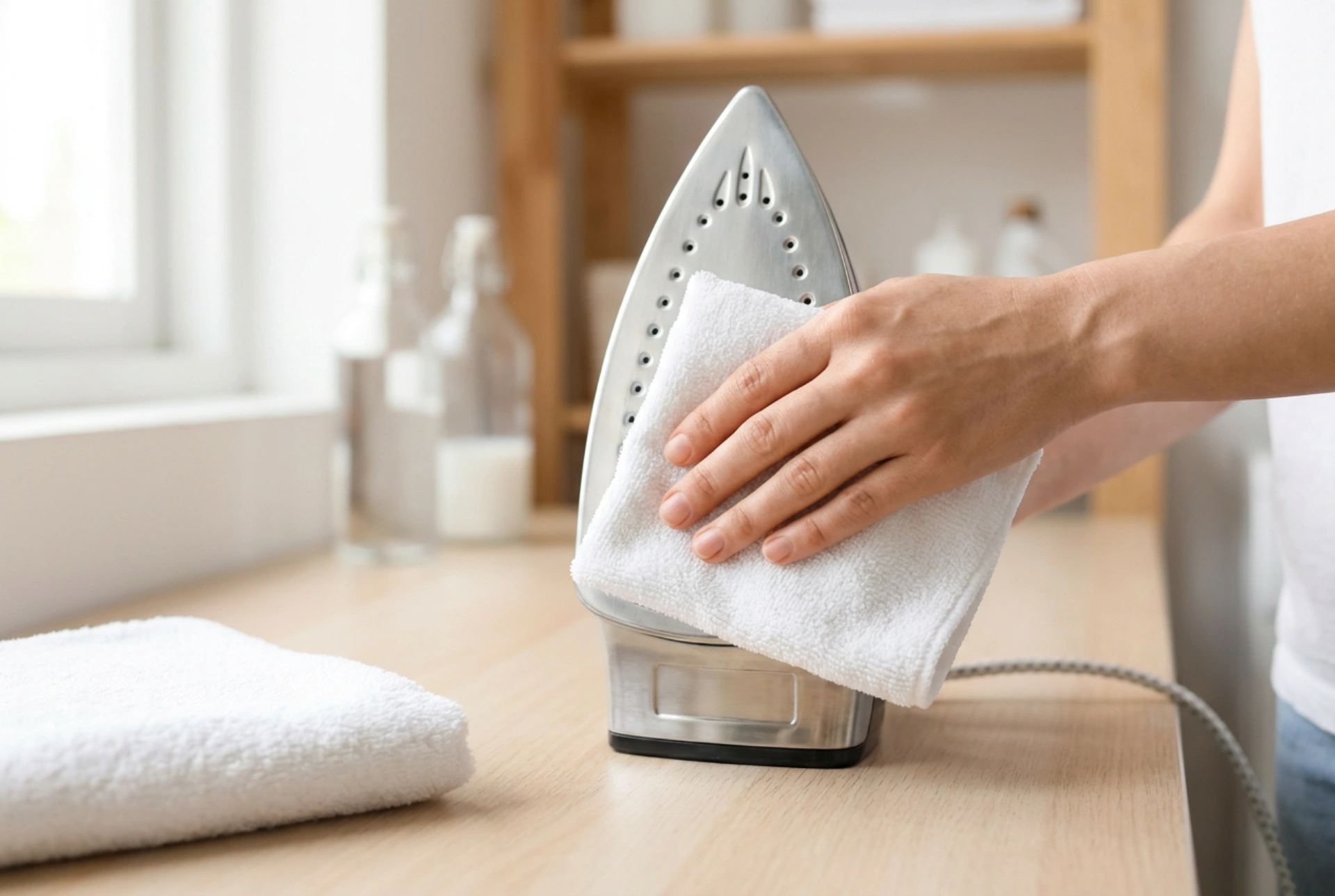
- Application: Mix equal parts of water and white vinegar. Soak a soft microfiber cloth in the solution and wring it out so it is damp but not dripping.
- Action: Place the damp cloth flat on an ironing board and rest the cool soleplate on top of it for 15 to 30 minutes. This allows the acid to penetrate and loosen the molecular bonds of the residue.
- Wiping: Lift the iron and wipe the plate with a clean, damp cloth. For stubborn spots in steam vents, dip a cotton bud into the solution and gently clean the openings.
The Sodium Bicarbonate Paste: Mild, Safe Abrasion
When burnt-on synthetic fibres or heavy carbonisation will not budge with acid alone, sodium bicarbonate (baking soda) provides a safe, low-hardness abrasive. Because sodium bicarbonate crystals dissolve slightly in water, they create a paste that polishes away residue without scratching delicate ceramic or stainless steel coatings.
Step-by-Step Application:
Mix two parts sodium bicarbonate with one part water to form a thick, spreadable paste. Ensure the iron is completely cold. Using a soft microfiber cloth, apply the paste directly to the stained areas. Work in small, gentle circular motions. Avoid pressing too hard, allowing the mild abrasive structure of the bicarbonate to shear the residue from the surface. Wipe the plate clean with a damp, fresh cloth to remove all powder residues, ensuring none remain in the steam holes.
The Thermal-Mechanical Peel for Melted Synthetics
If synthetic fabric has melted directly onto the soleplate, trying to scrape it off cold can peel away the iron's protective coating. Instead, utilising heat to soften the polymer is the most effective approach.
- Heat adjustment: Plug in the iron and set it to a low temperature (the silk or synthetic setting). This warms the polymer past its glass transition temperature without burning it further.
- Friction transfer: Once the residue softens and becomes pliable, run the iron firmly over a thick, dry cotton towel or a piece of brown paper. The friction and the textured surface of the cotton will pull the softened synthetic material off the metal.
- Safety note: Never use metal scrapers, steel wool, or abrasive scouring pads, as these create micro-grooves that trap future residues and ruin the heat distribution of the soleplate.