

When faced with a slow-draining sink or a complete blockage, choosing between a liquid chemical drain opener and a mechanical tool determines not only the success of the clearance but also the long-term integrity of your pipes. Understanding the chemical and physical mechanisms behind both methods allows you to clear blockages safely without causing costly structural damage to your home.
The Chemistry of Liquid Drain Cleaners: Saponification and Heat
Chemical drain cleaners generally fall into two categories: alkaline and acidic. The most common household formulations rely on sodium hydroxide or potassium hydroxide. These highly alkaline compounds work through a chemical process called saponification. When the basic solution contacts fats, oils, and grease trapped in the waste trap, it converts these lipids into water-soluble soap and glycerol. Concurrently, the chemical breaks down the peptide bonds in proteins, such as hair, through alkaline hydrolysis, dissolving the structural integrity of the organic clog.
This chemical reaction is highly exothermic, meaning it releases a significant amount of heat. While the elevated temperature helps melt solidified fats, it poses a direct risk to your plumbing. Excessive heat can soften or warp thin-walled PVC pipes and weaken the cement holding joints together. Furthermore, if the chemical fails to clear the obstruction, you are left with a highly corrosive, standing pool of caustic water, which complicates subsequent mechanical extraction efforts and poses a severe risk of chemical burns during handling.
The Physics of Mechanical Cleaning: Shear Stress and Displacement
Mechanical drain cleaning relies on physical force, kinetic energy, and friction to break apart or retrieve blockages. The primary tools used are plungers, hand-cranked drain snakes, and drain brushes. Unlike chemicals, mechanical methods do not alter the molecular structure of the clog; instead, they overcome its shear strength to physically displace it.
- The Plunger: This tool utilizes alternating positive and negative pressure. Pushing down creates high hydraulic pressure that forces the clog forward, while pulling up creates a vacuum that breaks the seal of the blockage, pulling it apart.
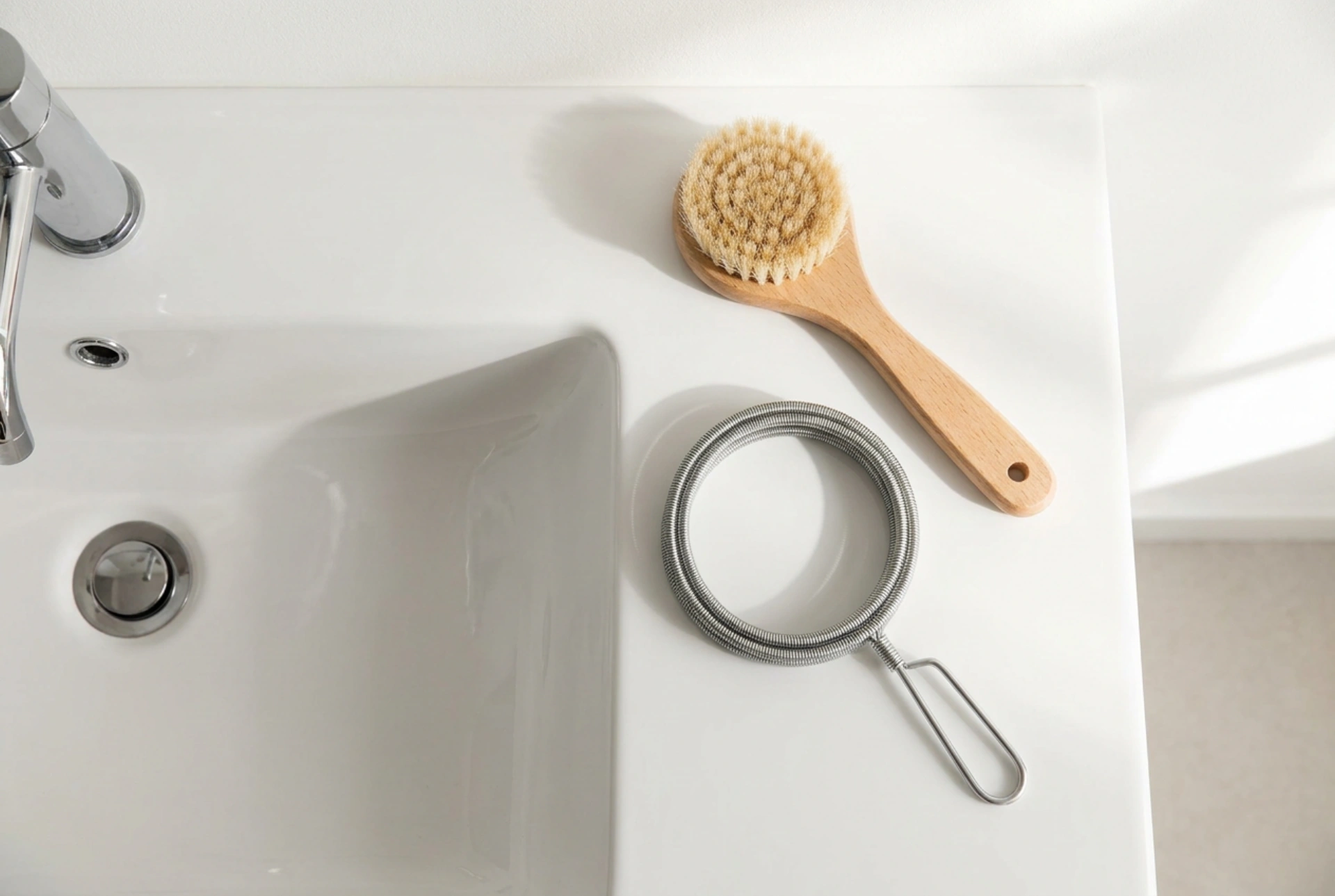
- The Drain Snake: A flexible, coiled metal wire fed directly into the pipe. Rotating the snake allows the corkscrew tip to hook onto hair clumps, wet wipes, or fibrous debris, pulling them out physically. It can also bore a hole through solid blockages like grease or mineral scale.
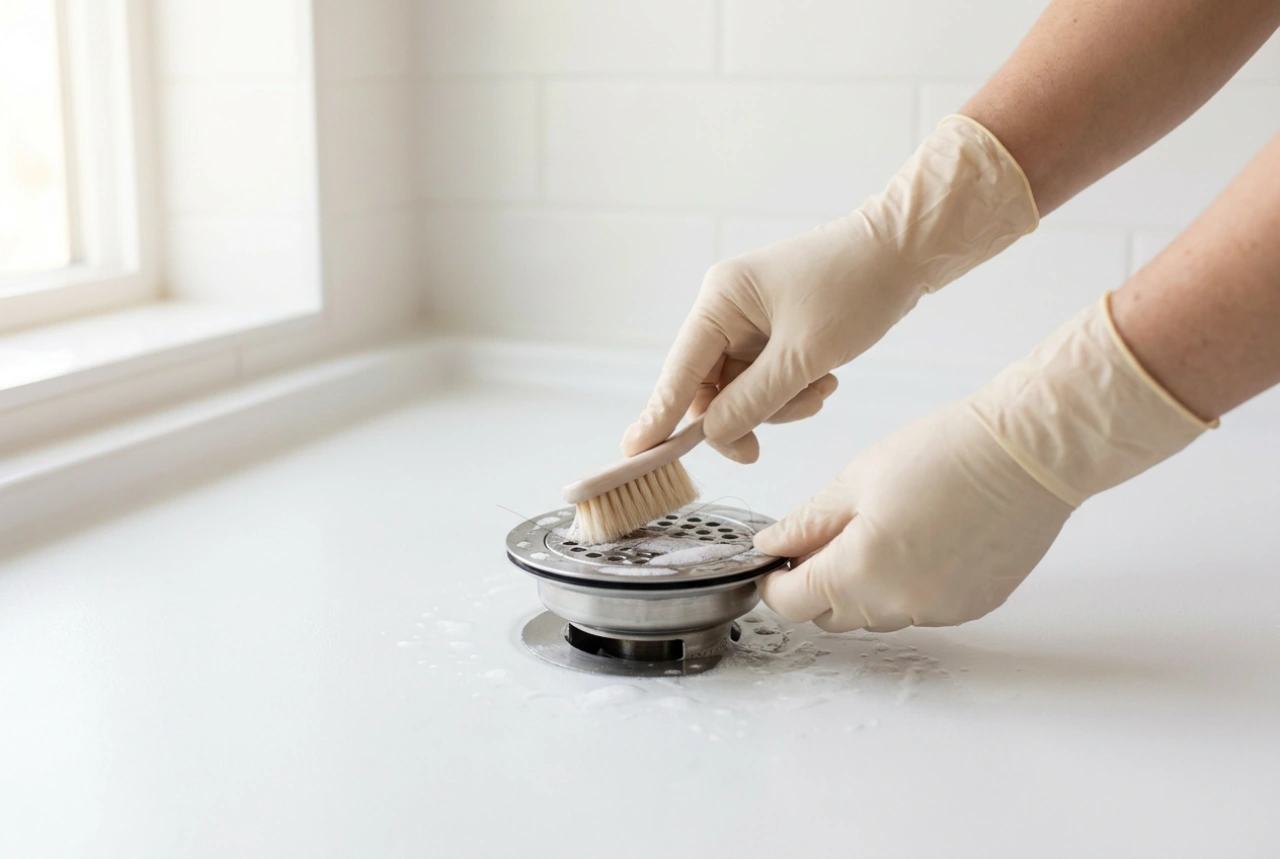
- The Drain Brush: Ideal for localized, shallow maintenance, scraping buildup from the internal walls of the pop-up waste assembly.
Material Compatibility and Pipe Integrity
A major distinction between the two approaches lies in how they interact with different pipe materials. Old cast iron pipes are highly susceptible to corrosion from acidic drain cleaners, which often contain sulfuric acid. The acid reacts with the metal, gradually thinning the pipe walls. Copper pipes can also degrade over time when exposed to harsh chemical environments. Mechanical tools, when used with proper technique, exert localized force only on the clog. A flexible snake glides along the smooth interior walls of metal or modern PVC pipes without damaging them, provided you do not force the tool violently around tight bends or junctions.
Order of Operations: Best Practices for Household Blockages
To maintain your drainage system efficiently, always employ a strict order of operations starting with the least invasive physical method. First, attempt to clear shallow debris using a simple drain brush or manual extraction. If the clog is deeper, use a plunger to break the seal. Only progress to a mechanical drain snake if the plunger fails to dislodge the obstruction. Chemical agents should be treated as a last resort, used only in partial blockages where water is still flowing slowly, ensuring the chemical does not become trapped in a dead-end pipe where it can generate localized heat and corrode materials. If you must use a chemical cleaner, thoroughly flush the system with cold water afterward to dissipate any residual heat and dilute the chemical agents.