

Transforming domestic clutter into a structured, highly functional system relies on understanding the material properties and spatial geometry of your storage vessels. Utilizing plastic containers effectively is not merely about hiding items away, but about matching the chemical and physical attributes of the plastic to the specific environmental demands of your home's microclimates.
Understanding Polymer Science in Domestic Storage
To establish a durable organization system, you must select the appropriate polymer for each specific domestic zone. Not all plastics behave the same way under varying thermal, mechanical, and chemical conditions. The most common plastics used in household storage are polypropylene (PP) and polyethylene terephthalate (PET), each offering distinct material advantages.
Polypropylene (PP), designated by resin identification code 5, is highly robust, semi-flexible, and chemically inert. It possesses a high melting point (around 160 degrees Celsius), making it resistant to thermal warping and safe for hot-water washing. PP is highly resistant to moisture vapor transmission, making it the ideal choice for high-humidity environments such as bathrooms, garages, and under-sink cabinets where contact with cleaning chemicals is likely.
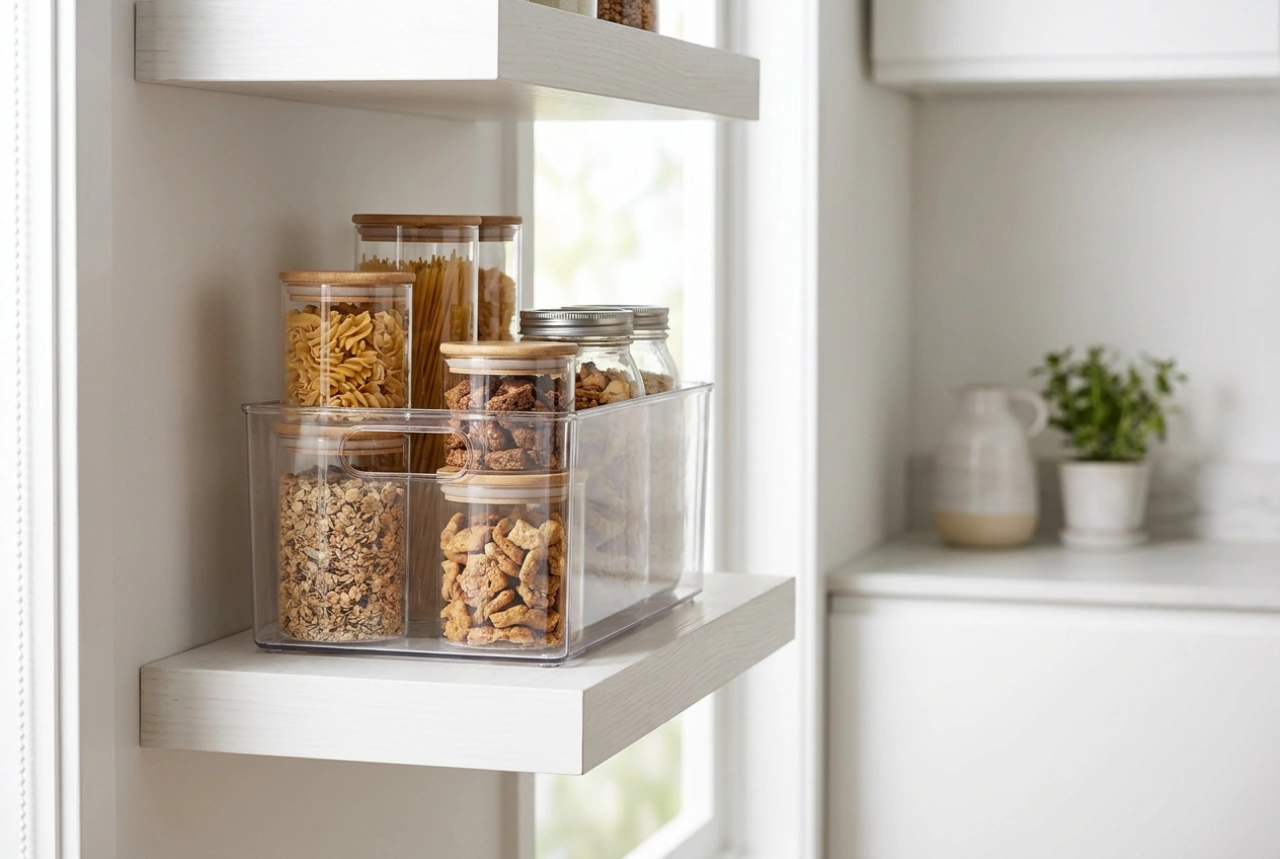
Polyethylene Terephthalate (PET), designated by resin code 1, is prized for its glass-like optical clarity. This transparency makes it perfect for kitchen pantries where instant visual inventory is required. However, PET is more brittle than PP and has a lower glass transition temperature. Subjecting PET containers to high-temperature dishwasher cycles can cause permanent warping and stress cracking. Therefore, reserve PET for ambient, low-stress environments and clean them manually with tepid water.
Maximising Volumetric Efficiency: The Physics of Shape
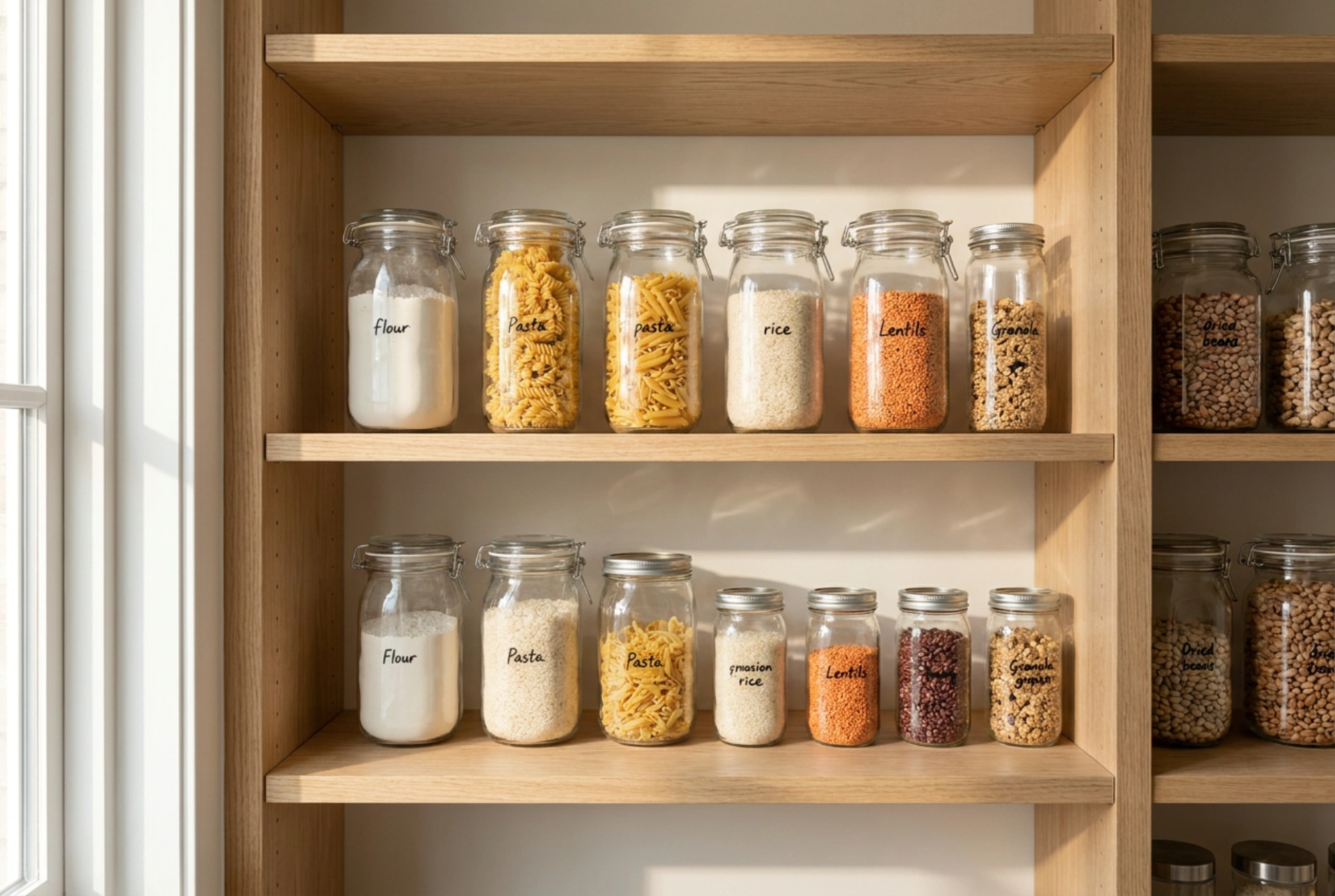
The geometry of your storage containers directly dictates the spatial efficiency of your shelving. While round jars and tubs are aesthetically appealing, they are highly inefficient from a space-utilization perspective. According to circle-packing physics, organizing with cylindrical containers results in approximately a 21 percent loss of usable shelf volume due to the unavoidable interstitial gaps between the curves.
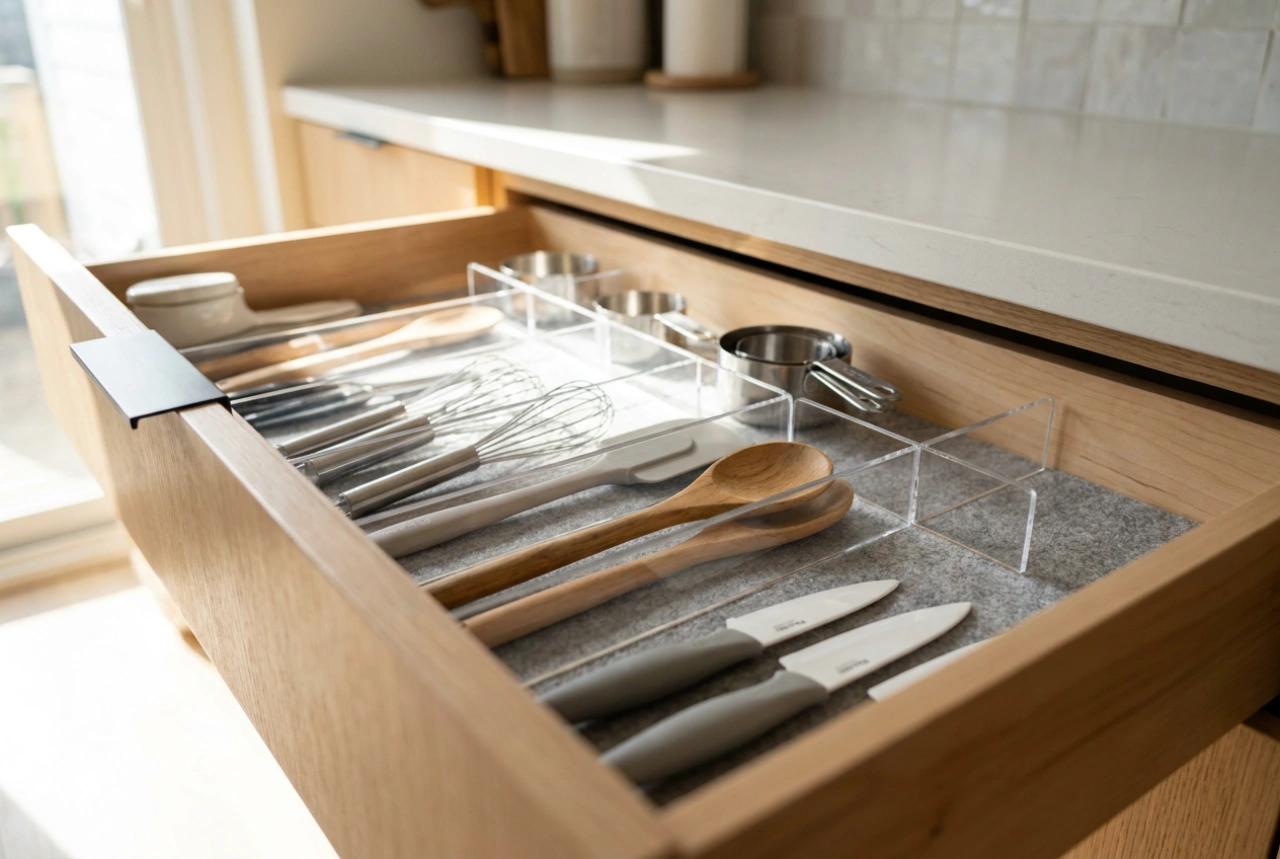
To optimize your spatial footprint, adopt rectangular or square modular containers. These shapes align seamlessly with the flat planes of cabinets and drawers, utilizing the entire depth and width of the shelf. Modular systems are engineered to nest and stack securely. When stacking, place heavier, denser items at the bottom of the column to maintain a low center of gravity. Ensure the bottom container is constructed of thick-walled polypropylene to withstand the cumulative compressive load of the stack without buckling or warping over time.
Managing Microclimates: Hermetic Seals and Ventilation
Effective storage is as much about preservation as it is about tidiness. Different household items require completely different atmospheric conditions to prevent degradation, mold, or pest infestations. You must categorize your storage needs based on whether they require hermetic sealing or ventilation.
- Airtight Storage: Dry kitchen goods like flour, sugar, cereals, and pet food are highly hygroscopic, meaning they readily absorb moisture from the air. Ingress of humidity leads to clumping, loss of crispness, and the acceleration of mold growth. For these items, select containers equipped with flexible silicone gaskets and locking latches. The gasket acts as a mechanical barrier, compressing to exclude air and preventing the entry of common pantry pests like weevils.
- Ventilated Storage: Conversely, organic materials, damp textiles, or footwear require airflow. Storing slightly damp items in an airtight plastic bin traps moisture, creating a high-humidity microclimate that fosters fungal spores (mildew). For closets, laundry rooms, or utility spaces, choose perforated plastic baskets or containers with ventilated lids to facilitate constant air exchange and evaporation.
Practical Implementation: Decanting and Decisive Zoning
The true utility of plastic containers is realized when you apply systemic zoning and decanting rules. Decanting—transferring goods from their original commercial packaging into uniform containers—removes visual noise and allows you to instantly gauge supply levels. When decanting dry food or laundry powders, always clean and thoroughly dry the container before refilling to prevent the build-up of rancid oils or stale residues at the bottom. Implement a strict "First In, First Out" (FIFO) rotation by placing newly purchased goods at the back and older stock near the front.
For non-food items, apply the proximity-of-use principle. Group items by activity (e.g., shoe care, seasonal decor, spare batteries) and place them in labeled, opaque PP boxes if they are visually distracting, or clear boxes if quick identification is necessary. Use adhesive labels or chalk markers directly on the smooth plastic surfaces to maintain an adaptable, clear labeling system that can be easily updated when the contents of the container change.