

Maintaining a pristine white hallway wardrobe requires understanding how dirt transfers onto light surfaces and implementing material-safe cleaning techniques. By managing physical contact and chemical residues, you can preserve both the structural order and the bright aesthetic of your storage.
The Science of White Surfaces and Soil Visibility
White laminate, lacquer, and painted wood possess high light reflectance, meaning any dark particulate matter, oils, or scuff marks create a high-contrast visual disruption. In a busy hallway, this wardrobe serves as the primary barrier against outdoor contaminants. Shoes carry abrasive silica dust and asphalt particulates, while wet coats transfer moisture and atmospheric pollutants. When these substances come into contact with a white surface, they can bond mechanically or chemically. Understanding this interaction is key: rough surfaces hold grime more easily because microscopic valleys trap dirt, whereas smooth, non-porous surfaces allow for easier removal but are highly susceptible to visible scratching. Therefore, maintaining order is not just about placement, but about preserving the physical integrity of the wardrobe’s finish.
Cleaning Chemistry: Lifting Grime Safely
To clean a white wardrobe without stripping its protective coating or leaving yellow residues, use the correct chemical agents. Avoid harsh alkaline cleaners, chlorine-based bleach, or abrasive scouring powders, which degrade polymers and cause yellowing. Instead, rely on non-ionic surfactants. These molecules lower the surface tension of water, allowing it to emulsify oils from fingerprints and outdoor grease.
- The Microfiber Advantage: Use clean, split microfiber cloths. The microscopic wedge-shaped polyester and polyamide fibres physically lift and trap dust using capillary action and weak electrostatic forces, rather than pushing dirt across the surface, which causes micro-scratches.
- Eliminating Scuff Marks: For stubborn rubber scuffs from bags, use a damp melamine foam pad. Melamine foam acts as an incredibly fine physical abrasive when lubricated with water. Apply minimal pressure in a circular motion to lift the transfer material without dulling the underlying finish.
- Preventing Static: Wiping dry surfaces creates static electricity, which actively attracts dust. Always use a damp cloth, or apply a highly diluted anti-static solution to neutralise the surface charge.
Zonal Barriers and Dye Transfer Prevention
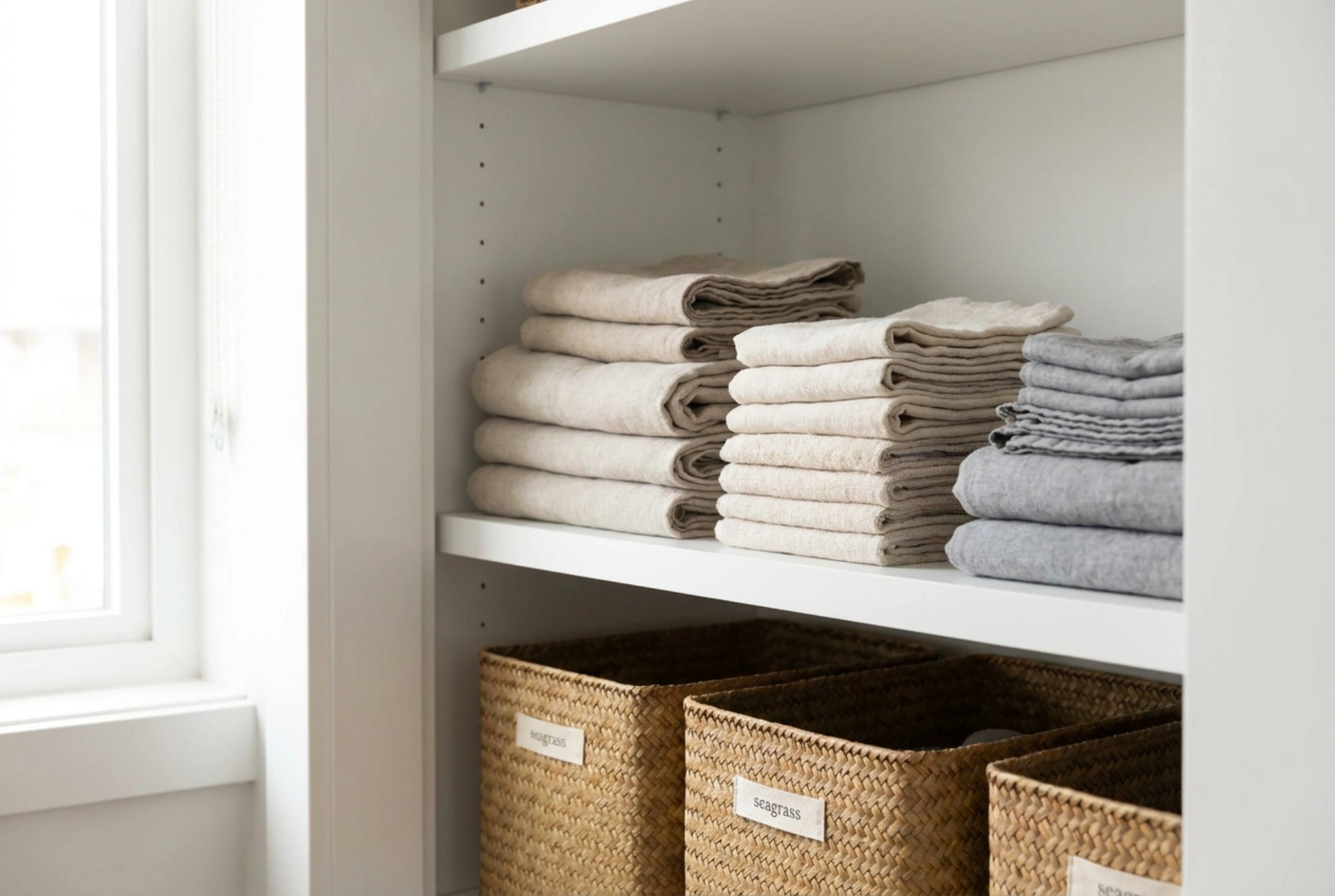
A common issue in white wardrobes is dye transfer (crocking) from wet textiles (like winter coats or damp umbrellas) onto light paint or laminate. To prevent this, establish strict physical barriers. Divide the wardrobe into functional zones. Use breathable, non-dyed storage containers, such as canvas boxes or undyed felt baskets, to store accessories. Never place wet footwear directly onto white shelves. Install heavy-duty polypropylene boot trays at the base. Polypropylene is chemically inert and highly resistant to moisture, road salt, and dirt, making it the perfect barrier to protect the sensitive laminate underneath.
Moisture Management and Airflow Dynamics
Hallway wardrobes are exposed to high humidity from wet outerwear. If moisture is trapped, it can cause wood swelling, joint failure, and mould growth, which leaves dark stains on white surfaces. Ensure adequate airflow by leaving a small gap (at least 2-3 centimetres) between the wardrobe and the wall. Inside, avoid packing items too tightly to allow air to move freely. If storing damp coats, leave the doors slightly ajar, or place a passive moisture absorber containing calcium chloride crystals on a middle shelf to capture excess humidity.
A Systematic Maintenance Protocol
To keep the wardrobe orderly and clean, follow a strict top-down cleaning sequence. Start by clearing the top shelves and vacuuming away loose dust using a soft brush attachment to prevent scratching. Work your way down to the lower compartments, wiping surfaces with a damp microfiber cloth and immediately drying them with a second, dry cloth to prevent water spots. Rotate your seasonal gear twice a year, ensuring that off-season items are stored in sealed, breathable garment bags. By establishing this systematic order of operations, you protect the delicate white surfaces from cumulative wear and preserve a clean, organized entryway.