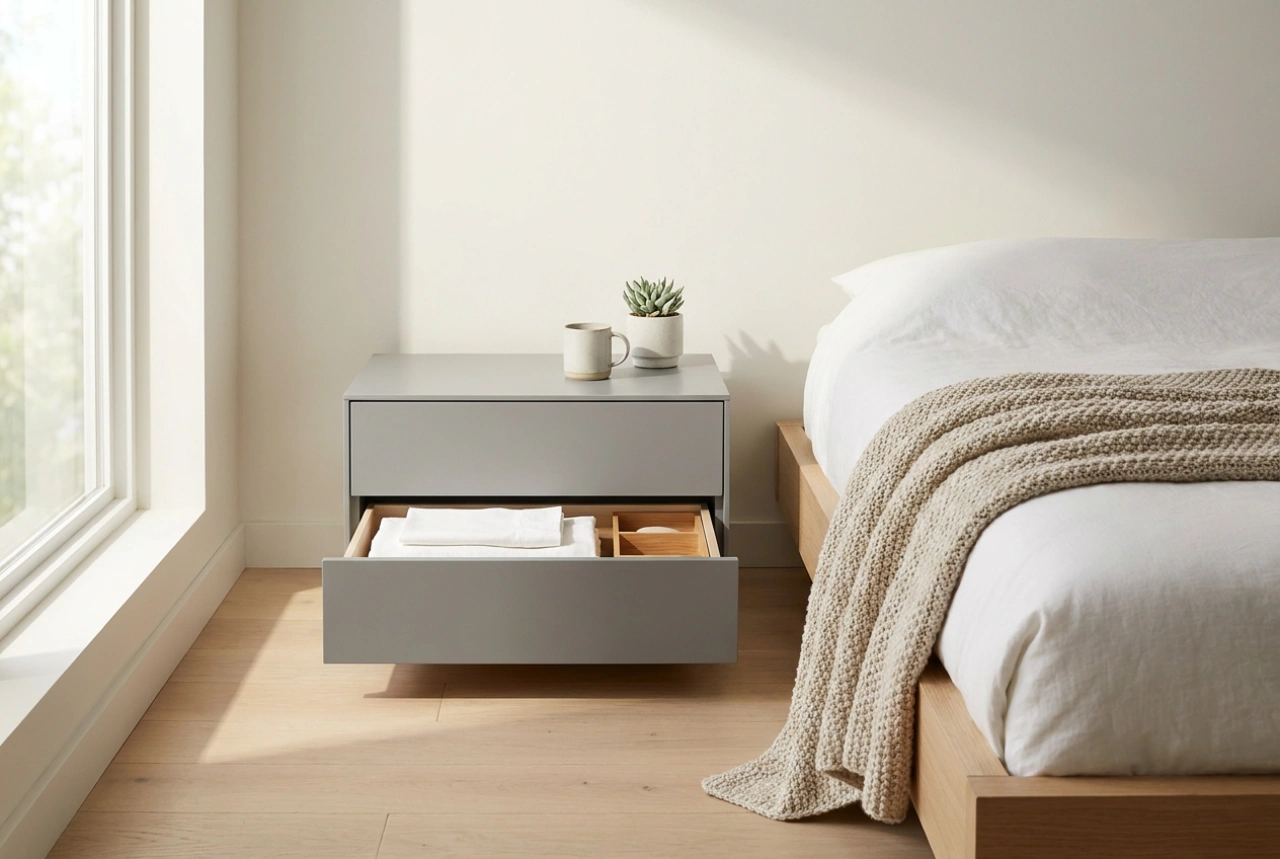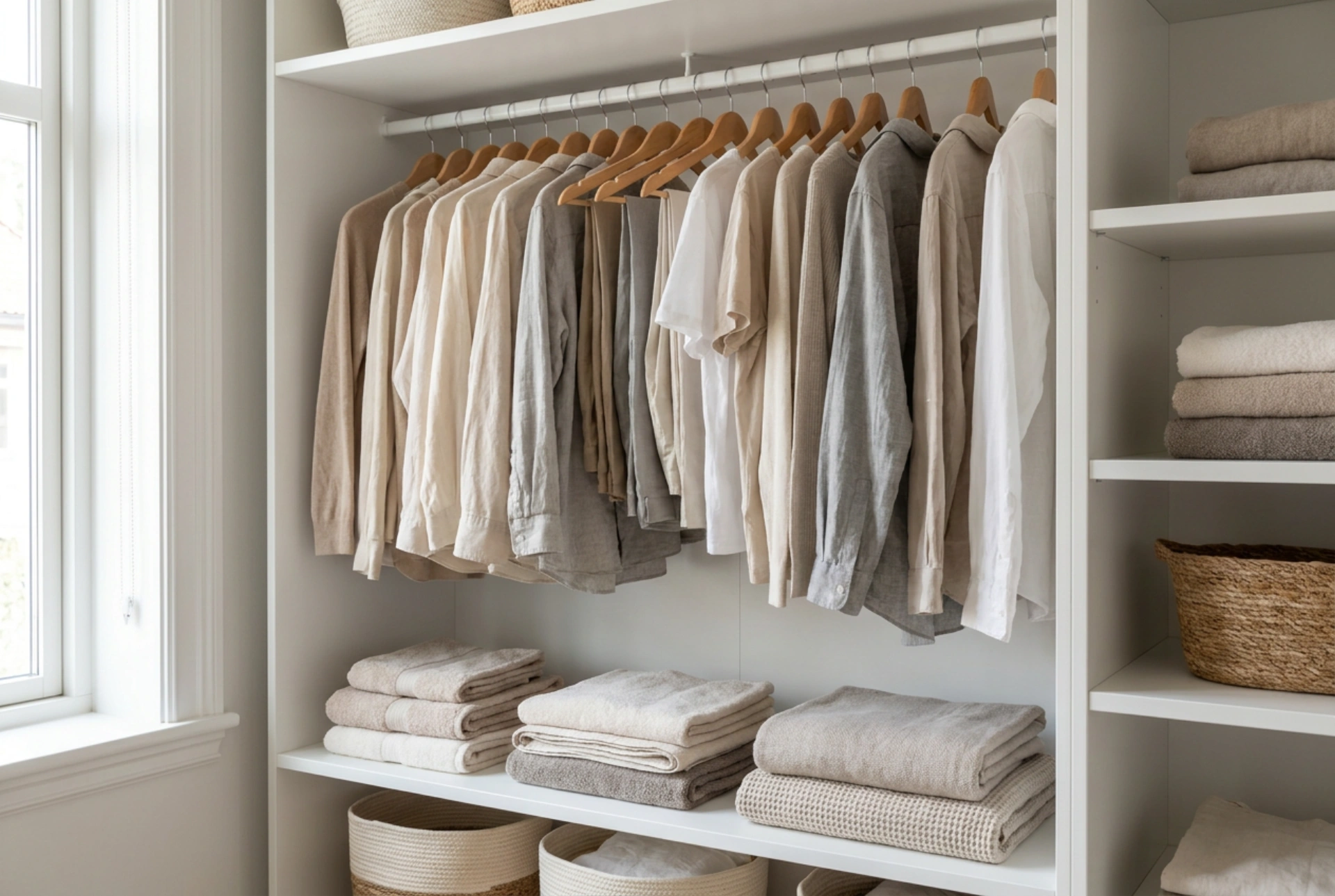


A white bedroom wardrobe offers a clean, minimalist aesthetic, but maintaining visual harmony requires aligning its external design with a highly structured internal organization system.
The Physics of Light and Visual Volume
White furniture is highly valued in interior design because of its high light reflectance value (LRV), often reflecting over 80% of visible light. This optical characteristic makes bedrooms feel larger and more serene. However, this effect is easily disrupted when the wardrobe doors are opened to reveal a chaotic, dark, and cluttered interior. High contrast between the bright exterior and a disorganized interior creates visual noise that induces cognitive fatigue.
To preserve the light-enhancing benefits of a white wardrobe, the interior should utilize light-colored shelving and drawers. This maintains a consistent LRV throughout the piece, ensuring that light penetrates even the deepest corners of the cabinet. Utilizing integrated LED strip lighting with a neutral color temperature (around 4000 Kelvin) further eliminates shadows, making every item visible without disrupting the peaceful ambiance of the bedroom.
Ergonomics and the Three-Zone Storage System
To prevent chaos, a wardrobe must be planned according to the physical ergonomics of human movement. Dividing the vertical space into three distinct zones optimizes access times and minimizes the physical effort required to maintain order:
- The Active Zone (Eye to Waist Level): This is the most accessible area, reserved for items worn daily. Hanging rails for shirts, blouses, and trousers should be positioned here to allow quick retrieval and replacement without bending or stretching.
- The Passive Low Zone (Waist Level to Floor): Ideal for drawers and pull-out baskets. Storing heavier items like knitwear and denim here utilizes the gravity-assisted viewing angle when pulling out a drawer, making it easy to scan inventory from above.
- The Passive High Zone (Above Eye Level): Reserved for seasonal storage, spare bedding, and infrequently used items. Because accessing this area requires reaching or using a step stool, items should be packed in sealed, breathable containers to protect them from dust.
Microclimate Control and Material Preservation
Closed wardrobes, particularly those constructed from medium-density fibreboard (MDF) or particleboard with a white laminate finish, can trap moisture and restrict airflow. Without proper ventilation, stagnant air can lead to musty odors and even mold growth, which damages delicate natural fibers like wool, silk, and cotton.
To maintain a healthy microclimate, never pack shelves to maximum capacity; leave at least a two-centimeter gap between the back wall and your clothing to facilitate natural convection. Furthermore, the choice of hangers plays a crucial role in fabric preservation. Wooden hangers provide structural support that preserves the shoulder shape of heavy garments, whereas thin metal wire hangers can distort fibers over time due to localized pressure. For delicate fabrics, velvet-flocked hangers prevent slipping without causing friction-induced wear.
The Science of Folding: Minimizing Creases and Maximizing Space
Traditional horizontal stacking forces the weight of the entire pile onto the bottom garments, compressing the fibers and creating deep creases that require ironing. Instead, adopt a vertical or "file" folding method. By folding garments into self-standing rectangular packets and placing them upright in drawers, you eliminate gravitational pressure on the fabric.
This method ensures that every item is visible at a single glance, preventing the disruption that occurs when pulling a garment from the bottom of a traditional stack. Grouping items by weight and then color-blocking them from light to dark creates a smooth visual transition that complements the clean, white exterior of your wardrobe.