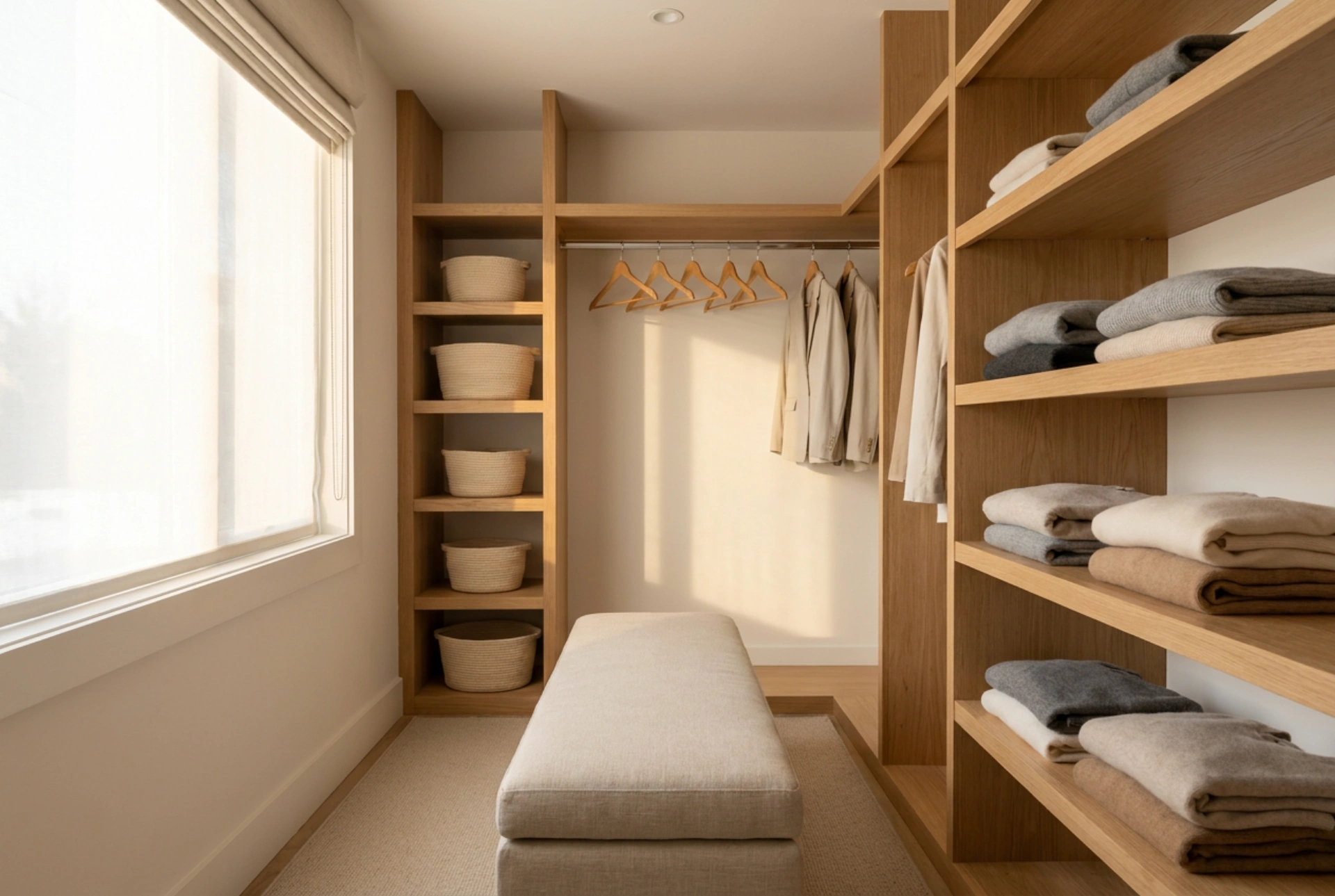


Integrating a dedicated seating area into your wardrobe or walk-in closet transforms a simple storage space into a highly functional, ergonomic dressing zone. Achieving daily comfort relies on precise physical dimensions, load-bearing mechanics, and material science rather than pure aesthetics.
The Biomechanics of Closet Seating: Key Dimensions
The primary function of a wardrobe seat is to facilitate physical transitions, such as putting on footwear, trousers, or socks. For these movements to occur without putting unnecessary strain on the lumbar spine or knee joints, the seat height must align with standard ergonomic guidelines. An optimal bench height ranges between 400 mm and 450 mm from the finished floor level. This range keeps the thighs parallel to the floor or slightly angled, reducing pressure on the lower back when leaning forward.
Depth is equally critical. A seat that is too shallow fails to support the thighs, while an excessively deep bench forces you to lean back, making it harder to reach down. Aim for a depth between 450 mm and 500 mm. Additionally, you must calculate the clearance zone around the seating. To allow a person to sit, bend, and pull their feet backward comfortably, leave at least 900 mm to 1000 mm of open floor space directly in front of the bench. If the seat faces low-level drawers, increase this clearance to 1200 mm to ensure the drawers can extend fully without obstructing your legs.
Material Science: Durability and Friction Resistance
Because closet seating experiences frequent friction, pressure, and potential contact with metal hardware like zippers, buttons, and shoe eyelets, fabric selection is paramount. When choosing upholstery, consult the Martindale rub test rating, which measures a fabric's durability under continuous friction. For daily residential use, select textiles with a Martindale rating of at least 30,000 rubs.
- Tight-Weave Synthetics: Polyester and nylon microfibres offer high tensile strength and natural resistance to tearing and pilling. They are easy to spot-clean if shoe polish or cosmetics transfer onto the seat.
- Durable Natural Fibres: Heavyweight flat-woven wool or linen-look blends provide excellent thermal comfort but should be treated with a non-toxic stain repellent to prevent liquid absorption.
- Foam Density: The internal cushioning determines how well the seat retains its shape over time. Avoid low-density polyether foams that sag within months. Instead, specify high-resiliency polyurethane foam with a density rating of 35 to 45 kg/m³, which offers immediate rebound and firm support.
Under-Seat Storage: Mechanics and Air Circulation
In a well-planned wardrobe, the space beneath the seating area should never go to waste. However, incorporating storage here requires careful planning of air exchange and drawer mechanics. If you use this area for footwear, open-front cubbies or slatted shelves are superior to closed drawers. They allow ambient air to circulate freely around the shoes, preventing moisture buildup and subsequent fungal or bacterial growth.
If you prefer a cleaner, closed look, use full-extension drawer runners equipped with soft-close mechanisms. These hardware components allow you to access the very back of the drawer without bending uncomfortably. Ensure the drawer front features integrated finger pulls or J-pull profiles rather than protruding metal handles, which can catch on your clothing or cause bruising when you stand up or sit down.
Illumination and Color Rendering
Proper lighting around the seating area is essential for evaluating clothing colours accurately and coordinating outfits. Avoid placing a single, intense spotlight directly above the seat, as this casts harsh downward shadows on your face and clothes. Instead, utilise diffused linear LED profiles installed vertically alongside the mirrors or integrated into the adjacent shelving units.
For accurate colour assessment, choose light sources with a High Colour Rendering Index (CRI) of 90 or above. This ensures that navy, black, and charcoal fabrics are easily distinguishable under artificial light. Maintain a neutral colour temperature of around 3000K to 4000K to simulate natural daylight without making the space feel cold or sterile.