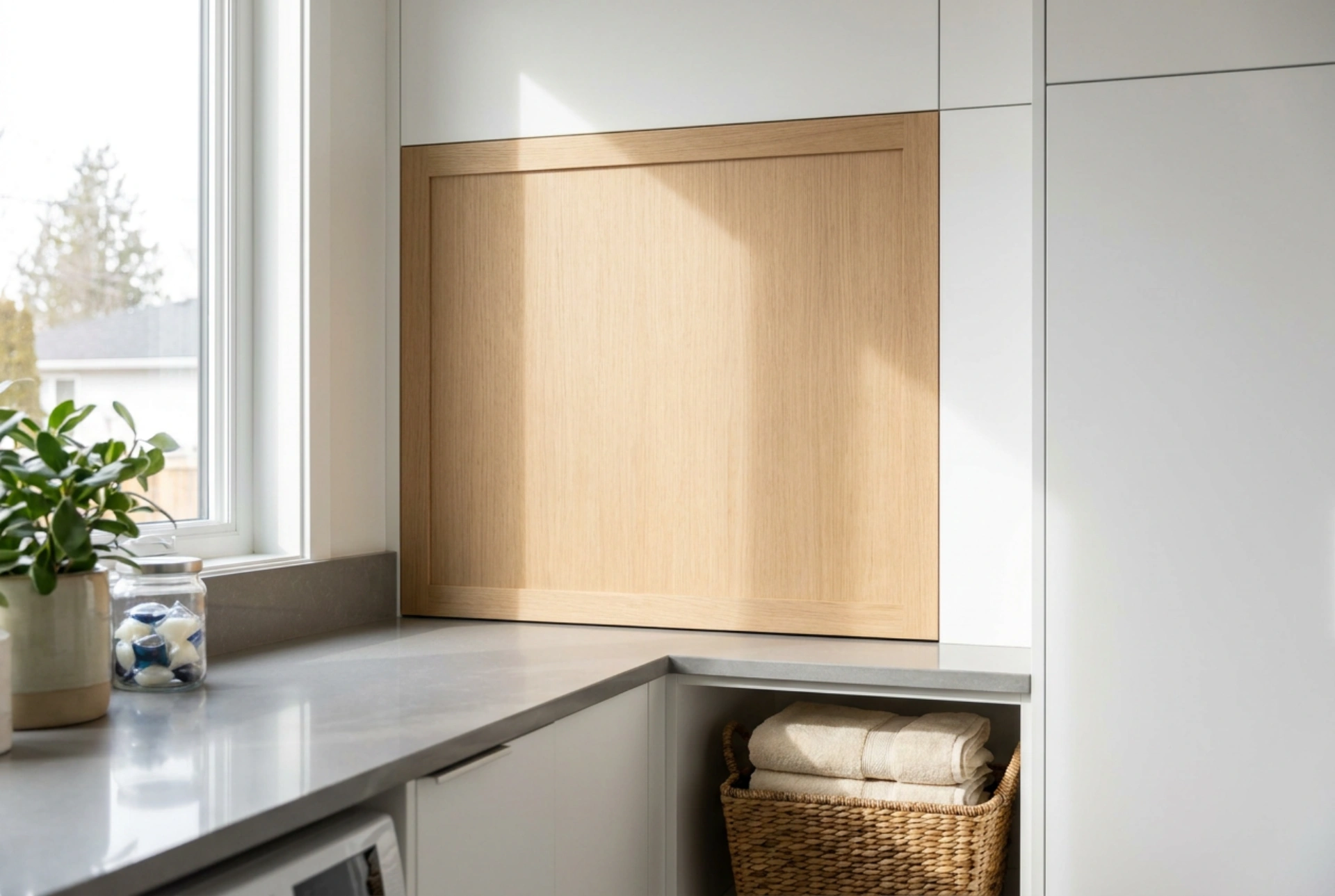


Integrating a washer-dryer into custom cabinetry creates a seamless aesthetic, but enclosing a high-heat, high-vibration appliance presents distinct thermodynamic and mechanical challenges. Successful installation requires understanding the physical forces of condensation, kinetic energy, and airflow dynamics to ensure both efficiency and appliance longevity.
Thermal Management and Airflow Dynamics
Unlike standalone units that freely dissipate heat into the surrounding room, an integrated washer-dryer operates within a restricted thermal envelope. Most modern built-in washer-dryers use condensation drying technology. This process relies on a temperature gradient: hot, moisture-laden air from the drum must pass over a cold condenser surface where the water vapor liquefies and is pumped away.
If the cabinet lacks sufficient ventilation, the ambient temperature within the enclosure rises rapidly. This minimizes the temperature difference between the hot drum air and the condenser, severely degrading the appliance's drying efficiency. To prevent this thermodynamic bottleneck, ensure a minimum clearance of 10 to 15 millimeters on all sides, and incorporate ventilation grilles in the cabinet plinth and countertop. This allows cooler air to enter from the bottom and warm air to escape from the top, maintaining the necessary temperature gradient for optimal condensation.
Mitigating Kinetic Energy and Vibrations
During the spin cycle, rotational speeds can reach up to 1400 revolutions per minute, generating significant kinetic energy. In a free-standing setup, this energy dissipates harmlessly into the surrounding air and floor. In a built-in configuration, however, physical contact between the vibrating appliance and the rigid wooden carcass of the cabinet can transmit harmonic resonance throughout the entire furniture structure, causing noise, joint fatigue, and structural damage.
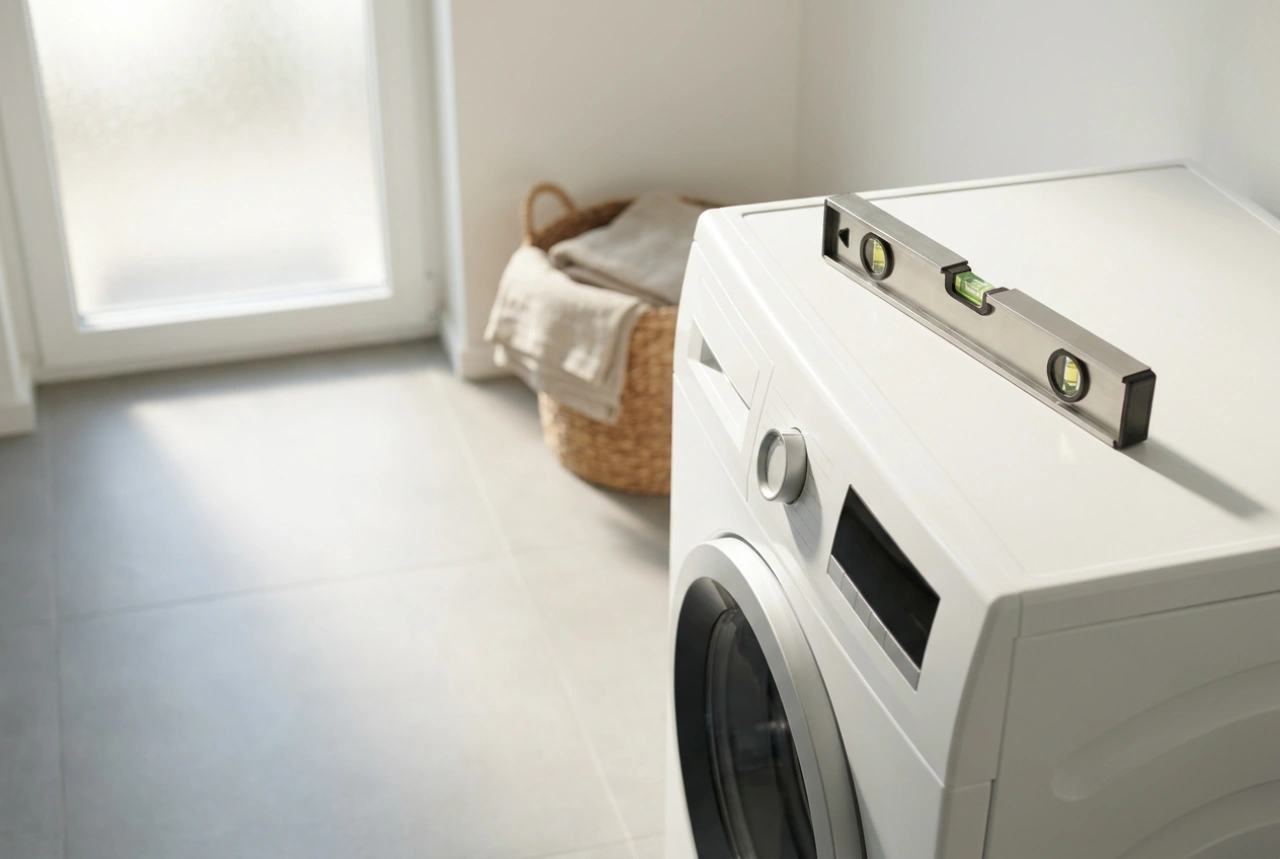
To counteract these forces, the appliance must be perfectly leveled on a solid, non-yielding floor using its adjustable feet, secured with locknuts to prevent shifting over time. It is crucial to maintain a physical gap of at least 5 to 10 millimeters between the machine chassis and the cabinet side panels. The front furniture door should be mounted using specialized heavy-duty hinges designed to isolate the door’s mass from the appliance's active vibration zones.
Hydraulic Connections and Accessibility
Enclosing an appliance must never compromise access to its critical utility connections. Water inlet hoses and drainage lines must be routed without sharp bends or pinch points. A crimped drain hose restricts wastewater flow, leading to backpressure and potential pump failure, while a pinched inlet hose limits water pressure, disrupting the wash cycle timing.
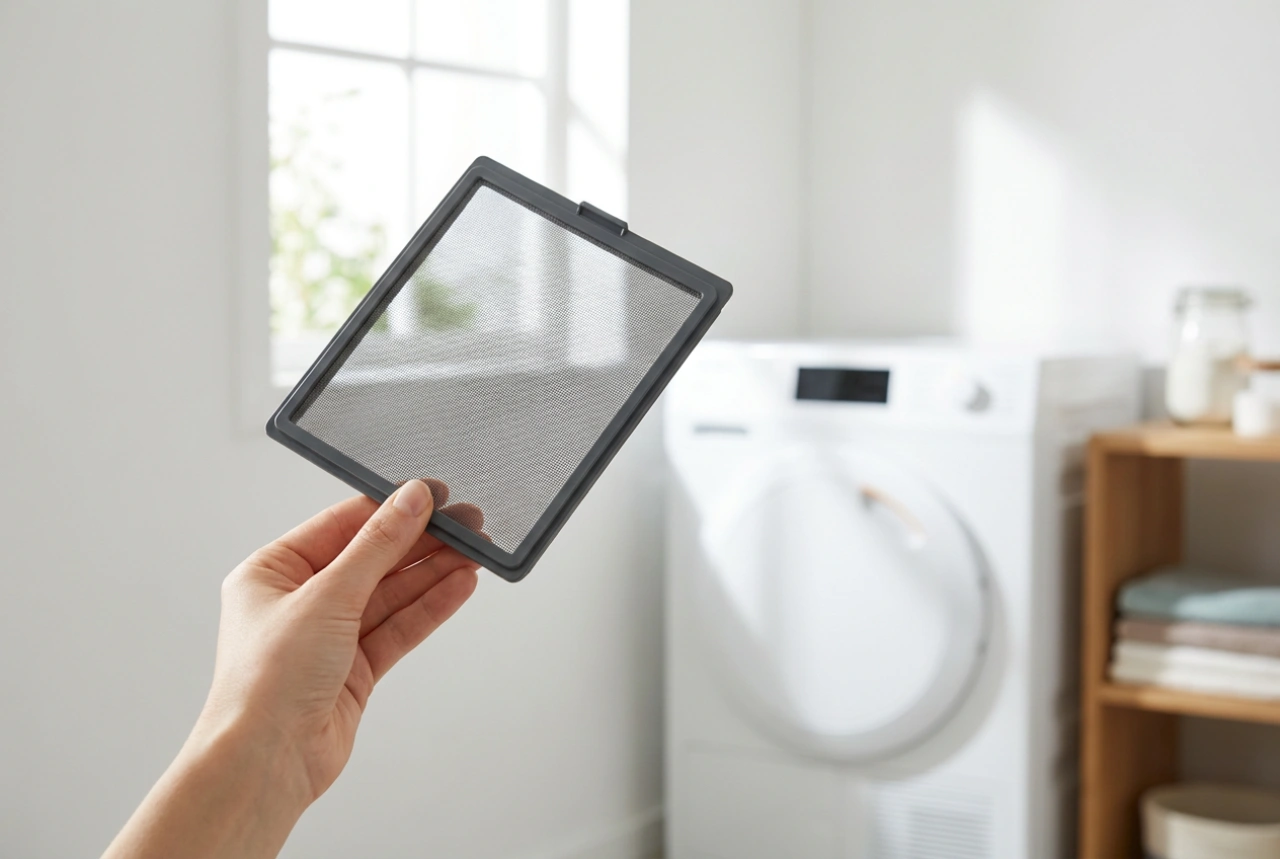
Crucially, the drainage system must feature a high siphon loop—typically between 60 and 90 centimeters above floor level—to prevent the siphoning effect, where wastewater is pulled back into the drum. Furthermore, the lower plinth of the cabinetry must be easily removable to allow regular cleaning of the debris filter. Failing to clear this filter regularly leads to poor drainage, pump strain, and stale odors due to stagnant water accumulation.
The Science of Load Capacity and Drying Efficiency
A common operational oversight with built-in washer-dryers is neglecting the physics of drum volume. Washing requires water to saturate and agitate the fibers, requiring less physical space. Drying, however, relies on warm air circulating through the fabrics to carry away moisture. Consequently, the drying capacity of a combined unit is typically 30 to 40 percent lower than its washing capacity.
To optimize drying in an enclosed space, fabrics must have room to expand and tumble. Overloading the drum restricts airflow, leading to uneven drying, excessive creasing, and elevated thermal stress on the heating elements. Users must adapt their laundry habits by splitting full wash loads before starting the drying phase, ensuring efficient thermodynamic transport of moisture out of the textiles.