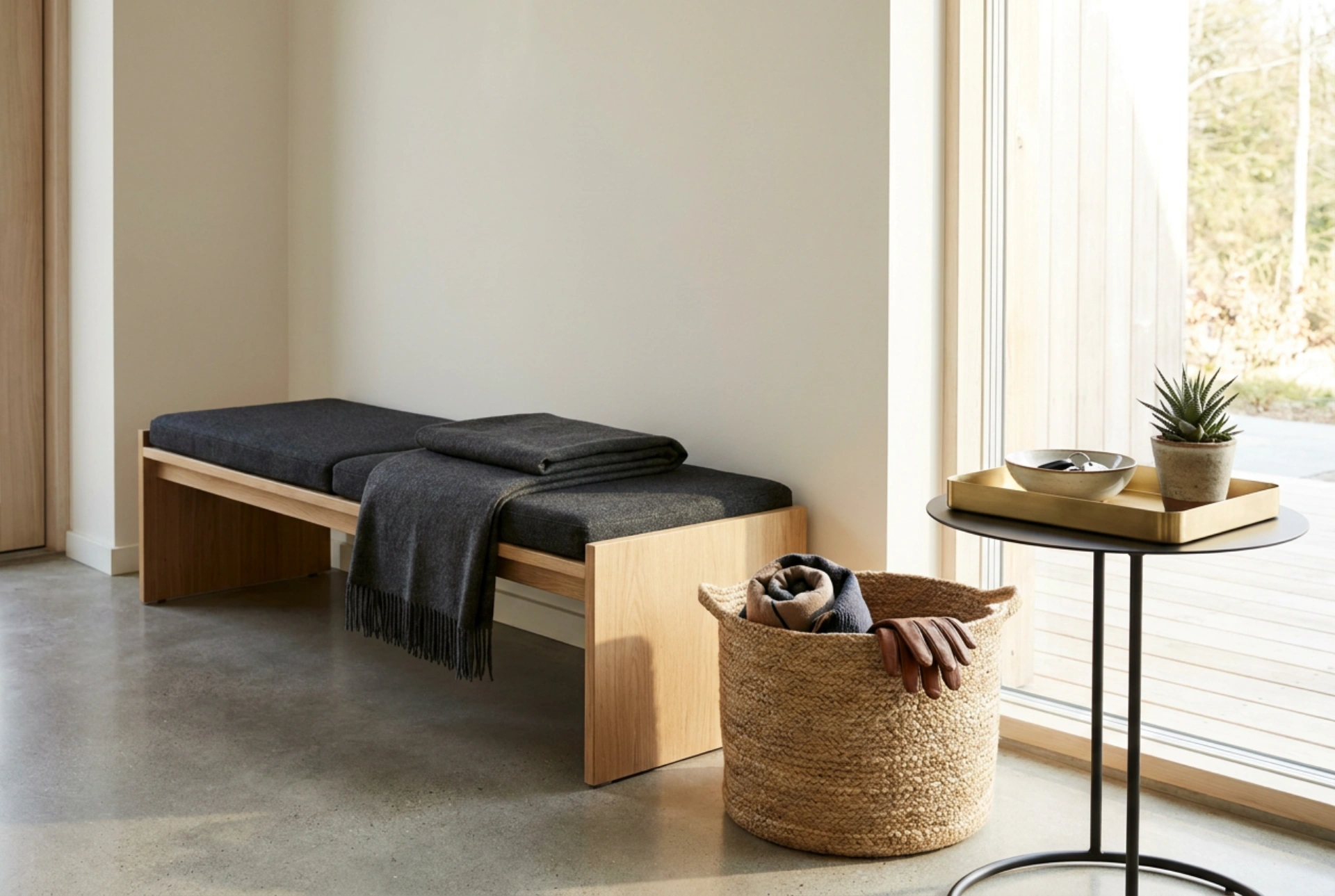


An entryway serves as a high-traffic barrier where external moisture, particulate dirt, and mechanical friction meet the controlled environment of your home. Dividing a unified entryway bench set into distinct functional zones optimizes spatial flow, minimizes cross-contamination, and protects the structural integrity of your furniture materials.
1. The Wet-Dry Boundary: Managing the Lower Zone
The lowest level of your entryway set, typically beneath the seating surface, must act as a primary barrier against external contaminants. When shoes enter a home, they carry water, road salt, and abrasive particulate matter like silica dust and sand. If left on porous wooden shelves, capillary action draws water into the wood grain, causing swelling, warping, and the eventual breakdown of protective varnishes.
To mitigate this, designate a dedicated wet zone using non-porous material trays, such as structured metal or high-density polypropylene, placed directly on the lower shelves. Elevating shoes on a wire or slatted wooden rack allows for passive convection—air must circulate around the soles to evaporate moisture quickly, preventing anaerobic bacterial growth that causes odor. Keep dry, clean footwear separated on a higher shelf or in a closed compartment to prevent gravity-fed debris from falling onto them from wet outersole treads.
2. Ergonomics and Textile Mechanics of the Seating Area
The central seating platform represents the transition zone where physical posture changes. For optimal biomechanics during shoe removal, the ideal seating height ranges between 40 to 45 centimeters from the floor. This height minimizes acute hip flexion, making the physical transition comfortable for various age groups.
Because the seat cushion experiences high friction and pressure, the choice of upholstery fabric is critical. Textiles should be evaluated by their Martindale rub count—a measure of abrasion resistance. In high-use zones like entryways, select tightly woven synthetic fibers, such as polyester or nylon blends, with a rating of at least 30,000 rubs. These fibers do not absorb moisture or organic oils as readily as natural cotton or linen, preventing staining and fiber rot. If using loose cushions, secure them with high-friction backing pads to prevent lateral slippage, which can scratch the underlying wood or laminate finish through micro-abrasion.
3. Vertical Zoning and Load Distribution
Effective vertical zoning utilizes gravity to keep daily essentials accessible while preventing visual and physical clutter. Organize your vertical space into three specific strata:
- The Active Zone (Eye to Waist Level): This is the high-frequency interaction area. Install hooks or hanging rods for active outerwear here. To prevent structural strain on the bench set, distribute weight evenly across vertical studs or anchors. Hangers should be spaced at least 10 centimeters apart to promote airflow, which is essential for shedding moisture absorbed by jackets during wet weather.
- The Passive Zone (Above Eye Level): Use this upper shelf for seasonal or low-frequency items. Store these in closed, breathable containers to protect them from dust settlement caused by rising warm air currents in the hallway.
- The Utility Zone (Seat Level): Dedicate the immediate sides of the seating area to small-item containment, such as keys, mail, and accessories.
4. Preventing Material Degradation in Small Storage Compartments
Small accessories like keys, coins, and dog leashes carry hard metallic edges that cause micro-scratches on wooden or painted surfaces upon contact. Over time, these micro-scratches breach the sealant layer, exposing raw wood to ambient humidity and finger oils, which leads to dark discoloration and oxidative wood degradation.
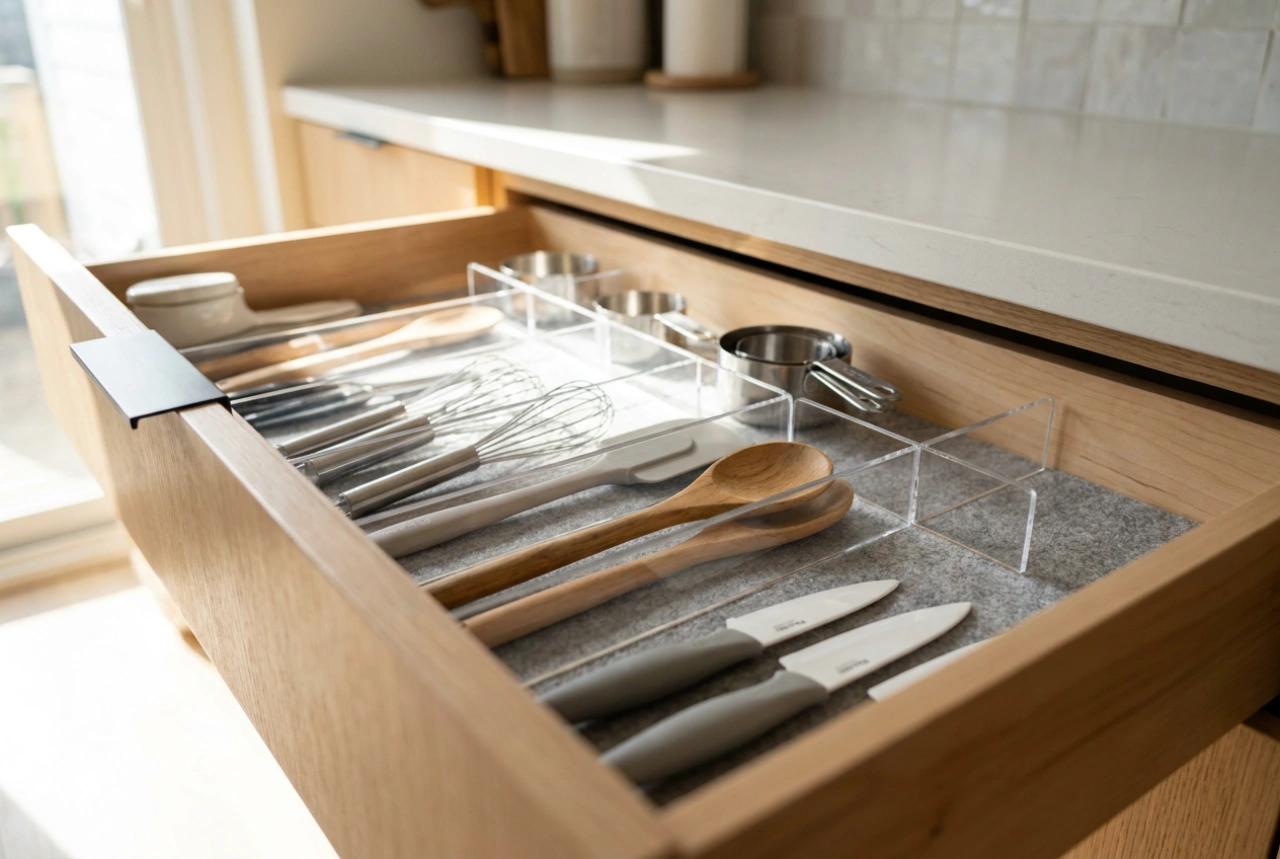
Line drawer interiors or accessory trays with dense wool felt or soft polymer inserts. Felt acts as an energy absorber, dampening the kinetic energy of dropped objects and preventing structural damage to the wood fibers underneath. Furthermore, organizing these items into dedicated, labeled containers reduces search times, streamlining the departure process and reducing physical wear on drawer runners and cabinet hinges caused by hasty, forceful movements.