

A burnt residue on an iron soleplate reduces glide, damages delicate fabrics, and can ruin garments permanently. Removing this carbonised buildup requires understanding the material science of the soleplate and using the correct chemical reactions rather than abrasive force.
Understanding the Material and the Bond
Iron soleplates are typically made from stainless steel, aluminium, ceramic, or coated with non-stick polymers such as PTFE (polytetrafluoroethylene). Each material has different physical properties and sensitivities. Abrasive tools like steel wool, harsh scouring pads, or metal scrapers will create microscopic scratches. These scratches permanently damage non-stick coatings and, on metallic surfaces, create tiny grooves where molten synthetic fibers can grip even more tightly in the future.
The burnt layer itself is usually a mixture of carbonised synthetic textile fibers (like polyester or nylon) that have exceeded their melting point, combined with mineral deposits (calcium carbonate) from tap water and polymerised starch from ironing aids. To dissolve or lift this mixture safely, we must rely on thermal control, mild chemical solvents, and gentle mechanical action.
The Mild Alkali Method: Sodium Bicarbonate
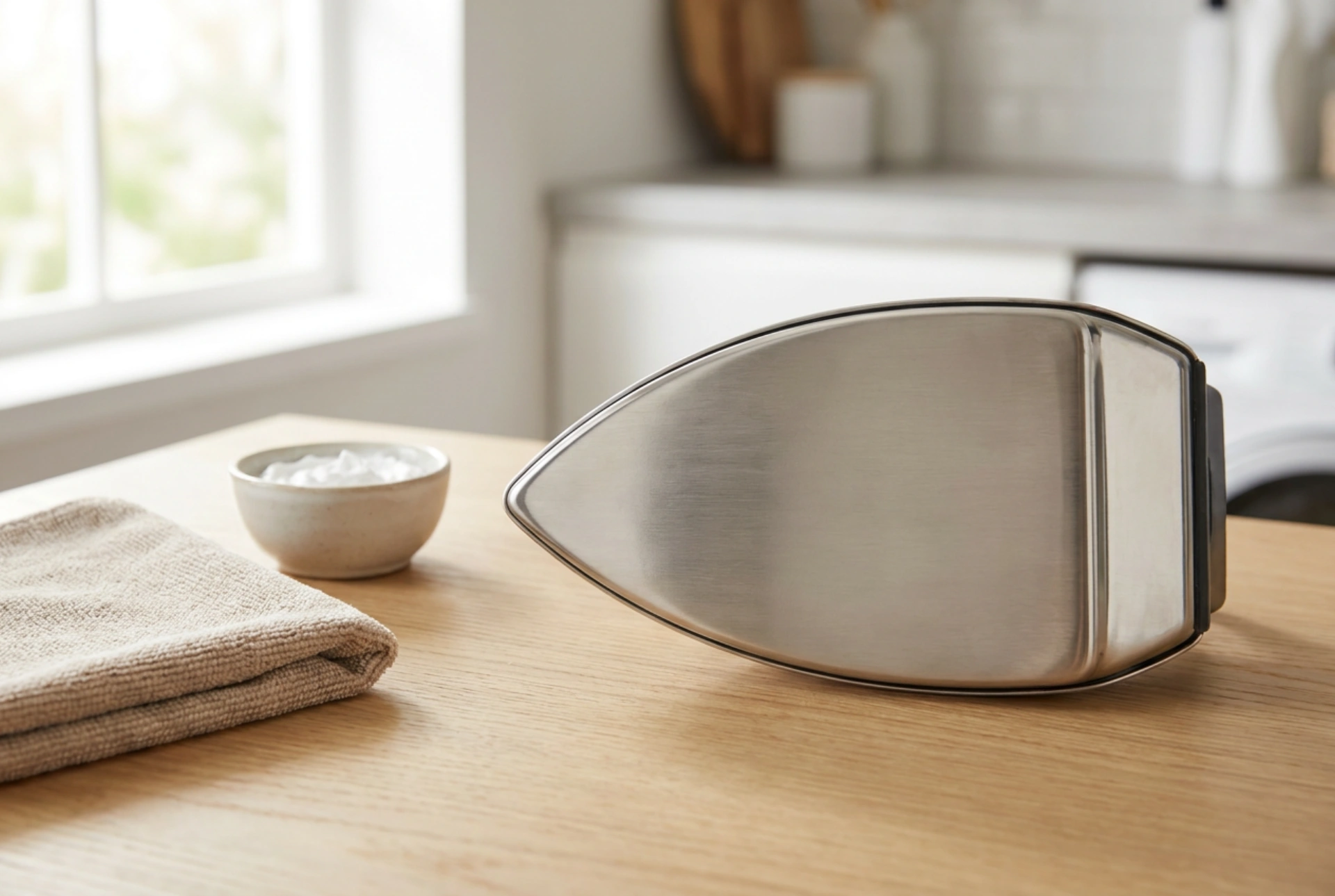
Sodium bicarbonate (baking soda) is an amphoteric compound with a very low Mohs hardness rating of approximately 2.5, which is lower than copper, steel, and ceramic. This makes it an ideal, non-scratch abrasive. When mixed with water, it forms a slightly alkaline paste that helps break down organic deposits and ester bonds in polymer residues.
How to apply the paste:
- Ensure the iron is completely cold and unplugged.
- Mix two parts sodium bicarbonate with one part water to form a thick, spreadable paste.
- Apply the paste directly to the stained areas of the soleplate using a soft microfiber cloth.
- Gently rub in a circular motion, allowing the mild abrasive particles to mechanically lift the loosened carbon without digging into the metal or ceramic substrate.
- Wipe away the residue with a clean, damp cloth, ensuring no paste enters the steam vents.
The Acidic Solution for Mineral and Light Organic Build-up
When the buildup consists of mineral scale from hard water coupled with light starch residues, an acidic approach is highly effective. Diluted acetic acid (white vinegar) chemically reacts with calcium carbonate (limescale), converting it into soluble calcium acetate and carbon dioxide gas. This chemical dissolution releases the grip of the scale on the soleplate.
The warm acid soak technique:
- Slightly warm the iron (lowest setting, warm to the touch, not hot) to accelerate the chemical reaction, then unplug it.
- Soak a clean cotton cloth in white vinegar (5% acetic acid concentration).
- Place the soaked cloth on a flat, heat-resistant surface and set the warm iron soleplate directly onto it.
- Leave it to sit for 15 to 30 minutes. The acid will penetrate the porous scale deposits.
- Lift the iron and wipe the soleplate with a clean microfiber cloth. The softened scale and carbon should slide off easily.
Thermosoftening with Paraffin Wax for Synthetic Melts
If you have accidentally melted a synthetic fabric onto the iron, the polymer has fused to the metal. To remove it, you can utilise the principles of thermal transfer and physical dilution. Paraffin wax or a simple unscented white candle can act as a medium to bind with and lift the melted plastic at a controlled temperature.
The melting and wiping process:
- Turn the iron on to a low heat setting (just warm enough to melt wax, around 60°C to 70°C).
- Rub the paraffin candle directly over the burnt area. The wax will melt and mix with the softened synthetic fibers, reducing their adhesion to the soleplate.
- Immediately wipe the melted wax and fiber mixture away using a thick, dry cotton cloth (such as an old terry towel). Use thick layers to protect your fingers from heat.
- Iron over a clean piece of scrap paper or cotton cloth to draw out any remaining wax residues from the soleplate and steam vents.
Preventative Chemistry and Physical Care
To prevent future carbonisation, always match the iron's temperature to the specific textile fiber's melting point. Synthetic fibers like polyester and nylon should always be ironed at low temperatures, ideally with a protective cotton pressing cloth in between. Additionally, using distilled or demineralised water prevents the formation of calcium deposits that act as anchors for melting synthetic fibers. Regular cleaning of the steam vents with a cotton swab dipped in vinegar prevents blockages and ensures even heat distribution across the entire soleplate surface.