

Using an electric window vacuum is the most efficient way to clean large glass surfaces, but achieving a flawless finish requires understanding the physics of surface tension and rubber blade mechanics. Without the correct technique and fluid dynamics, even the best appliance will leave unsightly streaks and residue.
The Chemistry of Window Pre-Treatment
Before turning on the window vacuum, the glass surface must be properly prepared. Windows accumulate a mixture of electrostatic dust, organic pollen, and oily soot from outdoor air. To break down these contaminants, you must lower the surface tension of water using a surfactant. A dilute solution of generic washing-up liquid or a specialized alcohol-based glass cleaner works best.
The surfactant molecules have a hydrophilic (water-loving) head and a lipophilic (fat-loving) tail. These tails attach to the oily grime on the glass, lifting it into suspension within the water droplets. However, chemical dosage is critical. Over-concentrating the cleaning solution leaves excess surfactant molecules on the glass. When the vacuum sucks up the bulk of the liquid, a microscopic sticky film remains, which quickly dries into white, streaky lines and attracts fresh dust.
The Physics of the Rubber Blade
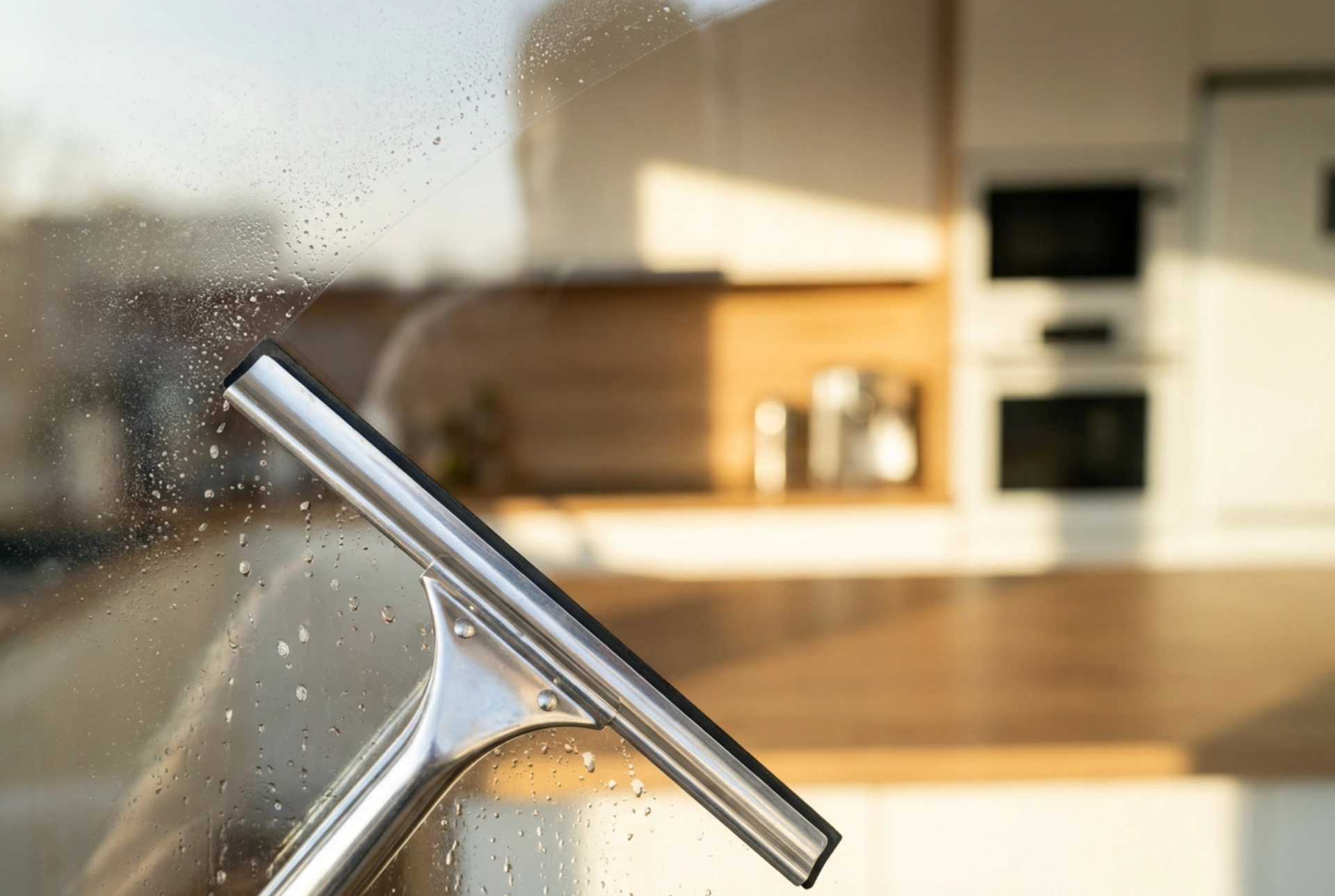
The core mechanism of a window vacuum is not just the suction, but the physical barrier created by the flexible rubber blade. This blade acts as a squeegee, gathering the suspended dirt and water into a thin wave that is immediately drawn in by the vacuum motor.
For the blade to glide smoothly, it requires constant lubrication. Running a dry rubber blade across dry glass creates high kinetic friction, causing the blade to stutter, jump, and leave distinct skip marks. Always ensure the entire pane is wet before starting. Furthermore, the angle of contact is crucial. Maintain a consistent 45-degree angle relative to the glass. Applying too much force compresses the rubber edge, causing liquid to bypass the suction channel, while too little pressure leaves water droplets behind.
Managing Evaporation and Temperature
One of the most common causes of streaking when using a window vacuum is the ambient temperature. If you clean windows in direct sunlight or on hot days, the thin film of dirty water evaporates rapidly before the vacuum can capture it. When the water turns to vapour, the dissolved minerals (such as calcium and magnesium) and the suspended grime are instantly redeposited onto the glass as solid, stubborn streaks.
To prevent premature evaporation, clean windows when the glass is cool to the touch—ideally in the morning, evening, or on overcast days. If you must work in warmer weather, apply more cleaning solution to slow down the drying process, and work in smaller sections rather than attempting to clean the entire pane at once.
A Step-by-Step Technique for Flawless Results
- Prepare the Frame: Always clean the window frames and sills first. If you skip this step, the vacuum blade will pull accumulated dirt from the edges back onto the wet glass.
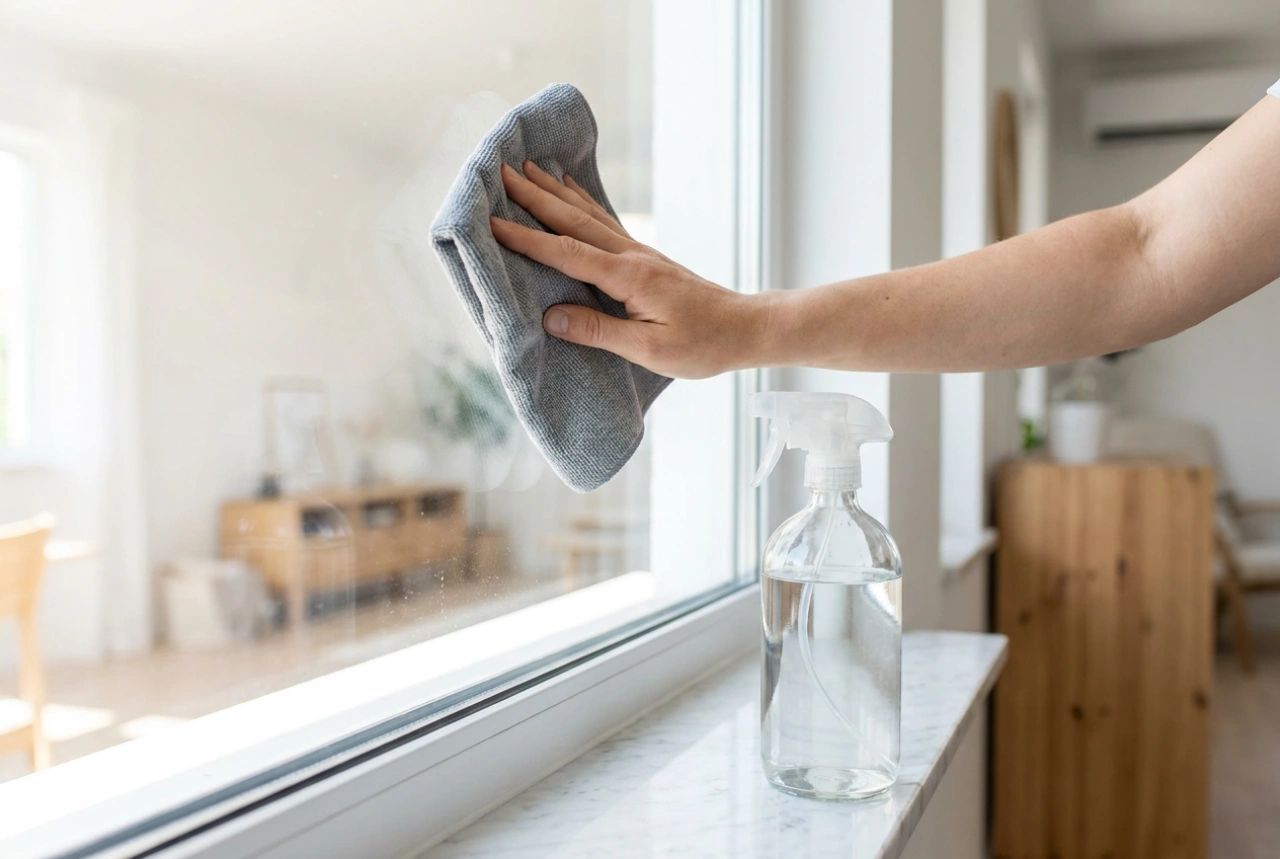
- Agitate the Dirt: Spray the cleaning solution generously and use a microfiber pad to physically agitate the surface, breaking the bond between the grime and the glass.
- Smooth Vertical Passes: Start at the top corner of the window. Pull the vacuum downwards in a single, continuous motion. Maintain a light, steady pressure and a constant speed.
- Overlap the Paths: Each subsequent vertical pass should overlap the previous one by approximately two centimetres. This prevents narrow lines of moisture from escaping between the passes.
- Wipe the Blade: After every single vertical stroke, wipe the rubber blade clean and dry with a lint-free microfiber cloth. Any grit trapped on the rubber edge will act as an abrasive, leaving fine lines and scratching the glass.
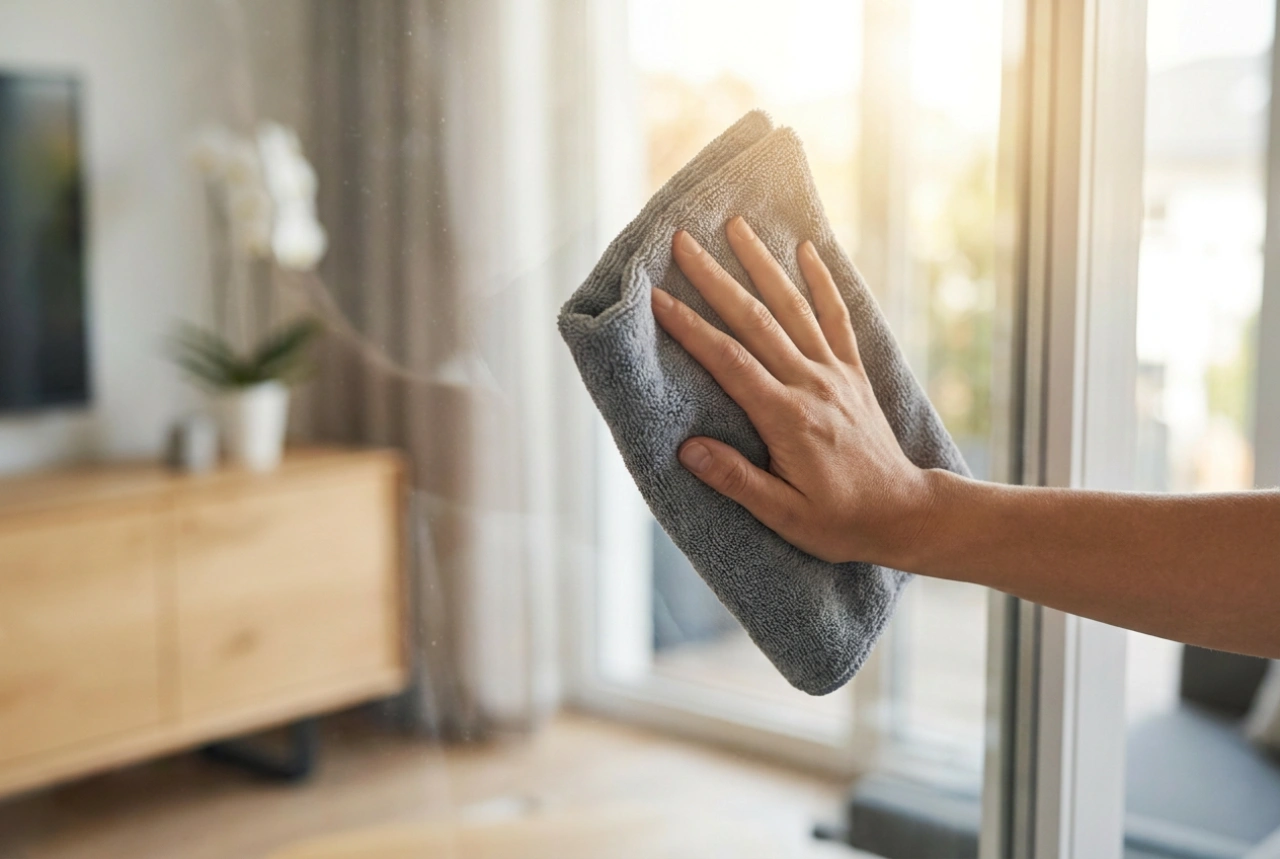
- Detail the Edges: Use a dry, clean microfiber cloth to absorb any minor pooling along the very edge of the window frame where the vacuum blade cannot make tight contact.