

A washing machine door that refuses to open mid-cycle is a frustrating problem, especially when the drum is full of water. Forcing the door open physically can damage the locking mechanism, while opening it prematurely risks releasing a torrent of dirty water onto your bathroom floor.
The Science Behind the Lock: Why Your Machine Stays Closed
Modern washing machines use automated safety systems designed to prevent water damage and injury. The primary mechanism is a door lock assembly controlled by a bimetallic strip or an electromagnetic solenoid. When current flows, the bimetallic strip heats up and bends, mechanically locking the latch. It can take several minutes after power is disconnected for this strip to cool down and release.
Additionally, a pressure switch (hydrostat) monitors the water level inside the drum. Even if the cycle is paused, the switch detects the hydrostatic pressure of the water column. As long as this pressure exceeds a safe threshold, the control board prevents the door from unlocking. Attempting to bypass this electrically is highly dangerous; the only safe solution is to remove the water and allow the physical mechanisms to reset naturally.
Preparing Your Work Space: Managing Hydrostatic Flow
Before attempting to drain the machine, you must prepare for the controlled release of residual water. Because the drain pump and filter are located at the bottom of the appliance, you will be working at floor level, meaning gravity will work in your favour but also against your dry floors.
- Power Down Safely: Always unplug the appliance from the mains socket. Do not merely turn off the power switch; physical disconnection eliminates any residual current risk.
- Establish a Water Barrier: Lay down thick, highly absorbent cotton towels or a heavy-duty microfiber mat directly beneath the filter flap. Avoid thin rags, which saturate instantly.
- Select a Low-Profile Container: Because the filter opening is mere centimetres from the floor, standard buckets will not fit. Use a shallow baking tray, a clean paint roller tray, or a cut-down plastic bottle to catch the initial flow.
Step-by-Step Controlled Drainage Technique
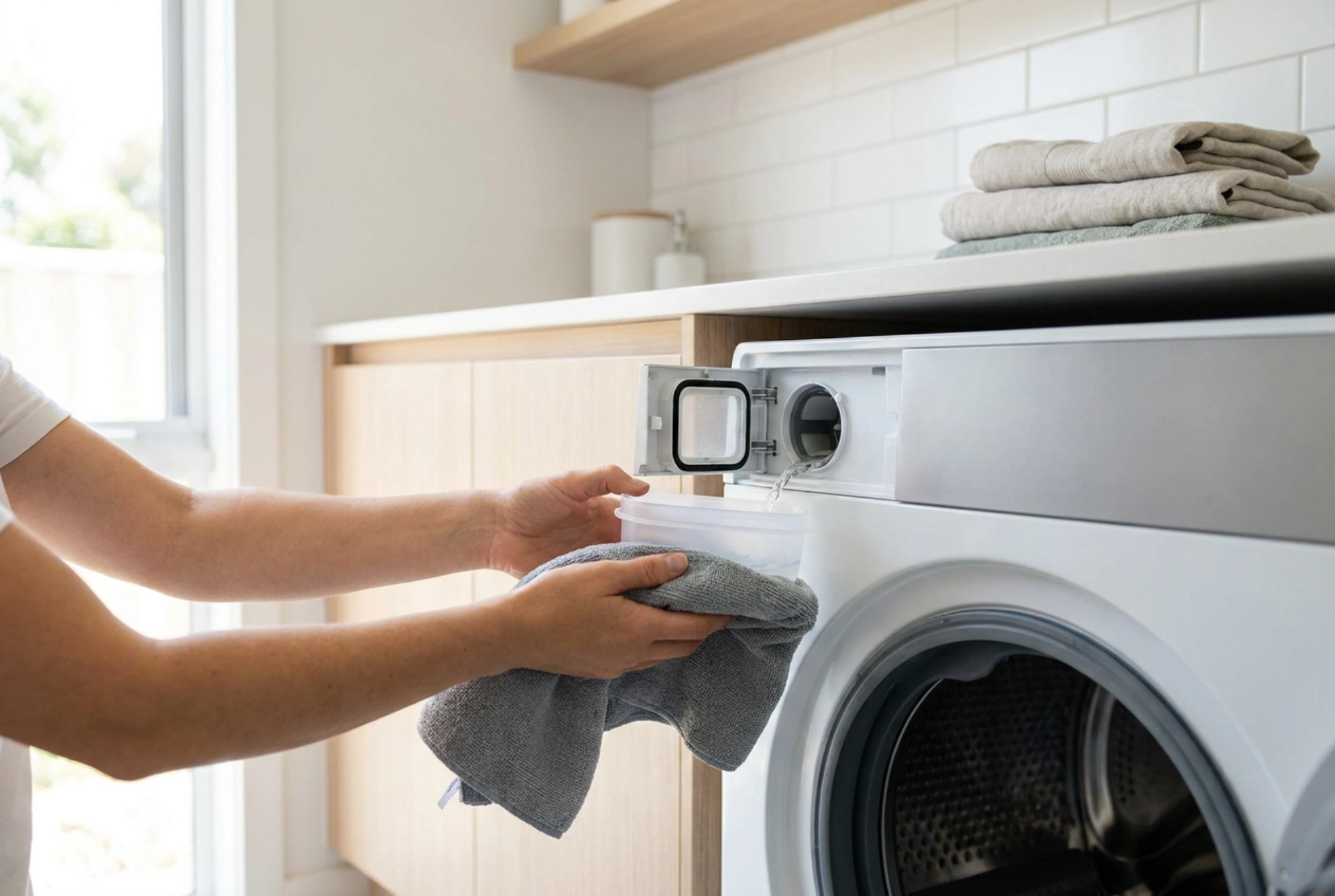
Most modern washing machines feature a small drain filter hatch at the bottom front corner. Behind this flap, you will find the main drain filter cap and, in many models, a small, flexible emergency drain hose.
Method A: Utilizing the Emergency Drain Hose
If your appliance is equipped with a small rubber hose next to the main filter, this is the cleanest method to empty the drum. Pull the hose out gently as far as it will go. Position your shallow container directly underneath the plug at the end of the hose. Remove the stopper carefully. Because the diameter of this hose is narrow, the water will flow out slowly, allowing you to cap it and empty your container as it fills. Repeat this process until water ceases to flow.
Method B: Controlled Unscrewing of the Main Filter
If your machine lacks an emergency hose, you must drain the water directly through the main filter housing. This requires a precise touch to prevent an uncontrollable rush of water. Place your shallow container directly under the filter cap. Begin turning the cap counter-clockwise very slowly. Do not unscrew it completely. Rotate it just enough—usually a quarter turn—until water begins to trickle into your container. When the container is almost full, screw the cap back clockwise to seal the flow, empty the container, and repeat. This gradual method keeps hydrostatic pressure manageable.
Triggering the Mechanical Emergency Release
Once the water is completely drained, the pressure switch should register that the drum is empty. However, the door may still remain locked due to a jammed mechanical latch or a lingering thermal charge in the bimetal strip. Many manufacturers include a mechanical override pull tab. This is usually a bright yellow or green plastic strip located right next to the drain filter. Pulling this tab downwards while simultaneously pulling the door handle will manually disengage the latch mechanism, allowing you to retrieve your laundry without force.