

Planning a custom built-in wardrobe requires a deep understanding of spatial ergonomics, structural physics, and textile preservation. By aligning the layout of your cabinetry with your daily physical movements and the material properties of your clothing, you can create a highly efficient storage system that protects your garments for years.
The Ergonomic Zones of Wardrobe Architecture
Effective wardrobe planning relies on dividing the physical space into vertical zones based on the frequency of access and the physical strain of retrieval. The primary zone, spanning from your hips to your eyes (approximately 70 to 160 centimetres from the floor), is reserved for items used daily. Placing frequently worn garments within this zone minimizes spinal flexion and shoulder extension, reducing physical fatigue during your morning routine.
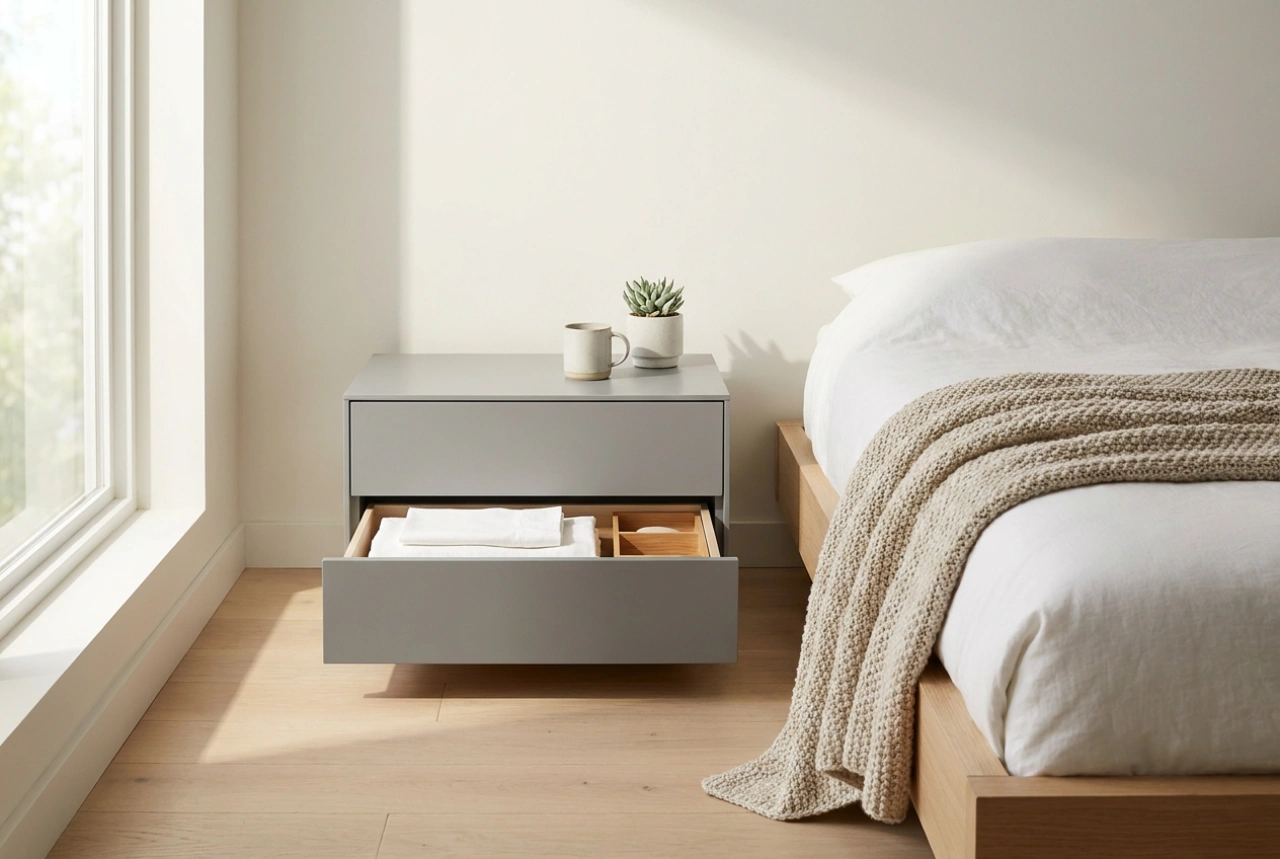
The lower zone, from the floor to hip height, is ideal for drawers and pull-out trays. Utilizing gravity, drawers allow you to look down onto your items rather than reaching blindly. Ensure that drawer runners utilize high-grade ball bearings to reduce friction coefficient, allowing heavy loads of denim or knitwear to glide smoothly without straining the cabinet joints. The upper zone, extending from head height to the ceiling, should be dedicated to lightweight, seasonal items. Storing high-mass objects at the top poses safety risks and increases the structural load on the highest panels, potentially causing the entire carcass to shift over time.
Material Science: Selecting Shelving to Prevent Sagging
When designing shelves, structural integrity is paramount. Wood-based composites like Melamine-Faced Chipboard (MFC) and Medium-Density Fibreboard (MDF) behave differently under continuous load, a phenomenon known in material science as mechanical creep. Under the constant downward pull of gravity, a shelf loaded with heavy items will slowly deform permanently if its span is too wide.
- The 800mm Rule: For standard 18mm thick MFC or MDF shelving, the maximum unsupported span should never exceed 800 millimetres. Exceeding this limit under typical clothing loads (such as heavy winter coats or stacks of denim) leads to noticeable bowing.
- Load Distribution: Distribute weight evenly across the shelf surface rather than concentrating it in the centre. Concentrated loads double the bending moment, accelerating structural deformation.
- Reinforcement: For spans wider than 800 millimetres, introduce vertical support dividers or solid timber front lipping to increase the section modulus and resist bending forces.
Textile Preservation and Ventilation Mechanics
A closed wardrobe is a microclimate. Without adequate air circulation, stagnant air pockets can trap moisture, leading to the growth of fungal spores (mould) and mildew. This is especially true for wardrobes built against external walls, which are subject to temperature differentials and condensation risk.
To mitigate this, maintain a 20-millimetre gap between the back panel of the wardrobe and the structural wall of the room. This space acts as a thermal barrier and allows convective airflow. Additionally, incorporate ventilation grilles in the plinth and the top cornice to promote chimney-effect ventilation—warm air rising and drawing cooler air in from the bottom. For clothing storage, choose breathable materials; avoid storing natural fibres like wool, cotton, or silk in airtight plastic boxes, as trapped residual moisture can degrade the fibres over time.
The Mechanics of Hanging versus Folding
Deciding which garments to hang and which to fold is governed by textile physics. Gravity acts continuously on clothing; how a garment reacts depends on its weave and fibre structure.
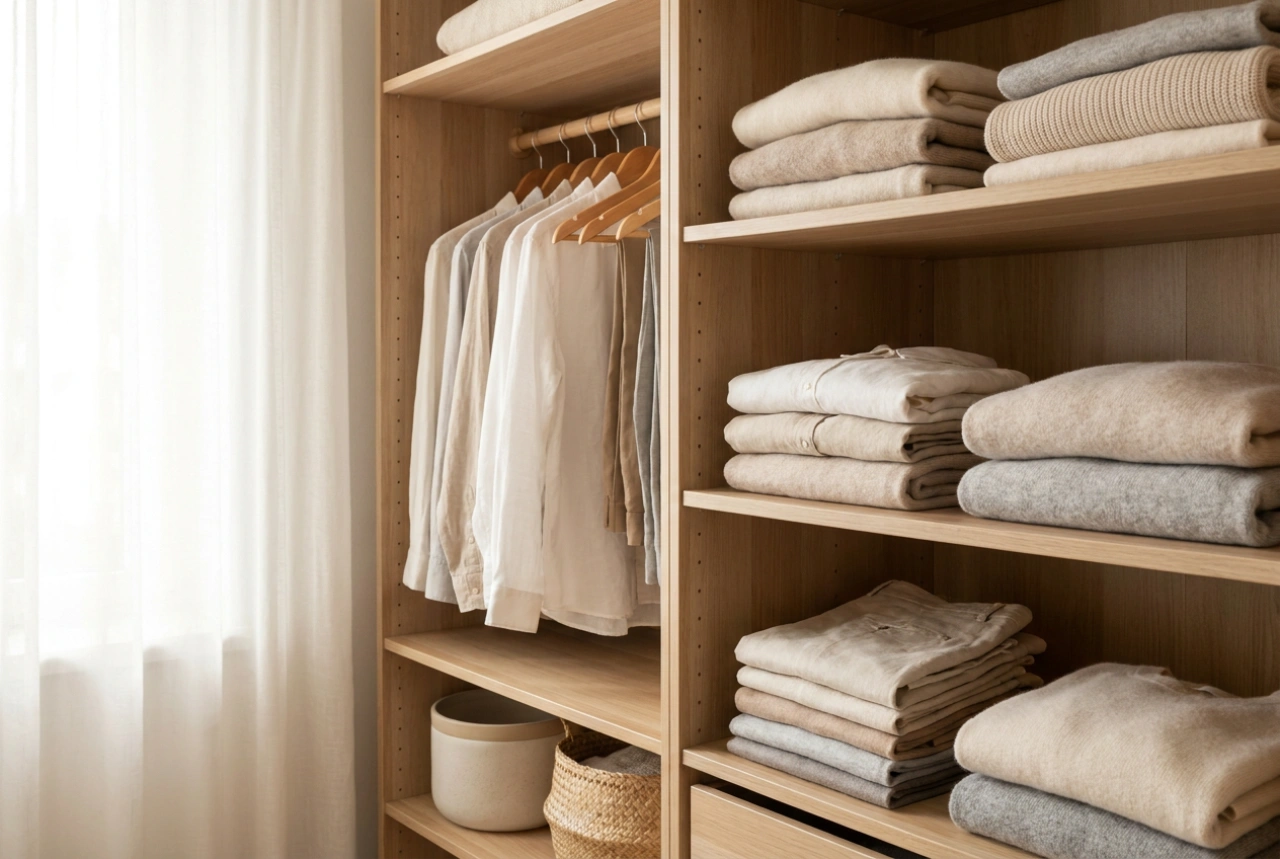
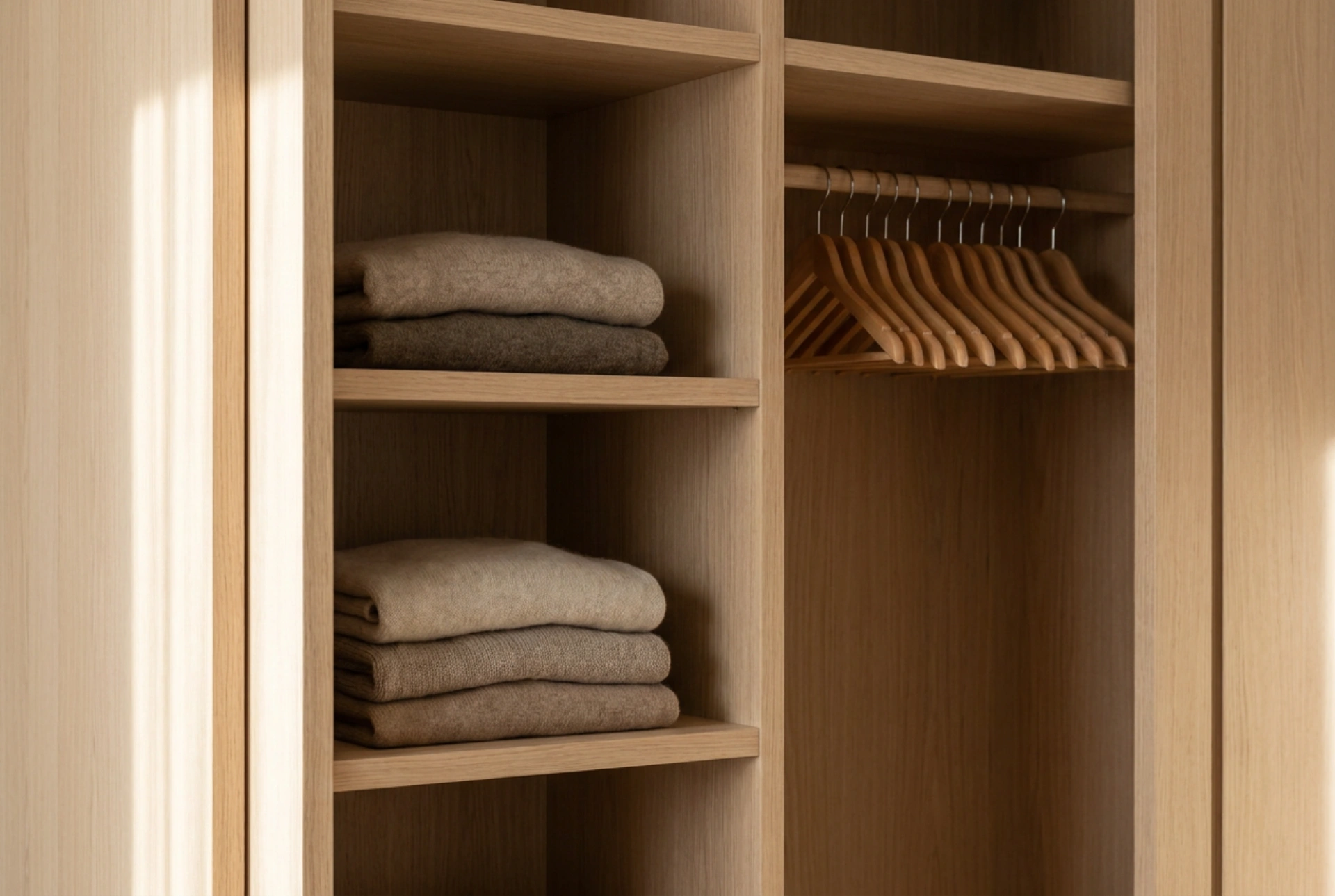
Knitted garments, such as woollen sweaters, feature interlocking loops of yarn that possess high elasticity. Hanging these items causes gravity to stretch the loops vertically, leading to permanent deformation and shoulder bumps. These must always be folded and stored flat on shelves or in shallow drawers. Conversely, woven fabrics (like linen shirts and cotton trousers) have intersecting warp and weft threads that resist vertical stretching. Hanging these items utilizes their natural drape to pull out minor creases over time, maintaining their crisp appearance without thermal intervention.
Choose hangers with broad, contoured profiles made of dense hardwood to distribute the garment mass evenly across the shoulder seams, avoiding localized pressure points that distort the fabric.
Optimising the Layout Sequence
A logical layout flow mirrors your daily sequence of dressing. Arrange your custom wardrobe so that undergarments and socks are housed in the highest drawer of the mid-low zone, followed by trousers, then shirts on hanging rails, and finally outerwear. Grouping items by length also optimises vertical space; hanging short shirts above a chest of drawers inside the wardrobe utilises space that would otherwise be wasted beneath a standard-height rail. This systematic arrangement reduces the time spent searching, minimising the physical handling of adjacent garments and protecting delicate surfaces from friction-induced damage.