

Storing soiled garments before washing is more than a matter of organisation; it is a critical step in managing domestic hygiene and preserving textile integrity. While airtight plastic containers trap humidity and promote microbial activity, natural wicker baskets offer a physical mechanism that naturally inhibits the growth of bacteria and mould.
The Microclimate of Dirty Laundry: Why Airflow Matters
Dirty clothing carries a combination of moisture, skin cells, sebum, and environmental bacteria. When these elements are confined to an airtight or poorly ventilated space, such as a solid plastic bin, they create a high-humidity incubator. Without air circulation, the relative humidity inside the container quickly rises, triggering the rapid proliferation of anaerobic bacteria and fungi.
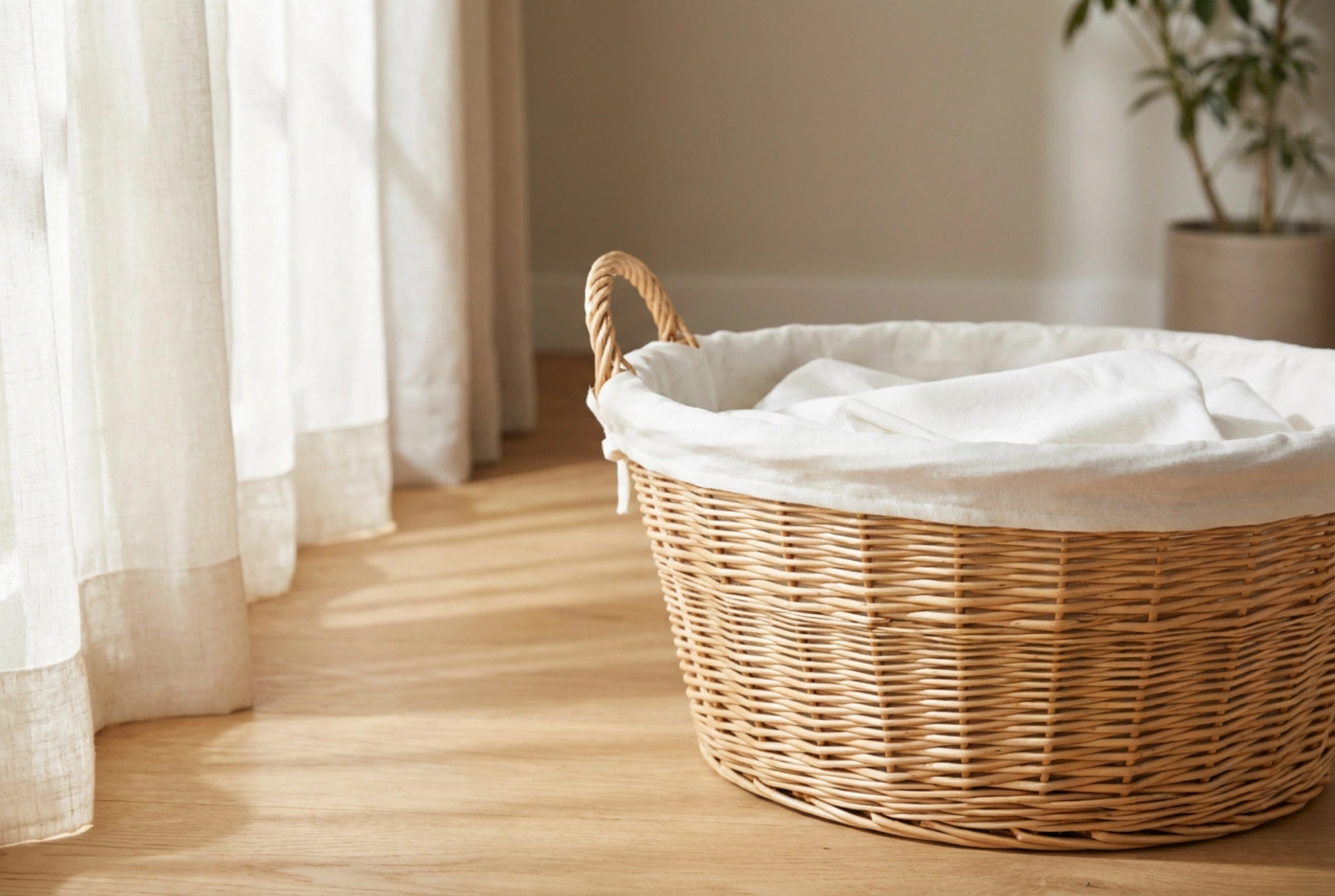
Wicker baskets solve this problem through basic physics. The woven structure of natural materials like willow, rattan, or bamboo creates a network of thousands of micro-apertures. This allows continuous passive ventilation. Air currents pass freely through the walls of the basket, facilitating the evaporation of residual moisture from sweat, damp bath towels, or kitchen cloths. By keeping the internal humidity level close to the ambient room level, wicker prevents the stagnant conditions required for volatile organic compounds to accumulate, which are responsible for the classic sour smell of dirty laundry.
Microbial Growth and Textile Degradation
When garments remain damp in a closed environment, two primary biological threats emerge: mould spores and odour-producing bacteria. Species of bacteria such as Staphylococcus hominis metabolise the lipids and proteins found in sweat, producing highly pungent thioalcohols. Concurrently, fungal spores from genera like Aspergillus and Penicillium thrive on damp cellulose (cotton, linen) and proteins (wool, silk).
If fungal hyphae penetrate the fibres of a garment, they can cause irreversible damage, including weakening the tensile strength of the thread and leaving permanent, dark stains known as mildew. The continuous airflow provided by a wicker weave keeps the moisture level below the threshold required for fungal germination, protecting both the garments and the indoor air quality of your home.
The Function of the Fabric Liner: Protection and Sanitisation
While the natural wood of a wicker basket offers exceptional ventilation, its raw, textured surface can physically snag delicate fabrics like lace, silk, or fine wool. A removable fabric liner, ideally made of unbleached organic cotton or linen, acts as an essential physical barrier. It protects delicate garments from mechanical friction against the wooden weave while still allowing air to pass through.
From a chemical and hygienic standpoint, the liner also serves as a secondary collection layer. It absorbs excess moisture and catches loose organic matter, such as skin flakes or pet dander, preventing them from settling into the crevices of the wicker itself. To maintain system hygiene, this liner must be washed regularly. Laundering the liner at a high temperature (at least 60°C) with an oxygen-based bleaching agent is highly effective at denaturing any accumulated proteins and eradicating fungal spores before they can transfer back to fresh laundry.
Scientific Maintenance of Natural Wicker
Because wicker is an organic, cellulosic material, it requires periodic maintenance to prevent it from absorbing moisture and becoming a host for microbes itself. Every few months, the basket should be completely emptied and vacuumed using a soft brush attachment to remove dust and loose organic particles from the weave.
To sanitise the wicker without damaging the natural fibres, wipe the surface with a soft cloth lightly dampened in a mild solution of white vinegar (acetic acid) or highly diluted hydrogen peroxide. Acetic acid lowers the pH, creating an environment hostile to fungal spores without stripping the natural protective oils of the wood. After cleaning, the basket must be dried completely in a warm, drafty area or under indirect sunlight, as UV radiation acts as a natural disinfectant, breaking down any residual bacterial DNA.