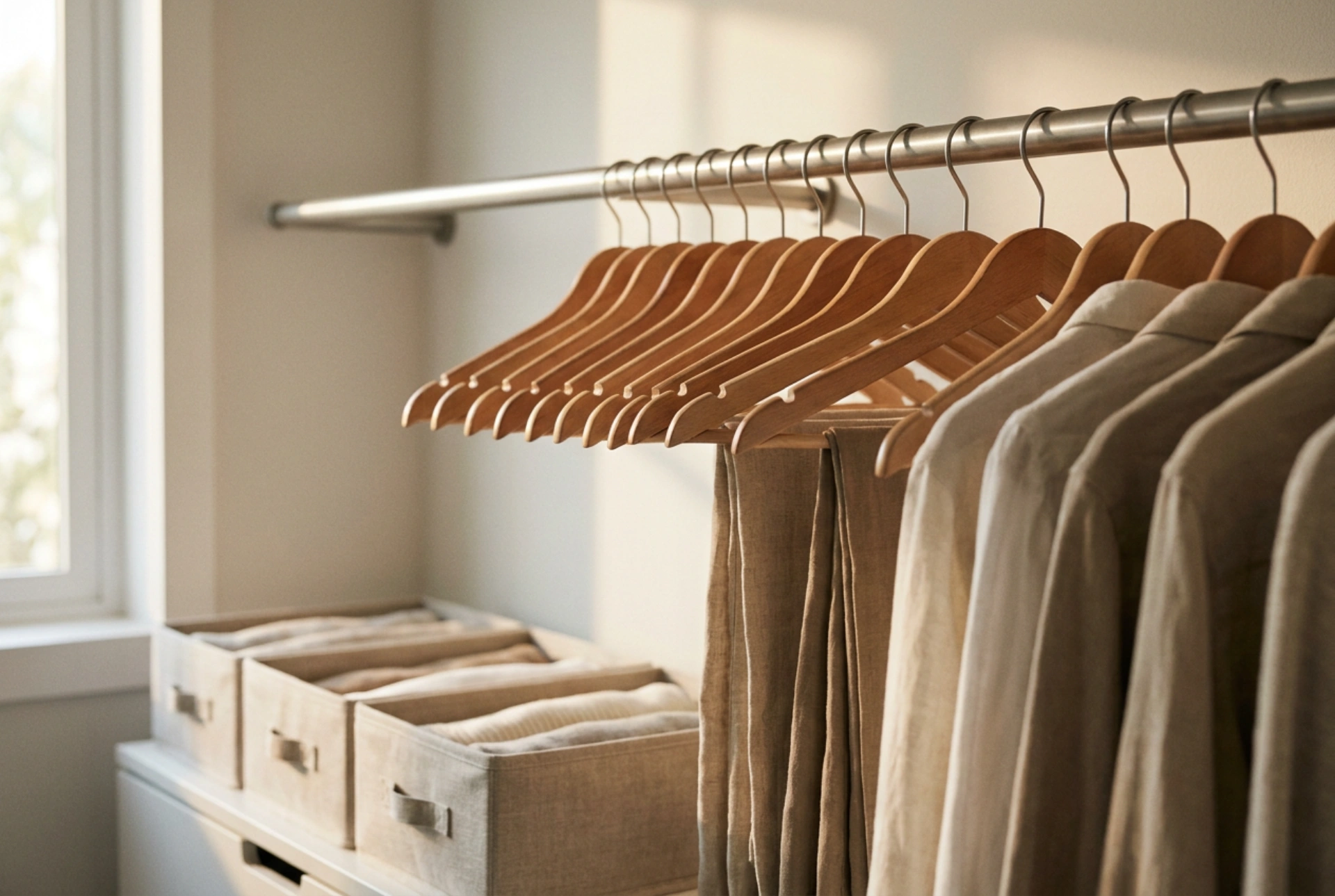


Optimising a wardrobe requires more than just hanging clothes; it demands an understanding of load distribution, structural materials, and spatial dynamics. By implementing adjustable rails and modular division, you can transform a static closet into an ergonomic, high-density storage system that protects your garments.
The Engineering of Wardrobe Rails: Materials and Load Capacity
The wardrobe rail is the primary structural element of any closet. When selecting or adjusting a rail, understanding material physics is key to preventing sagging and failure. Most standard rails are made of aluminium or steel. Steel offers significantly higher tensile strength and modulus of elasticity, making it ideal for heavy winter coats and suits. Aluminium is lighter and corrosion-resistant, but requires thicker walls or shorter spans to prevent deflection.
To calculate the load-bearing capacity, consider the profile shape. Oval profiles resist vertical bending forces much better than round tubes of the same cross-sectional area. A standard round rail with a diameter of 25 mm and a wall thickness of 1 mm will begin to sag visibly when loaded beyond 30 kilograms over a one-metre span. Minimising this span or adding middle support brackets is essential for spans exceeding 90 centimetres. Telescopic, adjustable rails allow you to customise this length, but ensure the overlapping joint is secured tightly to prevent structural weak points.
Optimising Vertical Space and Kinematics
Standard closets often leave massive volumes of unused air at the top or bottom. Adjustable rails allow you to divide this vertical space into distinct functional zones. By mounting a secondary lower rail, you double the hanging capacity for shorter garments like shirts, skirts, and folded trousers.
For high-ceilinged walk-in wardrobes, a mechanical pull-down rail (wardrobe lift) utilises a hydraulic or pneumatic spring system to lower high-altitude garments to eye level. This mechanism relies on counterbalancing: the gas springs are calibrated to assist in lifting the weight of the clothes back up. Understanding the load limits of these mechanisms is vital; underloading them can make pulling the rail down difficult, while overloading can overwhelm the pneumatic cylinders, leading to rapid wear or sudden dropping of the mechanism.
The Science of Modular Fabric Dividers
Once the horizontal rails are optimised, dividing the remaining space is crucial for smaller, non-hangable items. Modular linen or canvas hanging shelves introduce flexible zoning without adding permanent, heavy wooden cabinetry. Linen is an exceptional material choice for closet organisation due to its high breathability and hygroscopic properties, which naturally regulate moisture and prevent mustiness.
These fabric dividers hang directly from the rail, utilising hook-and-loop fasteners or integrated metal brackets. Because these dividers introduce vertical loading onto the rail, their weight and contents must be factored into the overall load calculation. By grouping similar items into lightweight fabric cubbies, you create physical boundaries that prevent the compression of delicate fabrics like wool and silk, which need air circulation to maintain their natural loft and structural integrity.
Hanger Dynamics and Material Selection
The interaction between the wardrobe rail and your garment hangers directly affects both ease of use and fabric health. Wood, metal, and velvet-flocked hangers each serve distinct mechanical functions. Wooden hangers, particularly those made of broad-shouldered cedar or maple, provide structural support that mimics human shoulders, preventing the distortion of heavy woollen jackets.
From a mechanical perspective, uniform hangers create a consistent height plane, allowing for smoother lateral sliding along the matte metal rail. When hangers slide easily, you reduce the physical friction that can cause fabric snagging and rail wear. Velvet-coated hangers offer high friction, which is excellent for keeping slippery silk blouses in place, but they require more physical effort to slide along the rail. Selecting the right combination of hanger type and rail surface finish ensures both garment preservation and effortless daily operation.