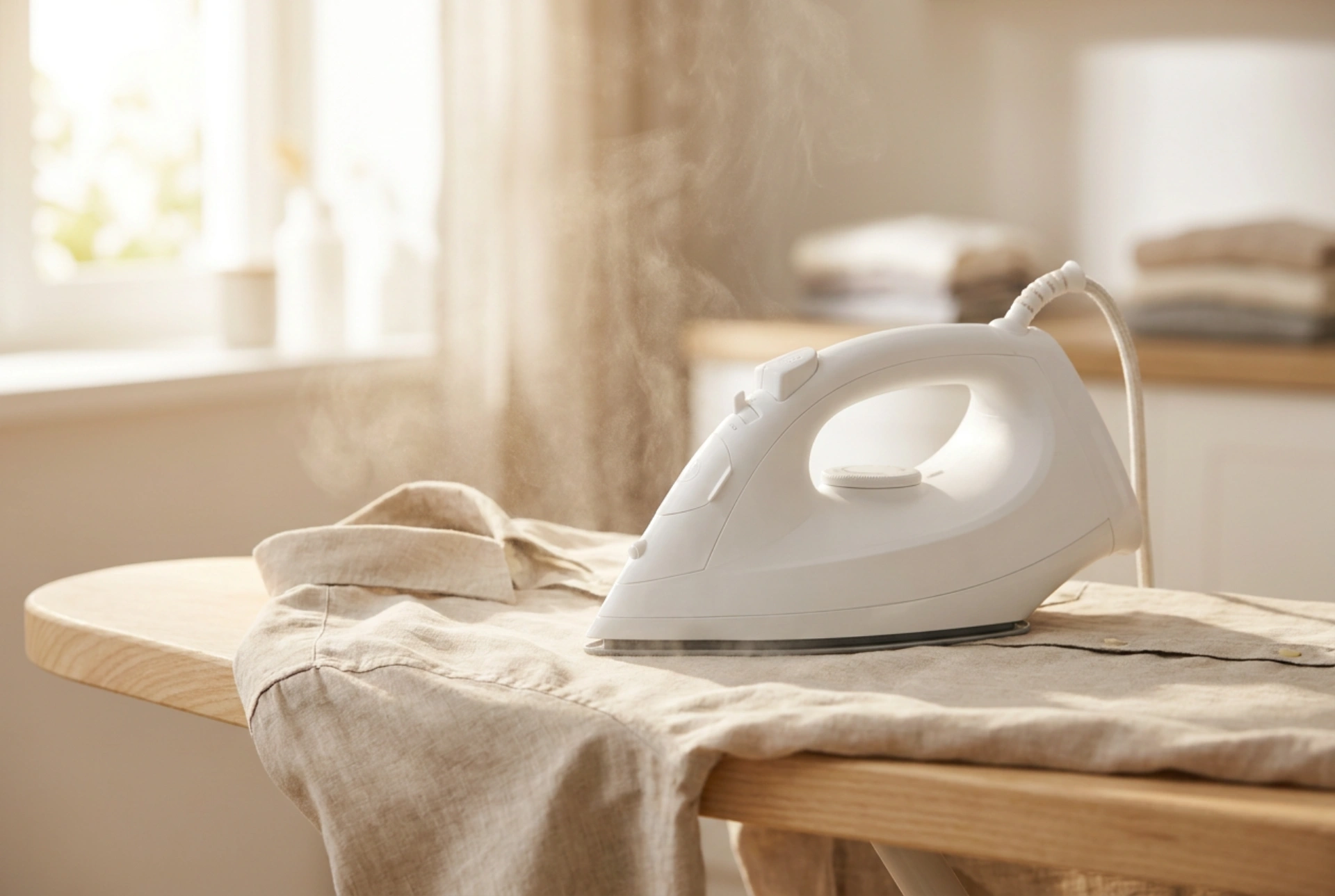


High-pressure steam generator irons offer unmatched efficiency by penetrating fabric fibres deeply, but managing this thermal energy requires an understanding of thermodynamics and proper handling techniques. Operating these appliances safely involves balancing heat, pressure, and moisture to protect both the operator and delicate textiles.
The Physics of Pressurised Steam
Unlike conventional steam irons, which generate steam inside the soleplate, a steam generator iron relies on a separate boiler base. This boiler heats water under pressure, typically between 4 and 8 bar, raising the boiling point of water and producing dry, high-velocity steam. When this steam is released, it carries high kinetic and thermal energy directly into the textile structure.
The primary mechanism at play is the latent heat of vaporisation. As pressurized steam penetrates the fabric, it transfers this latent heat rapidly to the fibres. This thermal energy temporarily breaks the weak intermolecular hydrogen bonds holding the polymer chains of the fibres in place. Once these bonds are relaxed, the mechanical weight of the soleplate realigns the fibres, smoothing out wrinkles instantly. The high pressure ensures that this process occurs throughout the entire thickness of the fabric, rather than just on the surface layer.
Temperature Control and Fabric Chemistry
Different textile fibres react uniquely to thermal energy, governed by their glass transition temperature. Below this temperature, amorphous regions of polymers are stiff and glassy; above it, they become pliable and easy to reshape.
- Natural Cellulose (Cotton and Linen): These fibres have high glass transition temperatures and require significant moisture alongside heat to relax their crystalline structures. High-pressure steam is ideal here, as it delivers deep moisture without requiring scorching soleplate temperatures.
- Protein Fibres (Wool and Silk): Highly sensitive to dry heat, these fibres benefit from the cooling effect of steam expansion, which prevents surface scorching while allowing the fibres to relax.
- Synthetic Polymers (Polyester and Nylon): These are thermoplastic materials. Excessive heat can cause irreversible melting or glazing. When using steam on synthetics, the physical distance of the iron and the use of short, controlled bursts of steam prevent the polymer fibres from reaching their melting point.
Safe Handling and Burn Prevention
Because steam carries significantly more thermal energy than boiling water at the same temperature, steam burns can be severe. Safe operation requires strict adherence to physical positioning and movement patterns.
Always guide the iron using a clear, linear motion away from your non-dominant hand. The hand holding or tensioning the garment must never be positioned in the direct path of the soleplate or the steam vents. When smoothing vertical garments, hold the fabric only at the very bottom hem, keeping your hand shielded or at a safe lateral distance. Additionally, when starting a new session, always purge the steam hose into a safe direction away from your body; the first burst often contains condensed hot water rather than pure steam.
Managing Condensation and Board Dynamics
The sheer volume of steam produced by a generator iron can rapidly saturate standard ironing surfaces. When steam hits a cold ironing board, it undergoes a phase change back into liquid water. If this condensation pools, it can ruin delicate fabrics and create a slipping hazard.
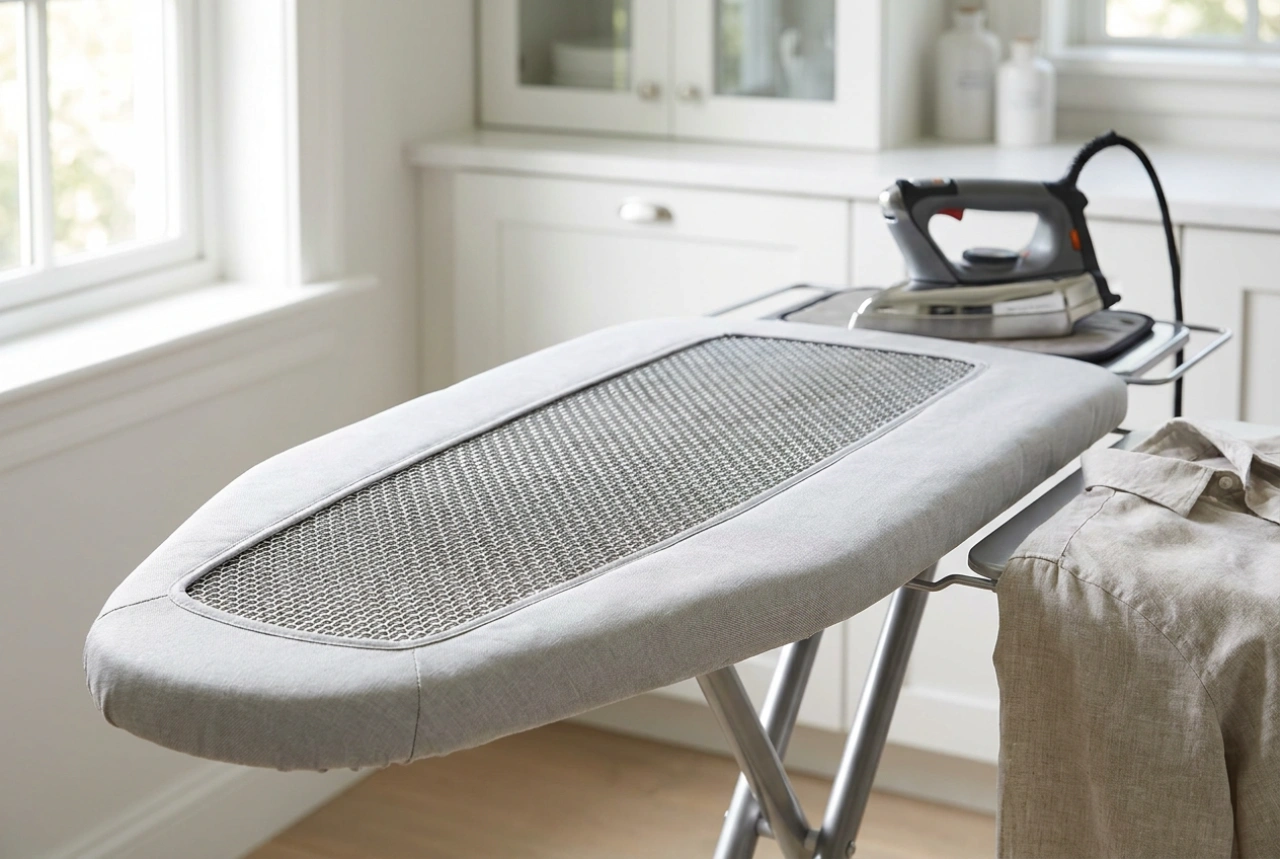
To mitigate this, use an ironing board with a highly permeable metal mesh surface covered by a thick, breathable felt pad. This structure allows excess steam to pass completely through the board rather than bouncing back up into the garment. After finishing a heavy steam session, leave the board open in a well-ventilated space to dry, preventing fungal growth within the padding layers.
Preventing Limescale and Thermal Degradation
Water hardness introduces dissolved calcium and magnesium ions into the boiler. Under high heat and pressure, these ions precipitate as calcium carbonate (limescale). Limescale acts as an insulator, reducing thermal transfer efficiency from the heating element to the water, and can eventually clog the steam vents, leading to dirty water spitting onto garments.
To maintain physical efficiency, perform regular physical flushes of the cold boiler tank. Rinsing the chamber with clean water removes the loose mineral flakes before they calcify onto the heating elements. Avoid using chemical descalers unless specifically instructed by material specifications, as acids can degrade the internal silicone seals and boiler alloy linings.