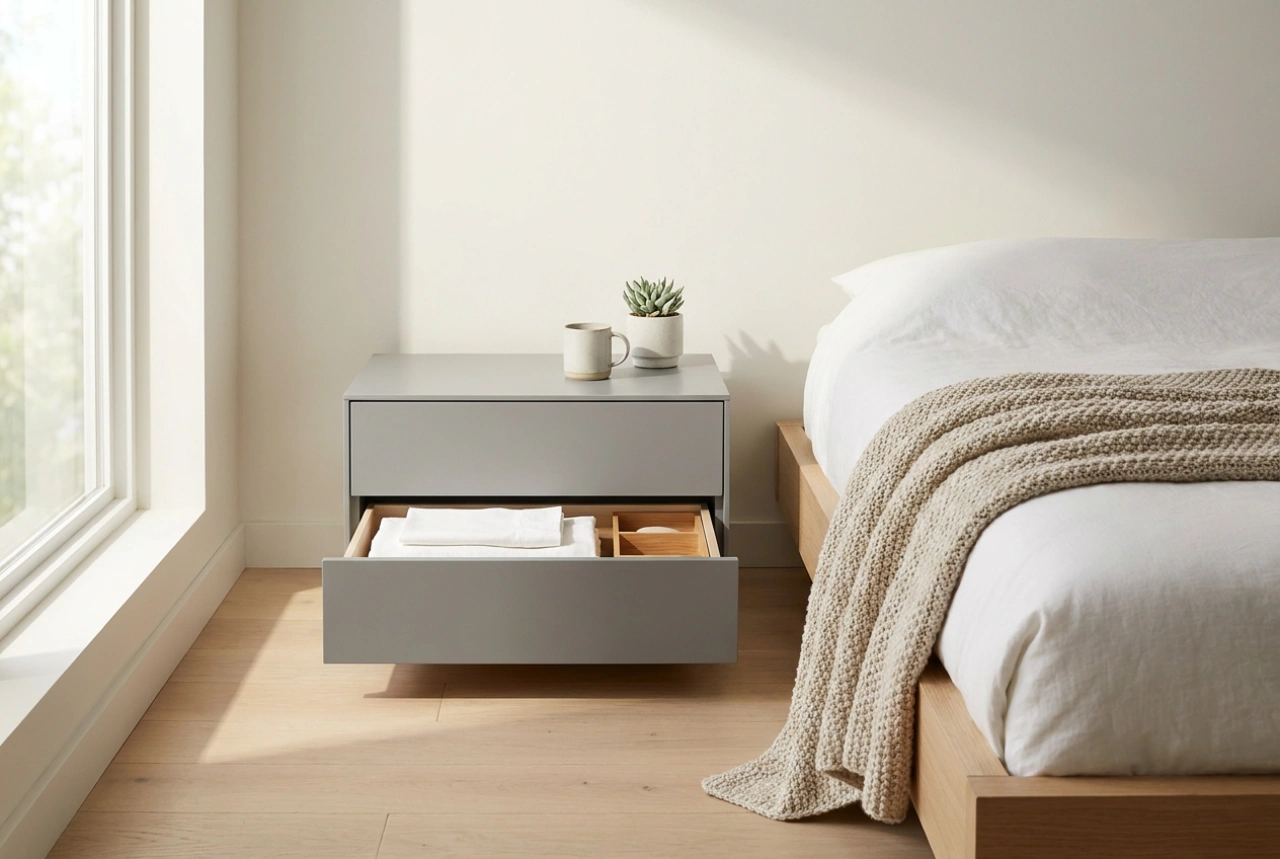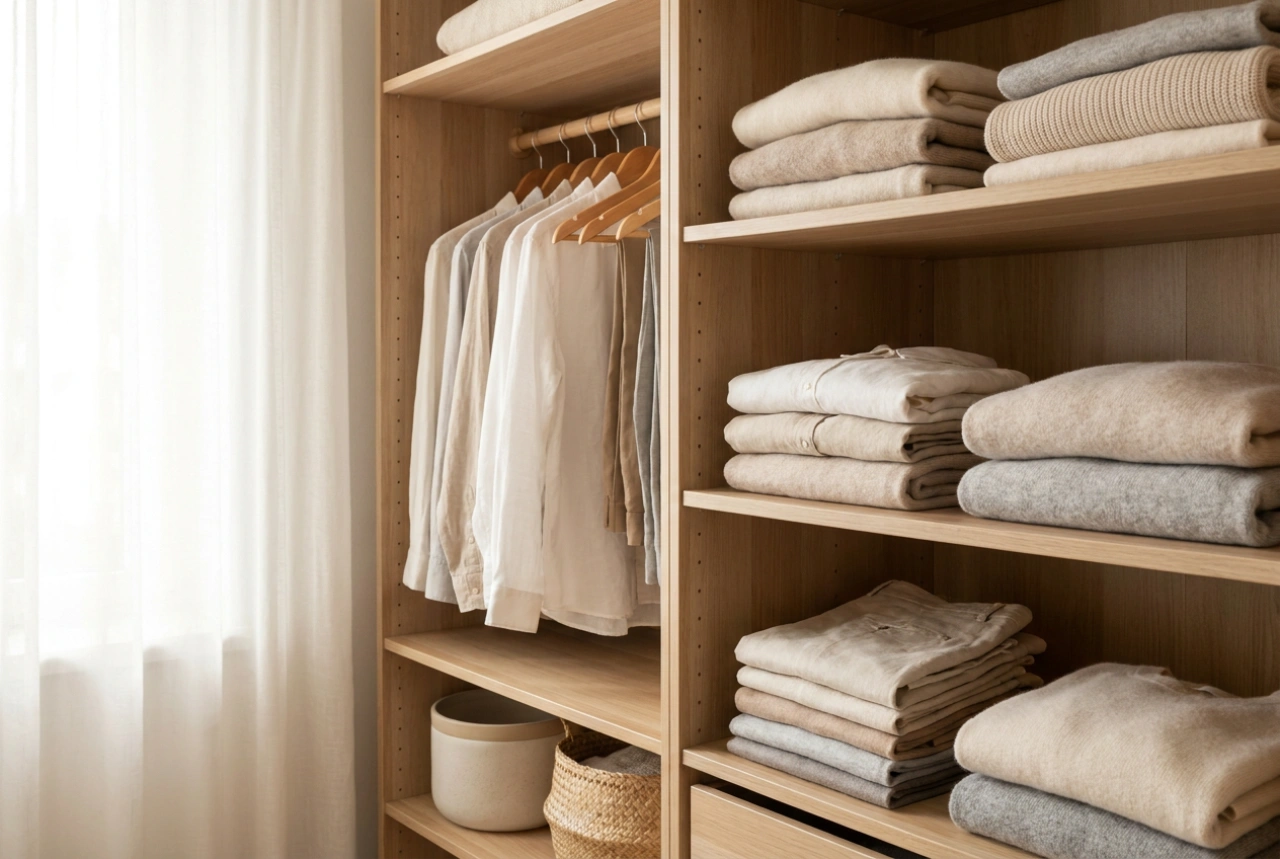


Designing a child-accessible wardrobe requires shifting from adult-centric vertical storage to ergonomic, low-level modular systems that match a child’s physical reach and cognitive capacity. By aligning shelf height, container mechanics, and visual cues with developmental milestones, you can transform daily tidying into an intuitive, self-directed routine.
Ergonomic Zoning: Adapting Storage to Child-Centred Reach
To an adult, a wardrobe is a tall vertical unit designed to maximise floor space; to a child, anything above chest height is practically non-existent. When organizing a modular wardrobe, the first rule is to apply ergonomic zoning based on your child's physical height. The most accessible space, known as the primary interaction zone, lies between the child’s knees and chest level. This is where daily essentials must reside.
- The Active Zone (Knee to Chest): Place daily wear here, such as school uniforms, t-shirts, and trousers. Accessing these items should require no stretching or balancing.
- The Secondary Zone (Floor to Knee): Ideal for shoes, heavier bins, or toys. While easy to reach, it requires bending, making it perfect for items used once a day.
- The Passive Zone (Above Shoulder): Reserve these higher modular shelves for out-of-season clothing, extra bedding, or items requiring parental supervision.
By adjusting modular shelves so that the most frequently used compartments are concentrated within the active zone, you eliminate the physical frustration that leads to children abandoning the task of putting clothes away.
Minimising Friction: Replacing Hangers with Open Storage
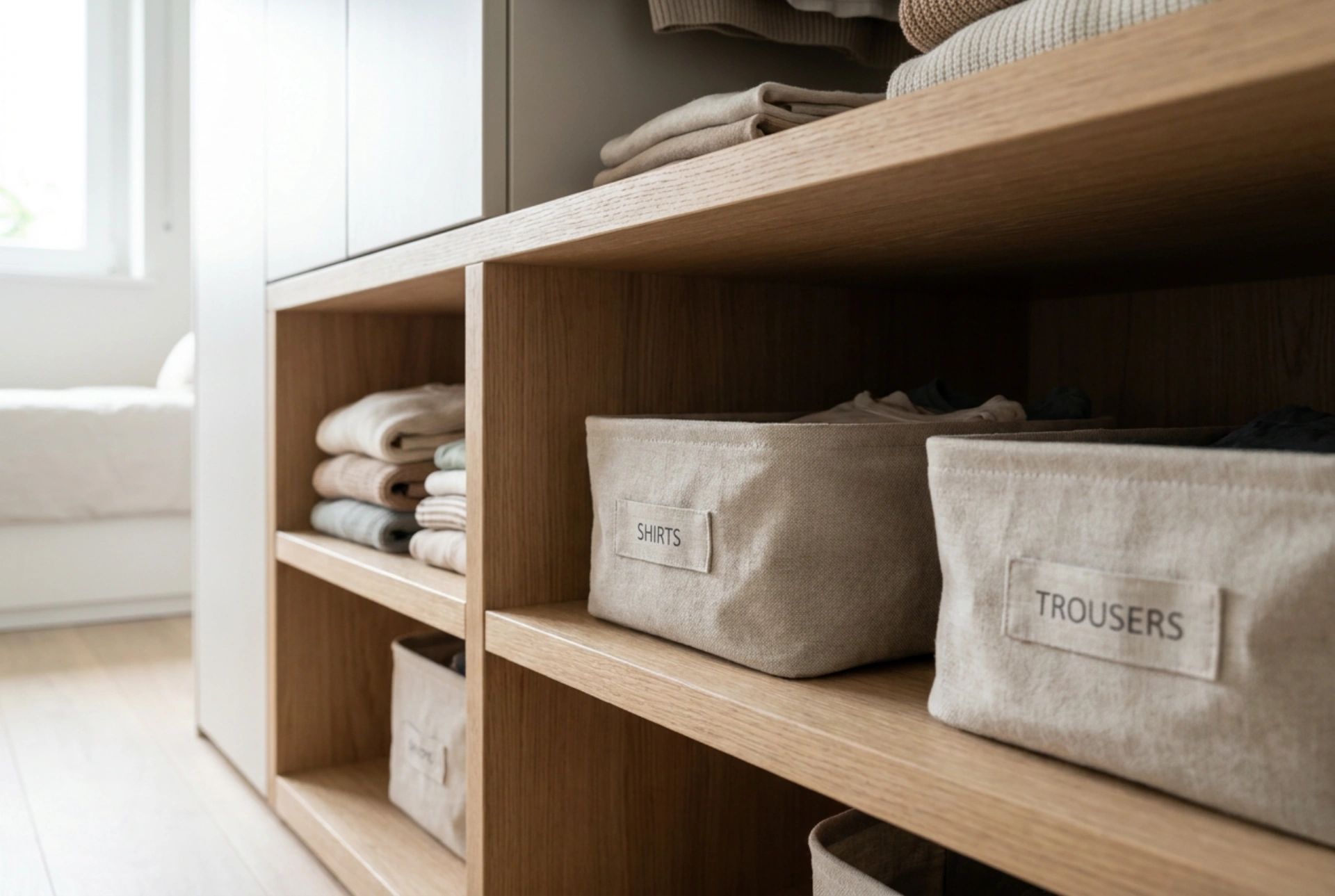
Traditional wardrobes rely heavily on clothes hangers, but hanging a garment requires advanced fine motor skills and bilateral coordination that young children are still developing. Forcing a child to use hangers often leads to garments pulled off forcefully, stretching collars and leaving clothes crumpled on the floor. To encourage independence, replace hangers with low-level modular cubbies and open fabric bins.
Open storage relies on a "one-step" retrieval and storage process. Instead of opening a door, pulling out a drawer, and unhooking a hanger, a child simply drops the folded garment into a designated basket. When selecting containers for the modular frame, opt for lightweight fabric or soft felt baskets rather than heavy plastic or wood. Fabric bins slide easily without friction, eliminate the risk of pinched fingers, and dampen acoustic noise, making the process of tidying physically pleasant and satisfying.
Visual Semiotics and Cognitive Load Reduction
A cluttered, unlabelled wardrobe presents too many choices, causing cognitive overload. When faced with a sea of unstructured clothing, a child will often pull everything out to find one item. To prevent this, limit the volume of clothing stored in the active zone to what is needed for the current week, and employ clear visual categorisation.
Utilise visual signs on the front of modular baskets to categorize contents. For pre-readers, simple line-art icons depicting socks, trousers, or shirts are far more effective than text. Colour-coding also serves as an excellent cognitive shortcut. Assigning specific colours to specific garment types—for example, a green basket for sportswear and a grey basket for underwear—allows the brain to process sorting decisions almost instantly, reducing the mental effort required to tidy up.
The Vertical Filing Method: Preserving Structural Order
Horizontal stacking is the natural enemy of child-led tidying. When t-shirts are stacked on top of one another, pulling the bottom shirt inevitably collapses the entire pile, creating instant mess and frustration. The solution lies in vertical folding, where clothes are folded into self-standing rectangles and filed front-to-back inside shallow modular drawers or baskets.
This physical arrangement ensures that every single garment is visible from above. A child can easily select and extract their chosen item without disturbing the adjacent clothes. When putting clean clothes away, the vertical filing system turns the task into a straightforward "slot-in" motion, which is highly rewarding for young minds and easy to replicate consistently.