

Top-loading washing machines offer unique ergonomic advantages, but maximizing their efficiency requires understanding the mechanical forces and fluid dynamics at play. By mastering the correct loading techniques, chemical sequencing, and balance physics, you can extend the lifespan of your appliance and achieve superior fabric care.
The Physics of Loading: Agitators vs. Impellers
Unlike front-loaders that rely on gravity to tumble clothes, top-loading machines use one of two mechanical systems: a central agitator spindle or a low-profile wash plate (impeller) at the bottom. An agitator uses a twisting motion to draw clothes downward in a continuous toroidal flow, while an impeller uses high-speed rotation to rub fabrics against each other.
To ensure unrestricted movement and even water circulation, clothes must be loaded loosely. Never wrap garments around the agitator, as this causes uneven tension on the fabric fibers and can damage the drive shaft. Instead, drop items individually in loose, un-folded heaps around the perimeter of the drum, creating a balanced "donut" shape. This allows the mechanical wash action to pull garments through the wash liquor uniformly, preventing dry spots and excessive friction.
Chemical Sequencing and Water Dissolution
The order in which water, laundry detergent, and fabrics are introduced determines how effectively surfactants can lower the surface tension of water. In traditional top-loaders without automatic dispensers, adding detergent directly onto dry fabrics can lead to localized chemical spotting, as concentrated surfactants or alkaline powders can weaken fibers before water dilutes them.
To optimize chemical efficacy, first add the laundry detergent (liquid or powder) to the bottom of the empty drum. As the machine fills with water from the bottom, the turbulent inflow dissolves the detergent completely, creating a homogenous wash solution before the fabrics are submerged. If your machine features a dedicated dispenser drawer, utilize it; these systems slowly inject diluted detergent into the water stream, ensuring even distribution across all fibers.
Balancing the Drum to Prevent Mechanical Strain
During the spin cycle, the drum rotates at high speeds to generate centrifugal force, pulling water out of the fabrics and pushing it through the perforations in the basket. If the mass inside the drum is distributed unevenly, the center of gravity shifts away from the rotational axis, creating violent lateral oscillations. This not only causes loud thumping noises but also accelerates wear on the suspension rods, dampening springs, and drive motor.
To prevent unbalanced loads, mix heavy, high-absorption items like cotton towels and denim jeans with lighter fabrics. Never wash a single heavy item, such as a thick bath mat or a large blanket, on its own. Always balance a heavy item with one or two similar-weight items placed on the opposite side of the drum to keep the rotational mass symmetric.
Preventing Biofilm and Odor Through Ventilation
Top-loading machines are less prone to catastrophic door seal leaks than front-loaders, but their physical design makes them susceptible to moisture retention. Gravity causes residual rinse water and dissolved fabric softeners to collect in the sump area beneath the drum, as well as in the crevices of the agitator base. Without proper airflow, this damp, dark environment promotes the growth of anaerobic bacteria and mold, resulting in musty odors.
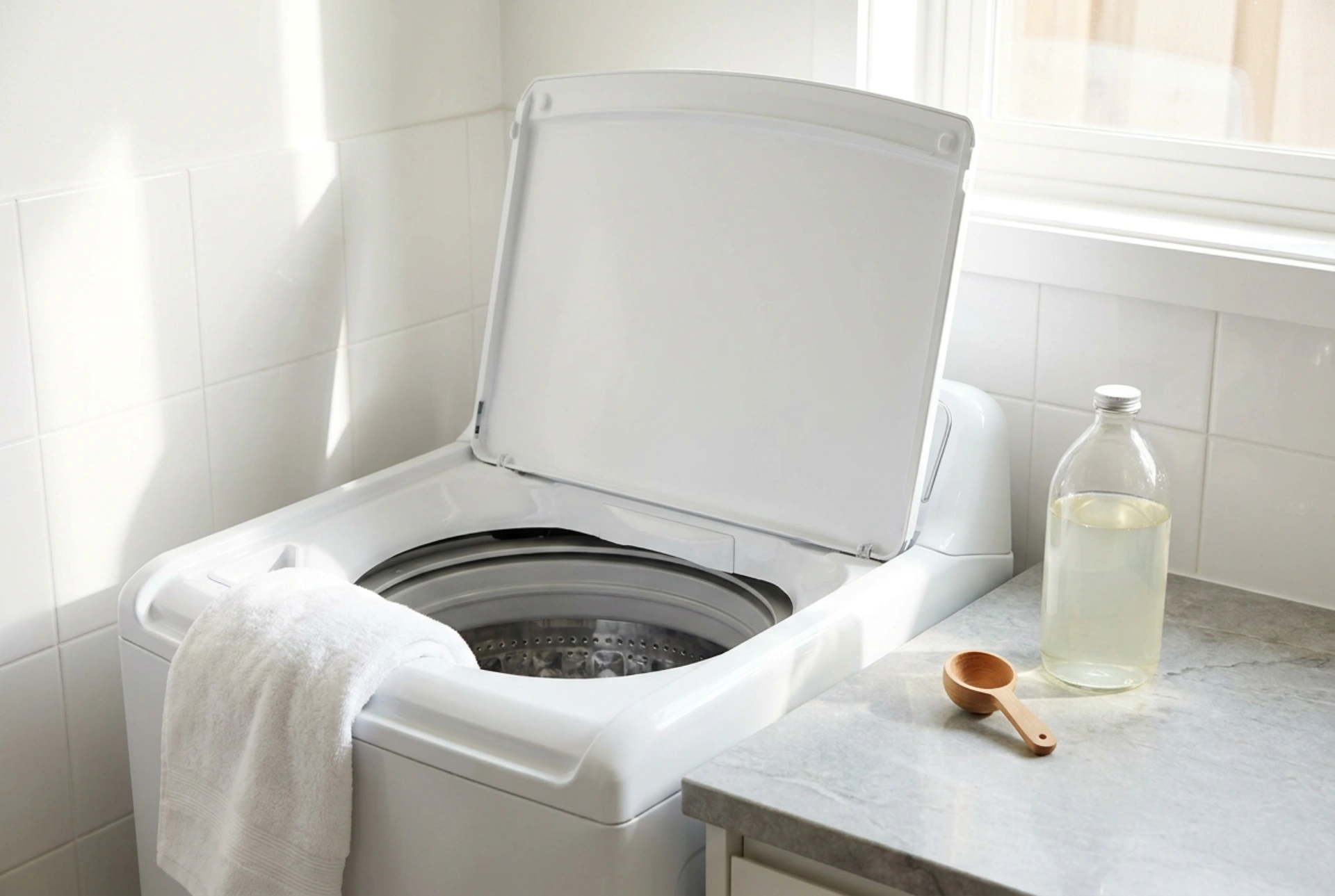
To maintain a hygienic environment, always leave the machine lid fully open between cycles to allow water to evaporate naturally. Periodically run a hot maintenance cycle at 60°C or higher with oxygen bleach or citric acid to dissolve accumulated bio-films and calcium carbonate (limescale) deposits. Wipe down the upper rim of the tub where detergent splashes can dry and form a sticky residue over time.