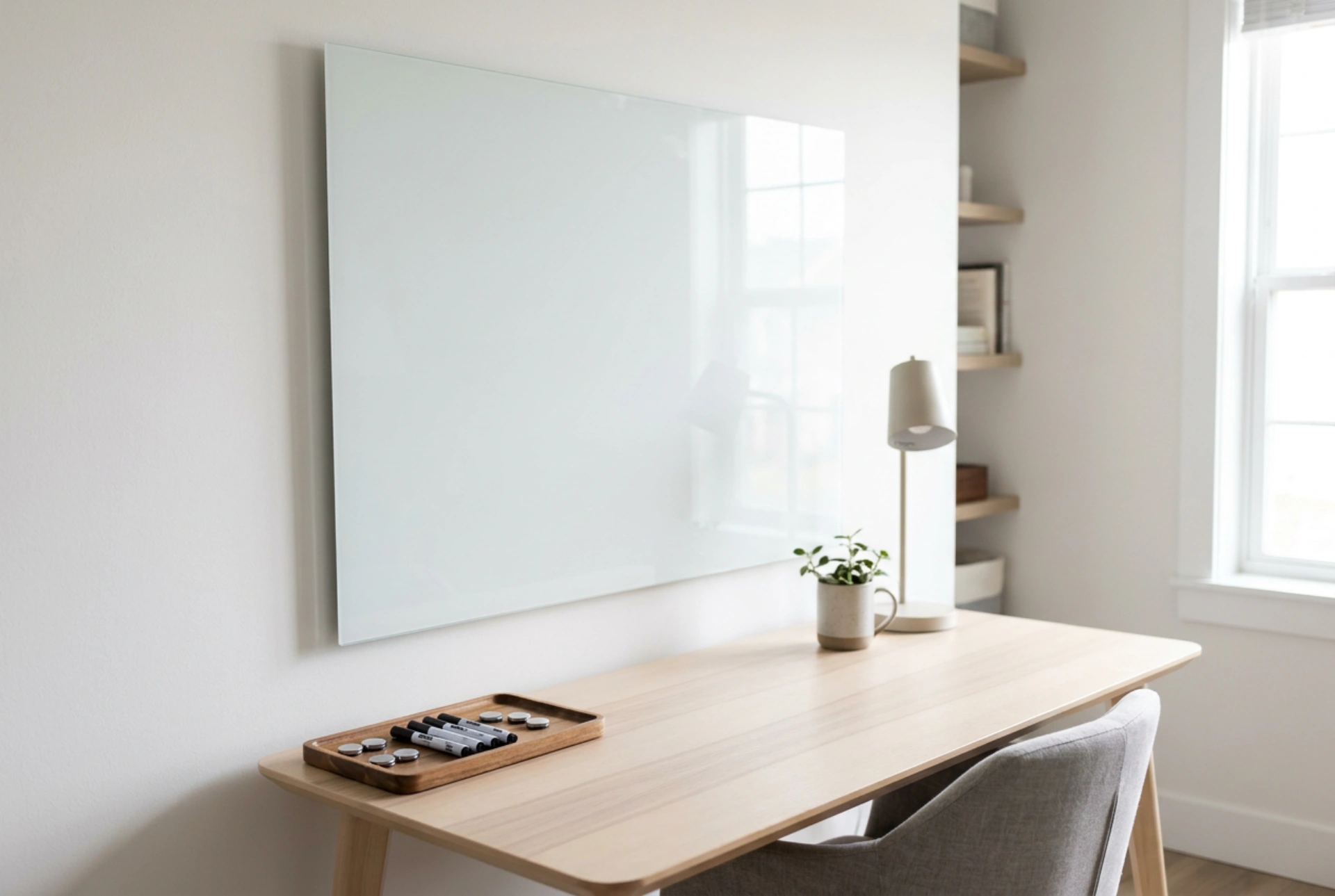


Integrating a mobile magnetic whiteboard into your workspace transforms static walls into dynamic, collaborative planes that adapt to fluid project requirements. Understanding the material science of dry-erase surfaces and the spatial dynamics of physical planning allows you to optimise your cognitive load and maintain peak efficiency.
The Materials Science of Dry-Erase Magnetic Surfaces
To select and maintain the ideal board, one must understand the molecular composition of the surface. Most high-performance whiteboards utilise either painted steel, porcelain-on-steel (ceramic), or tempered magnetic glass. Each material interacts differently with dry-erase marker polymers and magnetic flux lines.
Painted steel boards feature a thin polymer coating over a ferrous metal sheet. While lightweight and highly magnetic due to the proximity of the steel to the surface, the porous nature of cheap polymer coatings can lead to pigment entrapment—commonly known as ghosting. Porcelain surfaces fuse a glass-like ceramic layer to steel at extremely high temperatures, resulting in a non-porous, chemically inert barrier. This prevents ink solvent penetration and resists scratching. Magnetic glass boards use thick tempered glass with a steel backing. Because of the glass thickness, they require high-coercivity neodymium magnets (rare-earth magnets) rather than standard ferrite magnets, as the magnetic force decreases exponentially with distance.
The Chemistry of Dry-Erase Markers and Ghosting
Dry-erase marker ink consists of three main components: a pigment, a volatile solvent (typically isopropyl alcohol or ethanol), and a release agent (silicone polymer). When you write on the board, the solvent quickly evaporates, leaving behind a dry, cohesive film of pigment bound by the release agent. The release agent prevents the pigment from bonding directly to the non-porous board surface.
Ghosting occurs when the release agent fails, or when the solvent penetrates micro-scratches on the board's surface. If you attempt to wipe the board before the solvent has completely evaporated, you smear the unbound pigment into the pores of the material. To clean a ghosted board without damaging the surface, avoid abrasive scourers that create permanent micro-grooves. Instead, apply a high-purity isopropyl alcohol solution (90% or higher). Isopropyl alcohol acts as a solvent that re-dissolves the stubborn pigment resins, allowing a dry, dense microfibre cloth to lift the dissolved particles via capillary action.
Optimising Workflow with Physical Spatial Layouts
Human spatial memory is deeply tied to physical coordinates. Mapping complex project timelines on a mobile magnetic board utilizes our innate cognitive ability to remember information based on its physical location in a room. To implement a highly functional agile system, such as a physical Kanban board, apply the following structured methodology:
- Define boundaries clearly: Use thin, self-adhesive charting tape to divide the board into lanes (e.g., Backlog, In Progress, Review, Completed). Tape prevents the structural lines from being accidentally erased during daily updates.
- Utilise colour-coded magnetic tiles: Instead of paper notes that lose adhesive strength and curl, use reusable magnetic strips. Assign specific pigment colours to distinct task categories or urgency levels to exploit pre-attentive visual processing.
- Maintain a physical flow direction: Standardise the movement of tasks from left to right to align with natural reading patterns, reducing cognitive friction during progress reviews.
Ergonomics, Mobility, and Spatial Physics
The primary benefit of a mobile magnetic whiteboard is its ability to alter the physical architecture of a room. Positioning the board at a ninety-degree angle to your desk encourages regular standing breaks, stimulating blood flow and re-engaging the prefrontal cortex during intensive problem-solving sessions.
When moving the board, always secure the locking castors on the base to prevent oscillation while writing. Applying pressure to an unsecured board causes micro-vibrations that distort handwriting and increase physical fatigue in the forearm muscles. For optimal ergonomics, position the most critical, high-frequency tasks at eye level (between 120 and 160 centimetres from the floor) to prevent neck strain during prolonged analytical work.