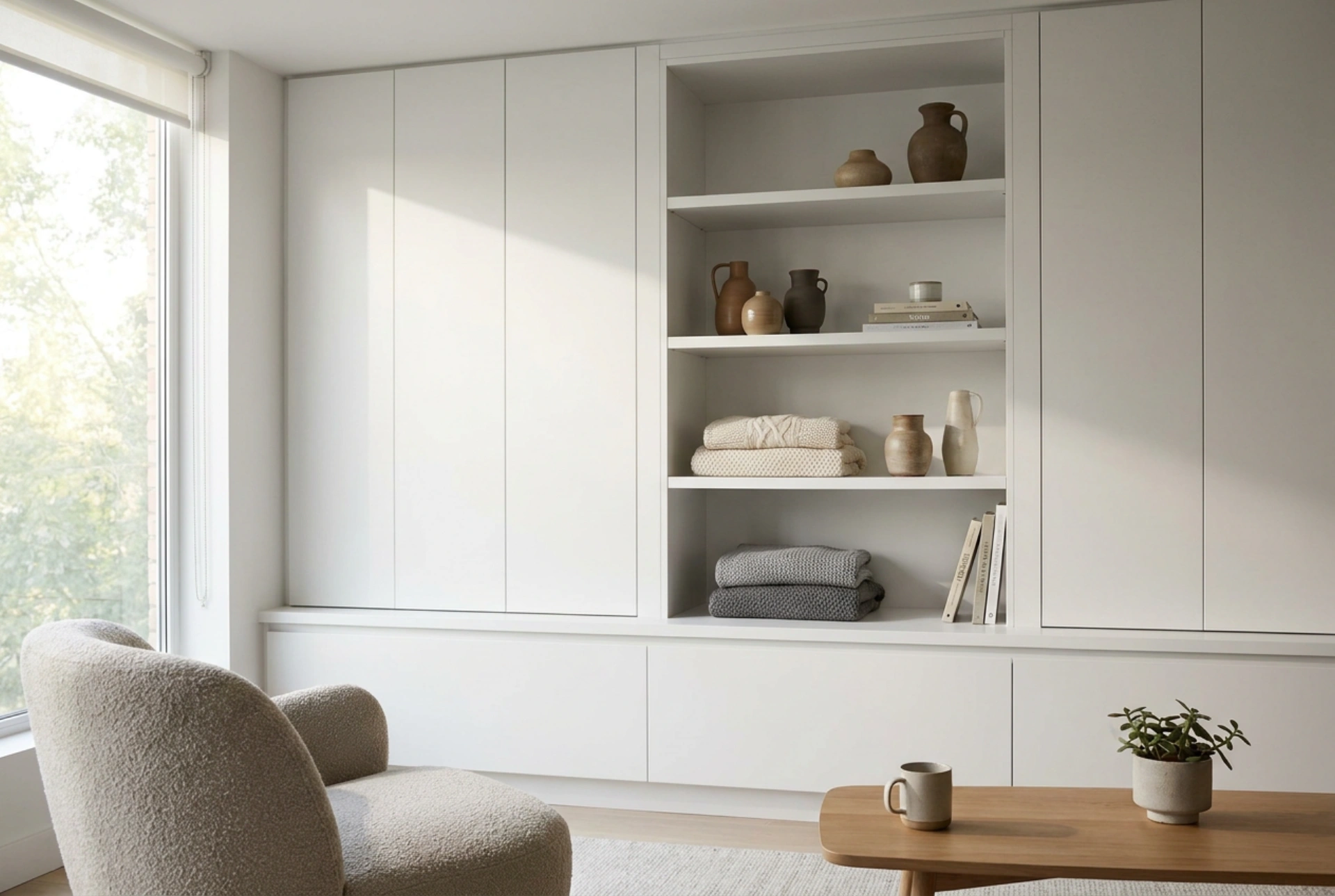


Achieving a clutter-free living room relies on understanding spatial design and utilising furniture that maximises vertical storage. A modern wall unit with an integrated wardrobe offers a unified structural solution that eliminates visual noise while keeping everyday items accessible.
The Physics of Visual Clutter and Spatial Efficiency
Visual clutter is more than just an aesthetic issue; it directly impacts how light behaves within a room. When a space is filled with mismatched, low-standing furniture, light waves are repeatedly obstructed, creating dark corners and casting uneven shadows. This fragmented light distribution makes a living room feel smaller and more chaotic. By consolidating storage into a single, cohesive vertical plane, you streamline the pathways of both natural and artificial light.
Utilising the vertical dimension of your walls shifts the storage burden away from the floor. A modern wall unit acts as an architectural extension of the wall itself. This integration exploits the vertical plane to draw the eye upward, creating an illusion of height. When choosing a wall unit with an integrated wardrobe, you capitalise on the deepest part of the furniture to conceal large, bulky items that would otherwise disrupt the flow of the room, such as winter coats, bedding, or home office equipment.
Zoning Your Storage: The 80/20 Rule of Interior Design
An organised living room relies on a strict distinction between open display and closed storage. The optimal ratio for maintaining a calm environment is the 80/20 rule: eighty percent of your belongings should be concealed behind closed doors, while only twenty percent remain visible on open shelves. This prevents sensory overload and allows you to curate a small number of visually pleasing items, such as ceramics or books, which add character without creating chaos.
To make the most of the integrated wardrobe and shelving, divide the unit into three distinct functional zones:
- The Active Zone (Eye Level): This area is reserved for items you interact with daily. Open shelves in this zone should hold a few carefully spaced decorative items, while closed compartments should house media devices, remote controls, or current reading material.
- The Passive Upper Zone (Above Shoulder Height): Use the highest shelves for seasonal items, archived documents, or lightweight decorative elements. Since this area requires a reach, keep items stored here in uniform boxes to maintain a clean appearance.
- The Heavy Lower Zone (Below Knee Level): Position heavy objects, such as photo albums, spare textiles, or board games, at the base of the unit. This keeps the centre of gravity low, ensuring the structural stability of the furniture while keeping heavy items easy to lift without straining your back.
Material Science: Caring for Matte White Finishes
Modern wall units often feature sleek, matte white finishes that excel at diffusing light. Unlike high-gloss surfaces, which reflect light directly and create harsh glares, matte surfaces scatter light in multiple directions. This diffuse reflection creates a soft, warm glow that enhances the feeling of space. However, matte surfaces are highly susceptible to picking up natural oils from fingers, which can leave dull, dark patches over time.
To maintain the pristine look of a matte polymer or lacquered MDF surface, you must avoid abrasive cleaning agents or rough scrubbing pads, which can micro-scratch the surface and permanently alter its light-scattering properties. Instead, use a high-density microfibre cloth. Microfibre carries a slight positive charge that attracts negatively charged dust particles, removing them without scratching. For oily fingerprints, use a solution of warm water mixed with a few drops of a neutral, non-ionic surfactant (such as standard dishwashing liquid). Wipe gently in circular motions, then dry immediately with a clean, dry cloth to prevent moisture from penetrating the seams of the cabinetry.
Structural Considerations and Load Distribution
When organising a wall unit, understanding structural tension is crucial for longevity. Horizontal shelves are subjected to bending stress under the weight of books and decorative objects. To prevent sagging, place the heaviest items close to the vertical supports of the unit, where the load is transferred directly down to the base. Avoid overloading the centre of long, unsupported shelves. If your unit is wall-mounted, ensure the anchoring system is rated for both the static weight of the furniture and the dynamic weight of its contents, taking into account the composition of your walls (plasterboard versus solid masonry).