

Optimizing a double-door refrigerator with a bottom freezer is not just about aesthetics; it is a matter of thermal dynamics and food preservation science.
Understanding Temperature Zones in Double-Door Units
French-door and double-door refrigerators utilize complex airflow patterns to distribute cold air. Unlike traditional top-freezer models, double-door units experience significant temperature fluctuations along the door bins due to frequent opening. The coldest zones are always at the back of the bottom shelves and inside the specialized drawers. The door bins, conversely, are the warmest zones and are highly susceptible to ambient kitchen air. Understanding this thermal stratification is crucial for placing food where it will resist bacterial growth and spoilage longest.
The Chemistry of Preservation: Crisper Drawers and Humidity Control
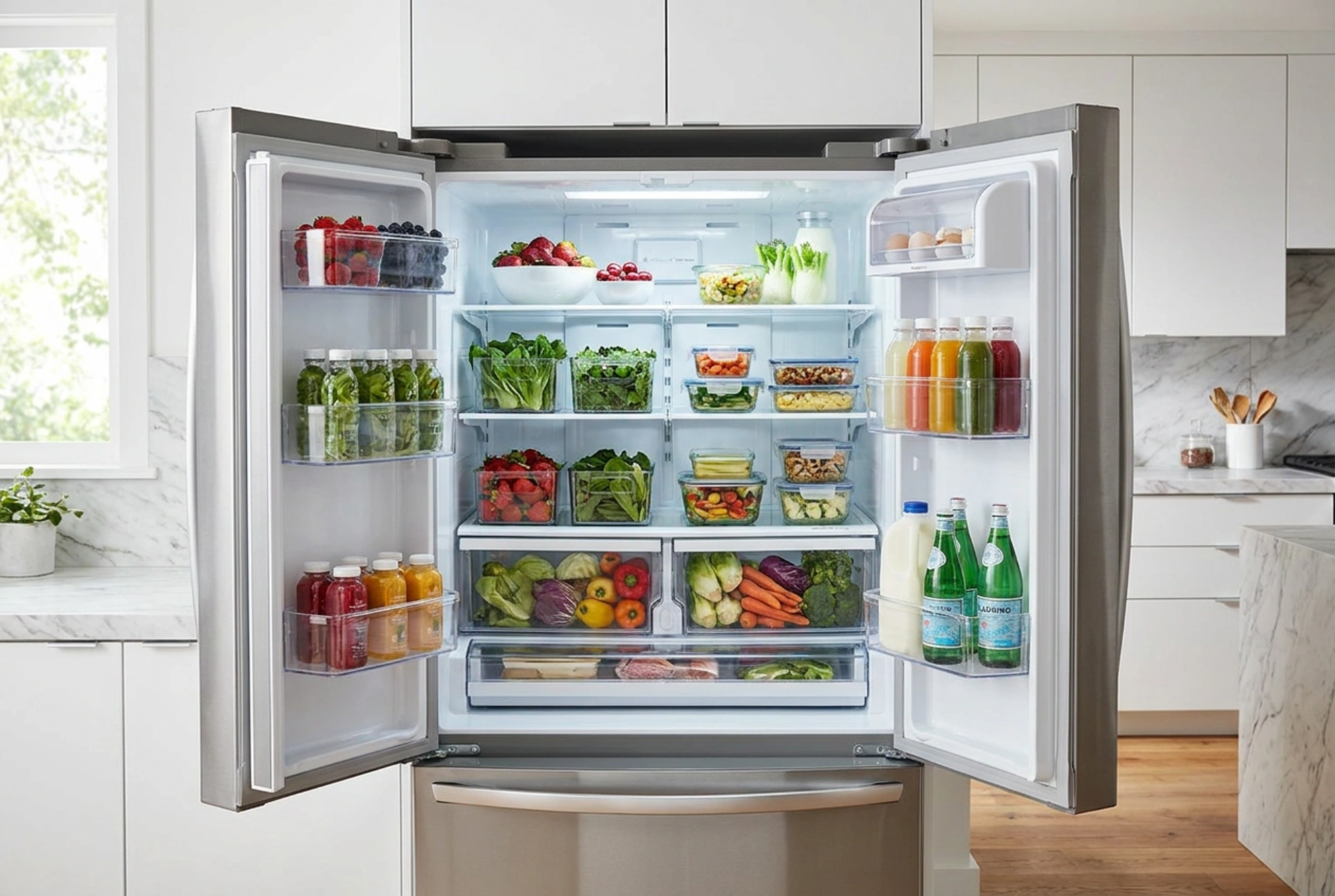
Most modern double-door refrigerators feature adjustable humidity sliders on the vegetable and fruit drawers. This is a mechanical control system that manages ethylene gas and moisture levels. High humidity drawers restrict airflow, keeping moisture in. This environment is ideal for leafy greens, broccoli, and carrots, which wilt when they lose water. Low humidity drawers open a small vent, allowing ethylene gas—a natural ripening hormone emitted by certain fruits—to escape. Apples, pears, and stone fruits should always be stored in the low-humidity zone to prevent premature decay and to stop them from spoiling adjacent vegetables.
The Physics of Shelf Placement
To maximize energy efficiency and food safety, organize the main cabinet shelves from top to bottom based on cooking temperature requirements. Since heat rises even within a refrigerated space, the top shelves maintain a stable, moderate temperature. This is the ideal zone for ready-to-eat foods, leftovers in glass containers, and dairy products like yogurt and cheese. The middle shelves should hold deli meats and eggs, which benefit from consistent cooling. The bottom shelf is the coldest part of the main cabin. Always place raw meat, poultry, and fish here. This positioning prevents gravity-assisted cross-contamination; if raw juices leak, they cannot drip onto other food items below.
Optimizing the Bottom Freezer
The bottom freezer is a deep chest that can easily become a graveyard for forgotten food if organized incorrectly. To combat this, employ a vertical filing system rather than horizontal stacking. Use durable, open-top plastic bins to categorize items: one for frozen vegetables, one for prepped meals, and another for raw meats. Storing items vertically allows you to see every label at a glance, minimizing the time the freezer drawer remains open. This practice reduces warm air entry, preventing frost buildup on the freezer walls and saving energy by maintaining a constant sub-zero internal temperature.
Practical Routine for Airflow and Maintenance
No organizational system will succeed if the refrigerator is packed beyond eighty percent capacity. Refrigeration relies on the free circulation of cold air. Blocked vents force the compressor to work harder, raising energy consumption and creating warm pockets where food spoils quickly. Ensure a two-inch gap remains between food containers and the back wall of the appliance. Wipe down the door seals monthly with warm water and mild dish soap to maintain a tight vacuum seal, keeping cold air inside and warm, humid kitchen air out.