

Achieving perfectly crystal-clear windows relies on understanding the chemistry of glass contaminants and the physical dynamics of evaporation rather than buying expensive commercial sprays.
The Chemistry of Window Film and Streaks
The cloudy, matte layer that often forms on window panes consists of a combination of airborne grease, pollen, soot, and mineral deposits from rain. When you use inappropriate cleaning agents or hard water, you do not actually remove these particles. Instead, you dissolve them slightly and spread them across the glass surface. As the liquid evaporates, these dissolved solids settle back down, creating unsightly streaks and a dull, matte appearance.
Commercial window cleaners often contain synthetic surfactants and artificial fragrances that leave behind thin chemical residues. These residues attract dust and moisture, accelerating the re-soiling process. To prevent this, the cleaning solution must completely encapsulate the grease and minerals, allowing them to be wiped away entirely before the liquid evaporates.
The Power of Acidity and Surfactants
You can create a highly effective, residue-free cleaning solution using basic household chemistry. The ideal mixture relies on two key components: a mild acid to dissolve mineral buildup and a surfactant to break down lipid-based grime.
- Acetic Acid Solution: Mix equal parts of distilled water and white vinegar (five percent acidity). Acetic acid efficiently breaks down the alkaline mineral salts left by rainwater and hard tap water.
- Dishwashing Liquid Booster: Add just two to three drops of standard, fragrance-free dishwashing liquid to your mixture. This acts as a surfactant, lowering the surface tension of the water so it spreads evenly and lifts greasy deposits from the glass fibers.
- Isopropyl Alcohol Variant: For exceptionally greasy windows, such as those in kitchens, replace half of the water with seventy percent isopropyl alcohol. Alcohol dissolves stubborn organic fats and accelerates the evaporation rate, reducing the window of time in which streaks can form.
The Drying Technique: Physics over Friction
How you dry the glass is just as important as the chemical solution you apply. Traditional paper towels often shed tiny cellulose fibers that cling to the static-charged glass surface. Furthermore, excessive friction creates static electricity, which immediately pulls dust from the air back onto the clean window.
To avoid this, use a squeegee with a supple, undamaged rubber blade. The squeegee relies on mechanical displacement rather than absorption. By scraping the liquid off in continuous, overlapping strokes, you physically remove the suspended dirt and water minerals before they can dry on the pane.
Step-by-Step Execution for Flawless Results
For the best results, always clean your windows on a cloudy day or when the glass is cool to the touch. Direct sunlight heats the glass pane, causing the cleaning solution to evaporate instantly. This rapid evaporation prevents you from wiping the contaminants away in time, guaranteeing streaks.
Step 1: Dry Dusting and Frame Cleanup
Before introducing any moisture, use a soft brush or a dry microfiber cloth to remove loose dust, cobwebs, and pollen from the window frame and the glass. Introducing liquid to a dusty window creates a muddy slurry that is much harder to clean and can scratch the glass during wiping.
Step 2: Applying the Solution
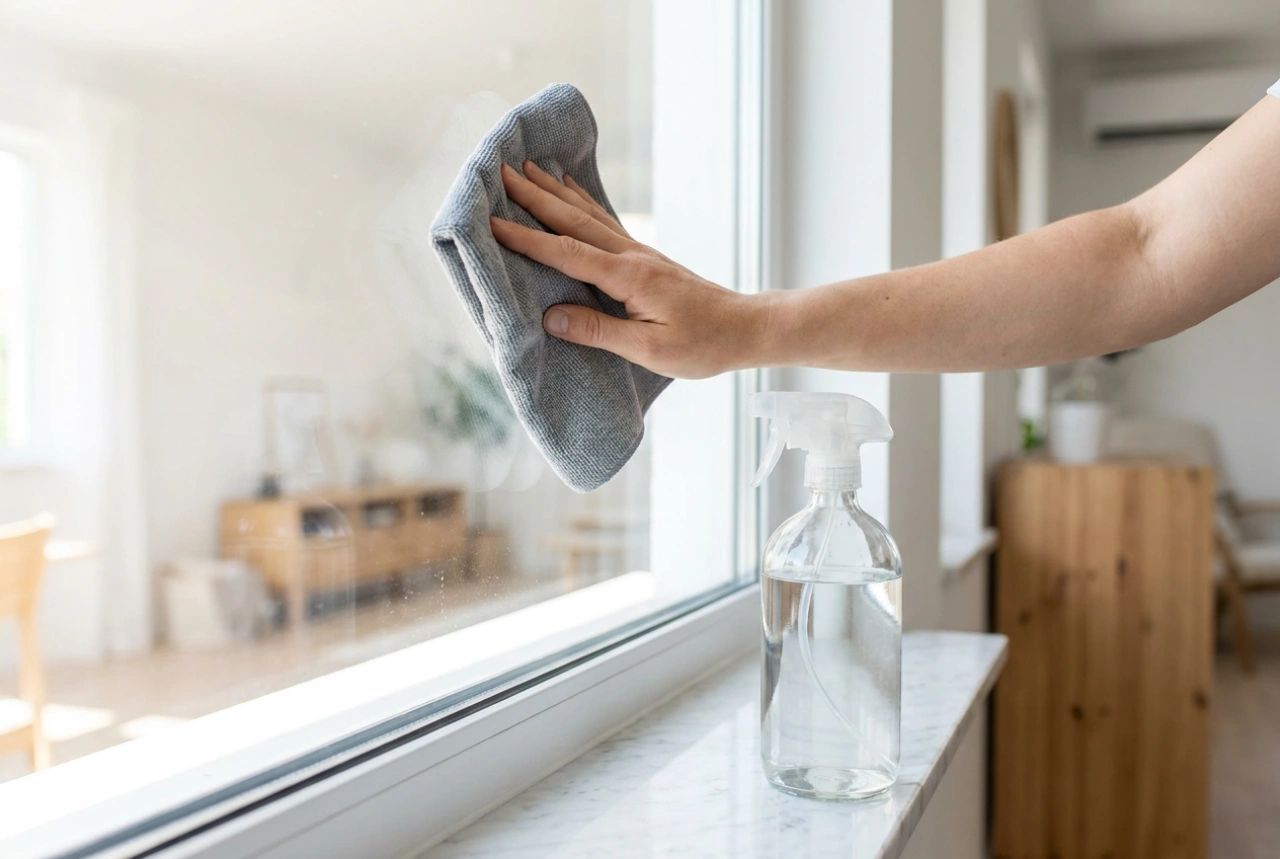
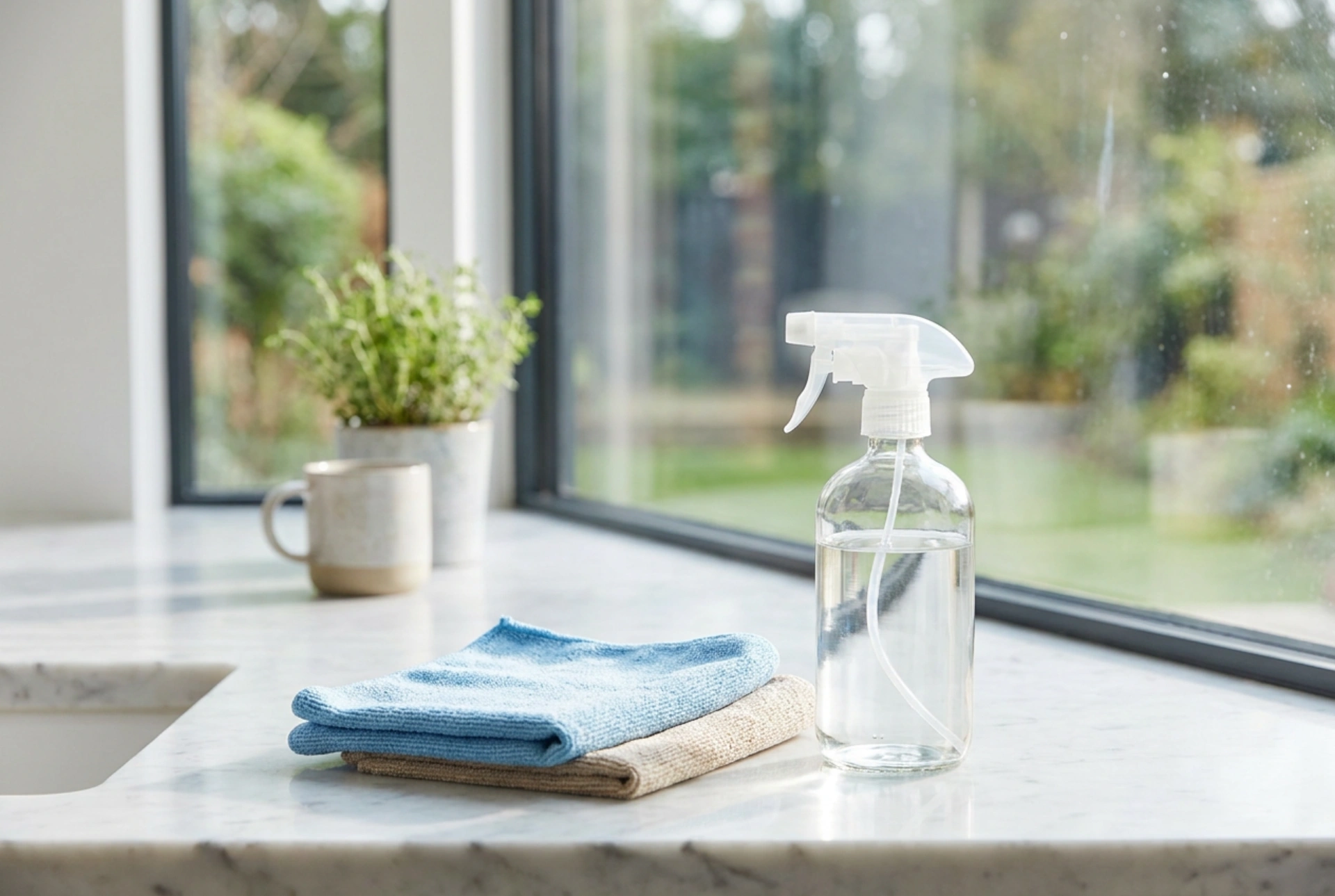
Spray your vinegar-based mixture generously over the entire glass surface. Alternatively, use a clean microfiber wash mitt soaked in the solution and wrung out so it is damp but not dripping. Work from the top of the window down to prevent dirty runoff from contaminating already cleaned areas.
Step 3: Squeegee Technique
Tilt your squeegee at a forty-five-degree angle to the glass. Start at the top corner and pull the blade down in a single, smooth motion. After each pass, wipe the rubber blade completely dry with a clean, lint-free microfiber cloth. Overlap the previous stroke by about two centimeters to ensure no wet lines are left behind.
Step 4: Detail Buffing
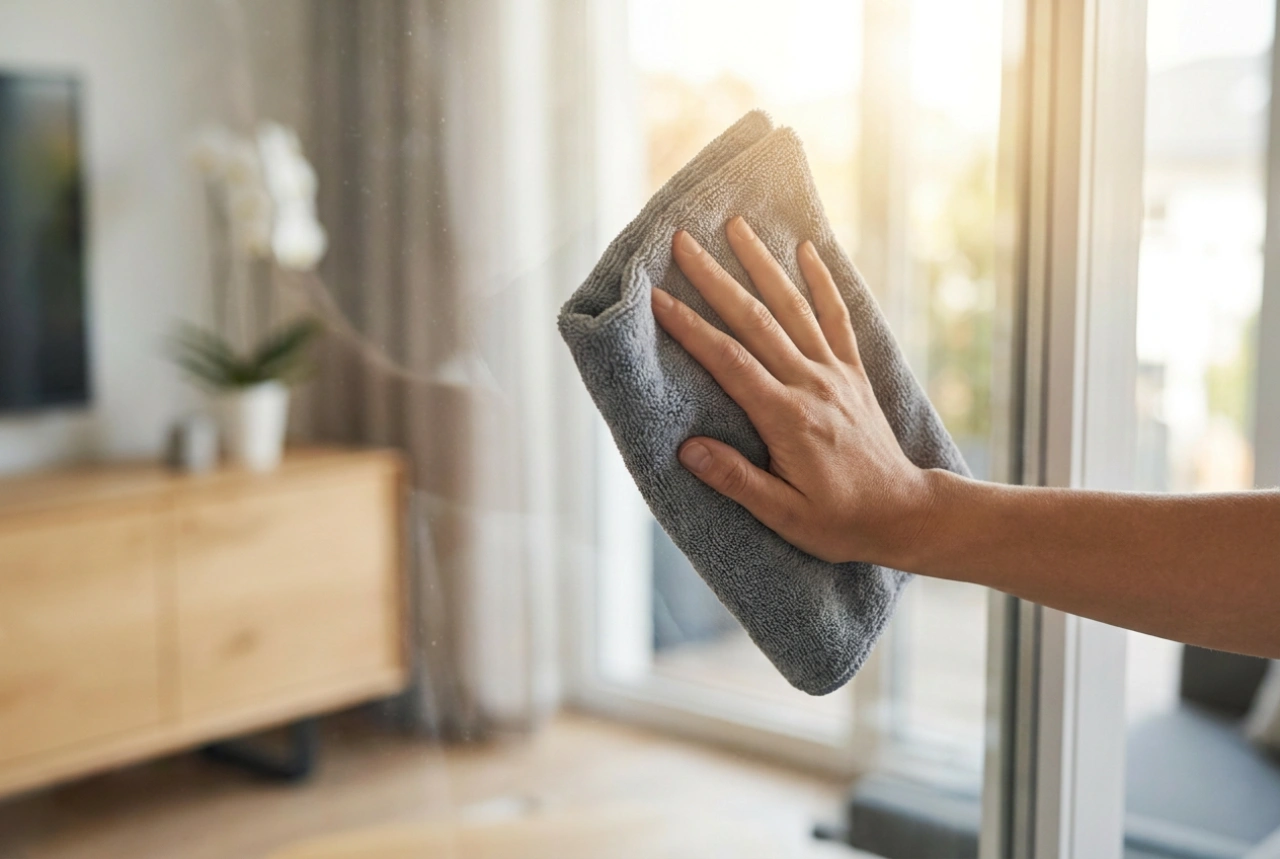
Inspect the edges of the window frame where the squeegee cannot easily reach. Use a dry, tightly woven microfiber cloth (specifically a waffle-weave glass cloth) to gently buff away any remaining moisture droplets along the perimeter of the glass.