

A well-planned bedroom wardrobe saves valuable minutes every morning by aligning your storage system with physical habits and material science.
The Ergonomics of Vertical Zoning
Gravity and human ergonomics dictate how we should organize storage spaces. Dividing your wardrobe into three distinct height zones optimizes physical effort and protects your garments. The active zone, stretching from your thighs to your shoulders, is the most accessible area and should hold your daily essentials. Placing frequently worn shirts, trousers, and knitwear here eliminates constant bending or reaching.
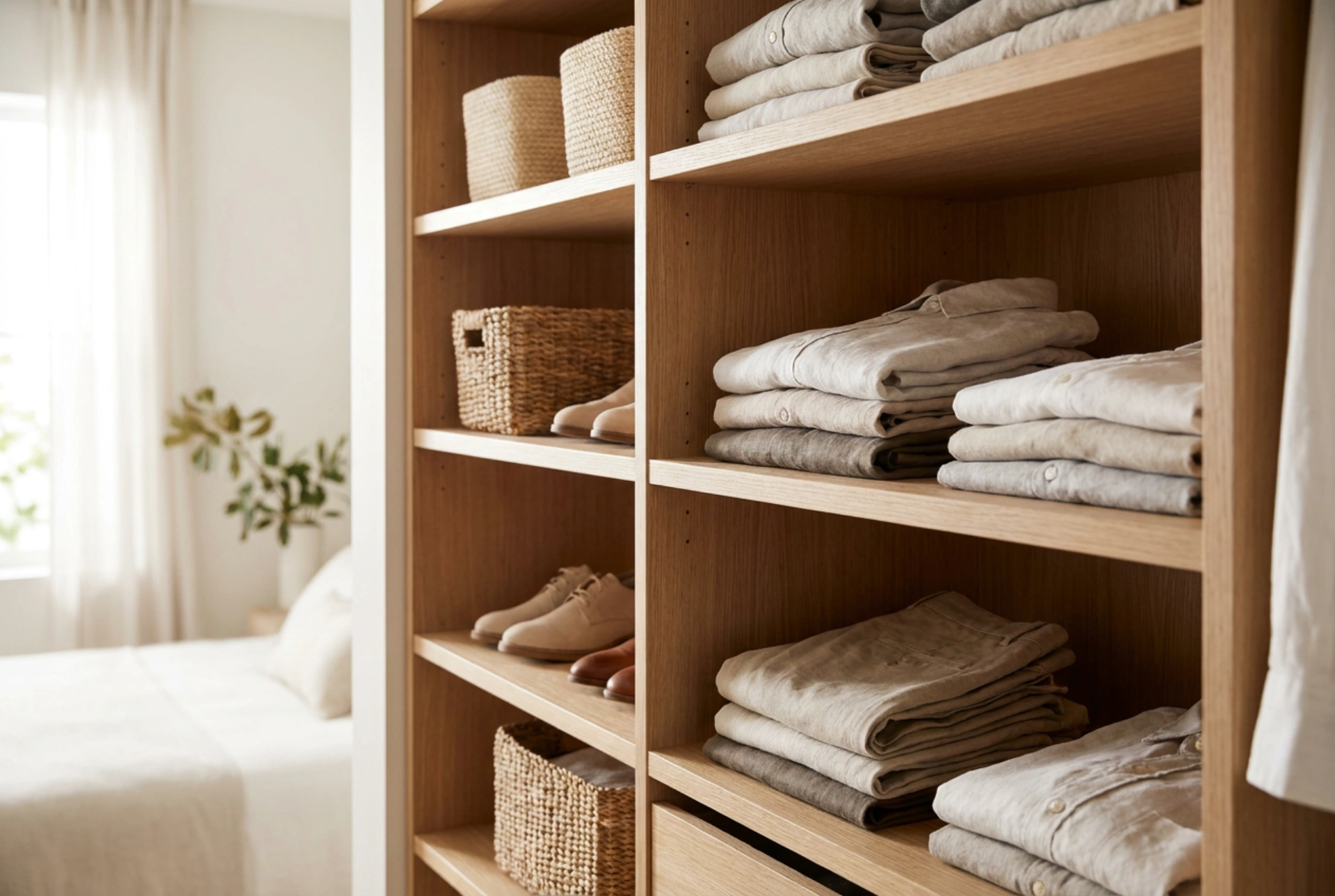
The low zone, from the floor to thigh height, is ideal for heavier items and shoes. Storing heavy denim or footwear at the bottom keeps the center of gravity low and prevents structural strain on the wardrobe unit. The high zone, anything above shoulder reach, should be reserved exclusively for seasonal items, spare bedding, or travel gear. This vertical hierarchy reduces physical strain and keeps your daily routine streamlined.
The Chemistry of Fabric Preservation
Different textiles require specific storage conditions to maintain their structural integrity and prevent fiber degradation. Air circulation is the most critical factor in preventing mustiness and fiber breakdown. Packing clothes too tightly compresses natural fibers like wool and linen, trapping residual body moisture and creating an ideal environment for microscopic mold spores.
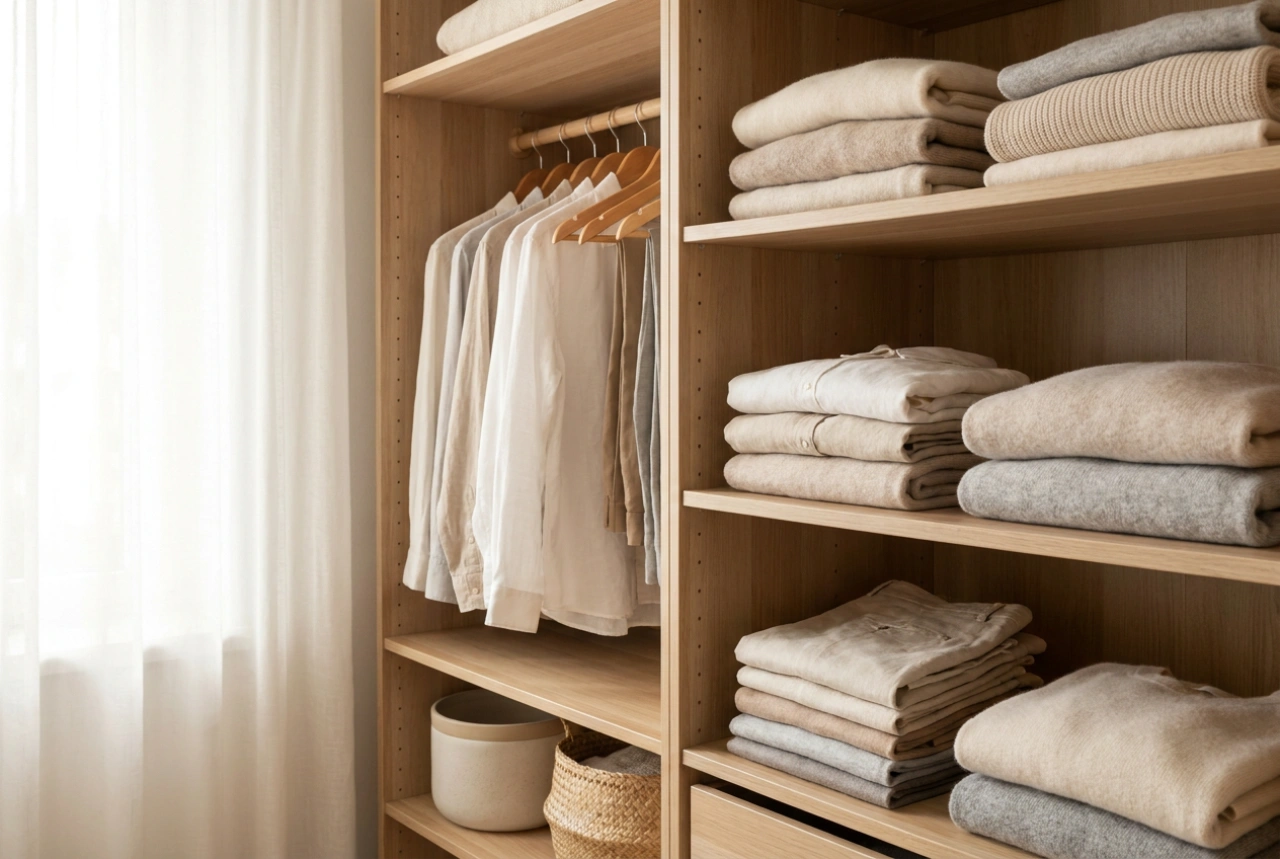
- Hanging vs. Folding: Heavy knits and sweaters should never be hung. Gravity pulls on the yarn, stretching the shoulders and distorting the fit. Instead, store them flat using a loose fold. Woven fabrics like linen, cotton shirts, and tailored trousers benefit from hanging, which allows natural gravity to pull out minor creases.
- Hanger Selection: Use wide, contoured wooden or padded hangers. Thin wire hangers exert concentrated pressure on small areas of the garment, permanently stretching the shoulder seams and weakening the fabric threads.
- Microclimate Control: Ensure there is at least a two-centimeter gap between hanging garments to allow air to circulate freely, maintaining a stable relative humidity within the wardrobe.
An Efficient Layout Scheme
Constructing a functional daily workflow inside your wardrobe requires a logical sequence of zones. Grouping garments by category and then by color or fabric weight creates a visual map that your brain processes instantly in the morning.
Dedicate one section to short hanging items, such as shirts and jackets, which leaves space beneath for a chest of shallow drawers. Drawers are highly efficient for storing smaller items like socks and undergarments. Utilizing the file-folding method, where items are stood vertically rather than stacked, ensures every piece is visible at a glance and prevents the bottom layers from becoming crushed and forgotten.
Sustaining Order Through Motion and Routine
An organized wardrobe relies on active maintenance and smart habits. When returning clean laundry to the wardrobe, place the freshly washed items at the back of their respective sections. This simple rotation system ensures even wear across your entire wardrobe and prevents you from repeatedly wearing only the top three items in a stack.
Conduct a seasonal transition twice a year. During these transitions, vacuum the interior corners to remove fabric dust, which attracts pests. Wipe down the wooden shelves with a slightly damp microfiber cloth to remove static electricity that attracts dust particles, ensuring a clean environment for your textiles.