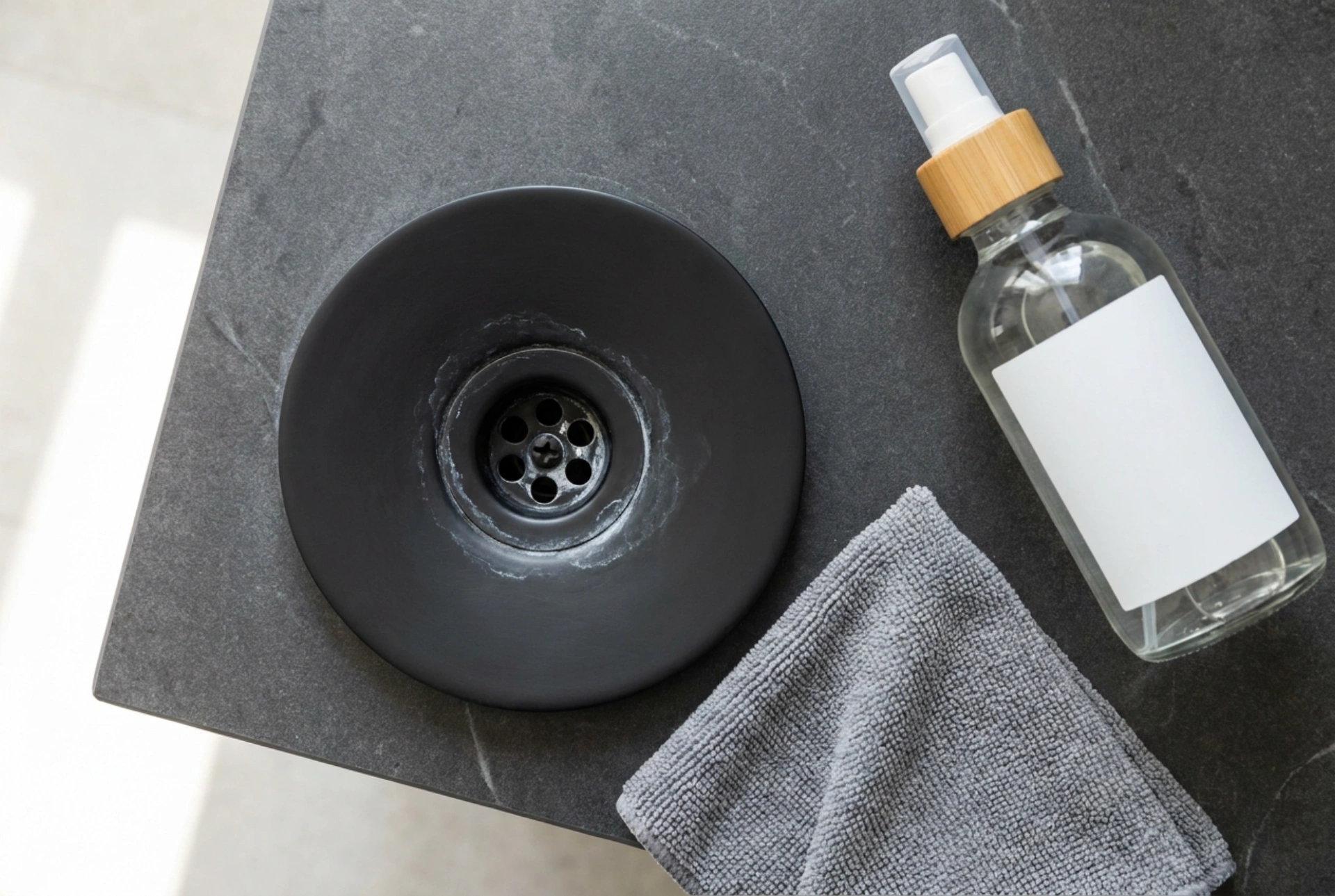


Matte black basin plugs and waste fittings add a sleek, modern touch to bathrooms, but they are highly susceptible to unsightly white limescale deposits that ruin their minimalist appearance.
The vulnerability of black finishes
Unlike standard chrome-plated brass, which can withstand aggressive scrubbing and strong mineral acids, black bathroom fittings usually feature a delicate powder coating or an electroplated metal oxide layer. These finishes are porous on a microscopic scale and easily damaged by abrasive pads or highly concentrated acids. Rough treatment scratches the surface, exposing the bright underlying metal and making the fitting permanently unsightly. Chemical erosion from improper cleaners can also cause the black finish to fade, turn gray, or peel away entirely.
The chemistry of limescale removal
Limescale consists primarily of calcium carbonate, a compound that is insoluble in water but dissolves when exposed to mild acids. To protect the black coating, you must use an acid that is strong enough to break down the calcium carbonate but weak enough not to strip the protective paint or anodized layer. Diluted citric acid is the ideal chemical agent for this task. It acts as a chelating agent, binding to the calcium ions and converting them into highly soluble calcium citrate, which can then be easily rinsed away without the need for mechanical scrubbing.
Step-by-step restoration process
- Prepare the solution: Dissolve one tablespoon of citric acid powder in 200 ml of lukewarm water. Stir thoroughly until the crystals are completely dissolved. Warm water accelerates the chemical reaction without damaging the plug finish.
- Apply the compress: Do not pour the solution directly down the drain, as it will run off before it can react. Instead, saturate a soft microfiber cloth or a thick paper towel in the citric acid mixture. Wrap this wet compress directly around the affected areas of the black plug.
- Allow contact time: Leave the compress in place for 10 to 15 minutes. This allows the acid to chemically dismantle the mineral matrix. Do not leave the solution on the surface for longer than 30 minutes, as prolonged contact can begin to dull the matte finish.
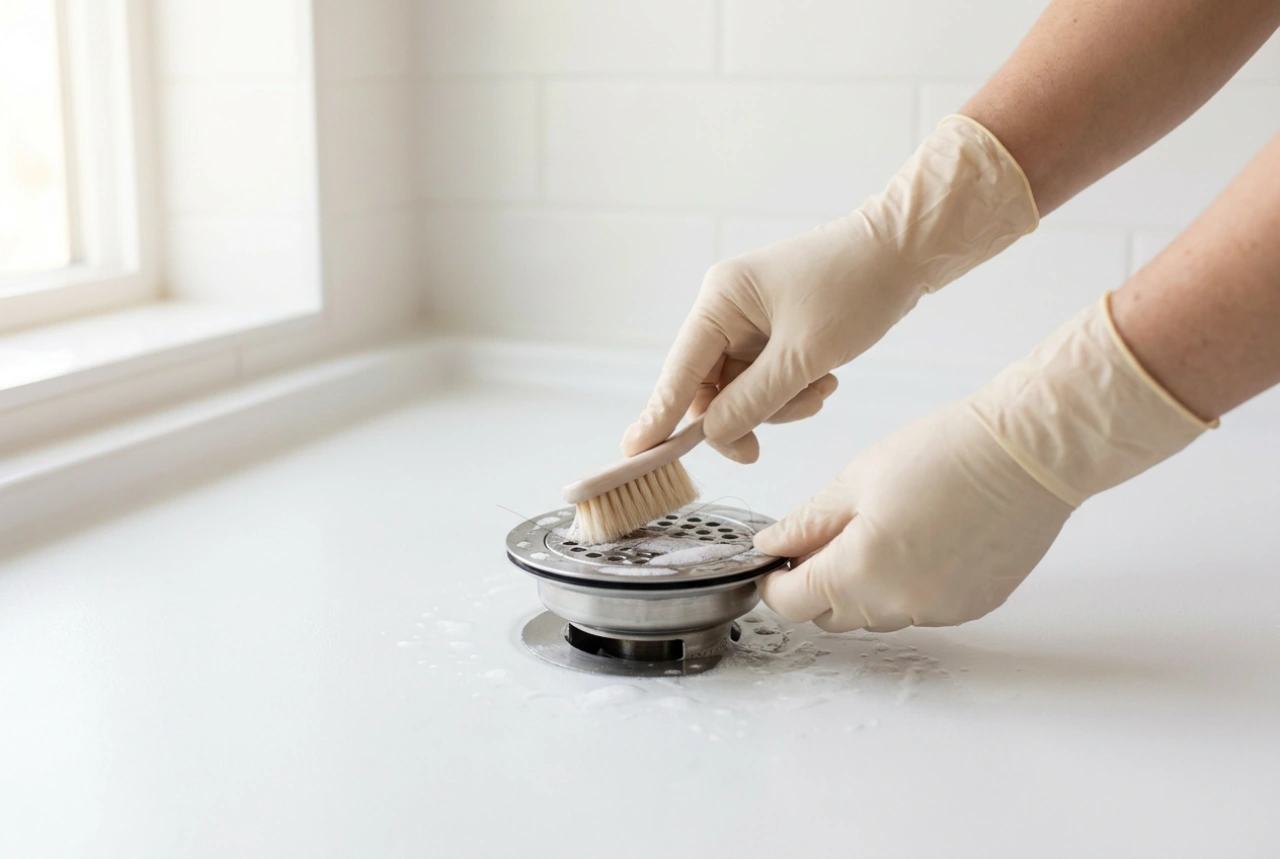
- Wipe gently: Remove the cloth and use a fresh, damp microfiber cloth to wipe away the softened limescale. Use light, circular motions. Never use abrasive sponges, steel wool, or stiff-bristled brushes.
- Neutralize and dry: Rinse the area thoroughly with clean, cold water to neutralize any remaining acid. Dry the fitting completely with a dry microfiber cloth. Eliminating standing water is crucial, as evaporating water is what creates new mineral deposits.
Preventing future mineral buildup
The key to maintaining a flawless matte black basin plug is prevention rather than cure. After each use of the sink, quickly wipe the plug dry with a towel to prevent water droplets from evaporating and leaving calcium deposits behind. Once a week, apply a thin layer of specialized silicone-based protective spray or a tiny drop of mineral oil to the dry plug using a microfiber cloth. This creates a hydrophobic barrier that repels water, causing it to bead up and slide off the surface before limescale has a chance to form.