

Maintaining the crisp, white appearance and structural integrity of delicate curtains requires a precise understanding of fiber physics, water temperature, and chemical reactions.
The Thermal Threshold of Delicate Fibers
Most modern sheer curtains are woven from synthetic fibers like polyester, polyamides, or delicate natural blends. These materials are highly sensitive to thermal energy. Washing curtains at temperatures exceeding 30 degrees Celsius can permanently damage their structure. High heat softens the synthetic polymers, causing them to warp, shrink, and form deep creases that are nearly impossible to iron out. Keeping the water temperature strictly at 30 degrees Celsius or choosing a cold-water cycle protects the fiber tension, ensuring the curtains hang straight and retain their original dimensions after drying.
Why Curtains Turn Yellow and How to Prevent It
Yellowing is primarily caused by two factors: the accumulation of airborne particles (such as cooking grease, dust, and nicotine) and the chemical degradation of the fibers from UV radiation. When exposed to heat during washing, these trapped organic molecules can bake into the synthetic matrix, permanently binding the yellow tint to the fabric. To break down these yellowing compounds without destroying the fibers, you must rely on chemical synergy rather than heat. Regular laundry detergents often contain optical brighteners that only mask the yellowing temporarily. For deep purification, use oxygen-based bleaching agents or pre-soak the curtains in a sodium bicarbonate solution, which neutralizes acidic residues and lifts embedded pollutants gently from the weave.
Mechanical Action and the Spin Cycle Danger
The mechanical friction inside a washing machine drum is just as critical as the water temperature. Delicate curtain fabrics cannot withstand heavy agitation, which pulls at the thin threads and distorts the weave. Always select a dedicated delicate or wool cycle that utilizes a high water level and low-frequency drum rotations. Crucially, the spin cycle must be restricted to a maximum of 400 RPM, or disabled entirely. High-speed spinning forces the wet, heavy fabric against the perforations of the drum, stretching the fibers out of shape and creating severe creasing. Instead, let the excess water drain naturally.
The Correct Order of Operations for Flawless Results
- Step 1: Dry Dusting. Before wetting the curtains, shake them gently outside or vacuum them on the lowest suction setting with an upholstery brush to remove loose dust. Wetting dusty curtains turns the surface grime into a muddy paste that penetrates deeper into the weave.
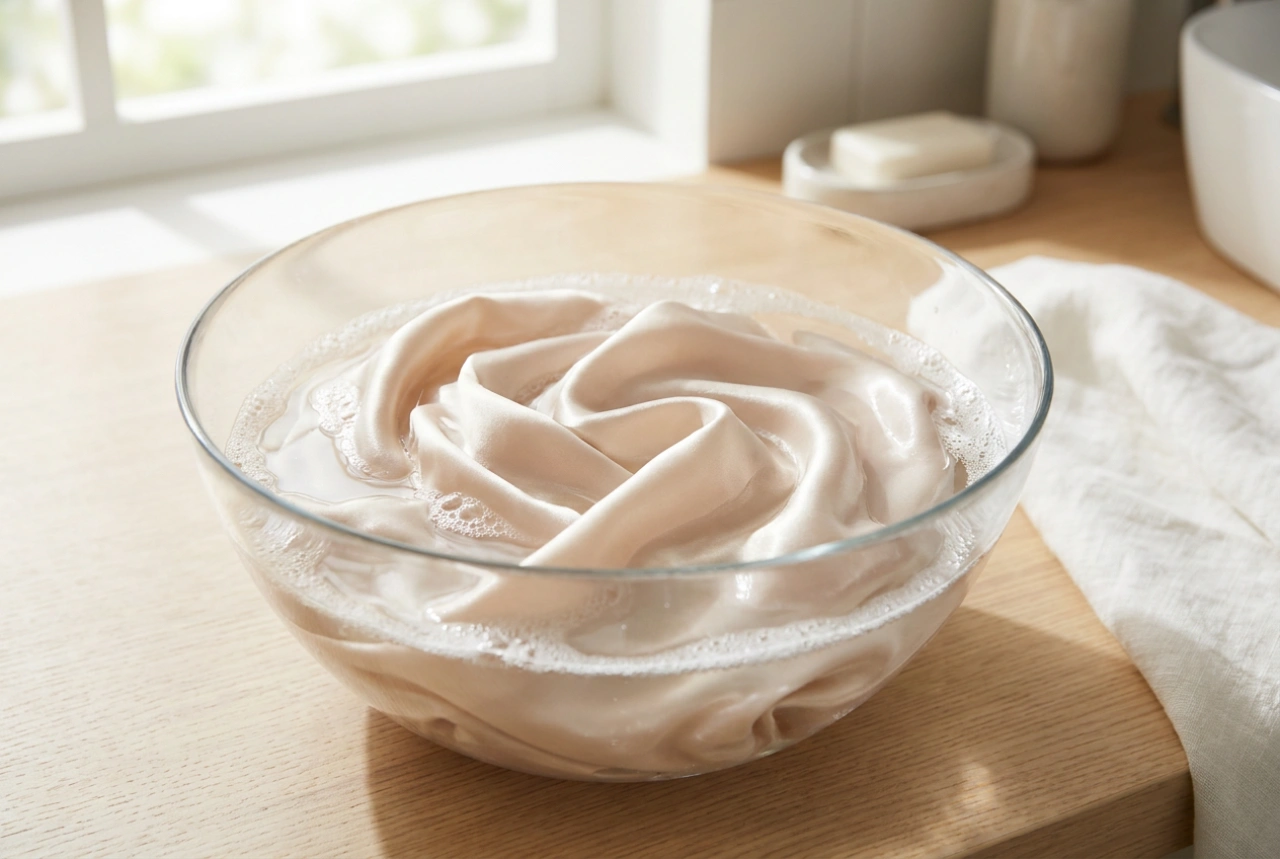
- Step 2: Pre-soaking. For heavily soiled or yellowed curtains, soak them in a tub of lukewarm water (under 30 degrees Celsius) mixed with five tablespoons of sodium bicarbonate for at least two hours.
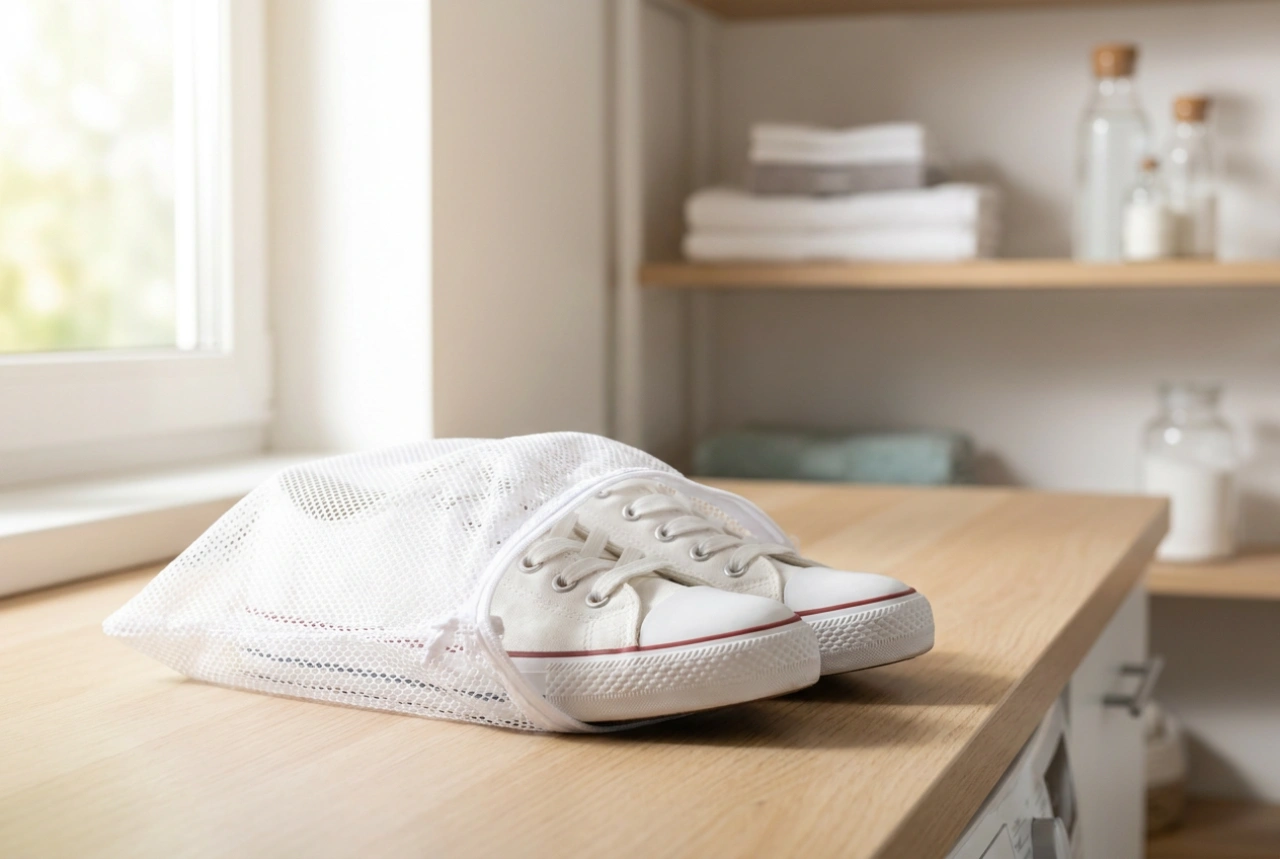
- Step 3: Washing. Place the folded curtains inside a large mesh laundry bag to prevent snagging. Wash at 30 degrees Celsius on a delicate cycle using a mild, liquid detergent.
- Step 4: Hanging Wet. Do not wring or tumble dry the curtains. Hang them back on the curtain rod while they are still damp. The natural weight of the gravity-fed water will pull the fabric straight, smoothing out wrinkles naturally as they dry in place.