

An unorganized makeup drawer is not just a visual nuisance; it accelerates the degradation of your cosmetics due to mechanical friction, temperature fluctuations, and chemical cross-contamination.
The Physics of Protection: Why Cosmetics Need Stability
Every cosmetic formulation is a delicate chemical system. Emulsions, such as foundations and creams, rely on a stable suspension of water and oil phases. When bottles are left loose in a deep drawer, they slide, collide, and tip over every time the drawer is opened or closed. This constant kinetic energy transfers to the products, accelerating phase separation where oils rise to the top and water settles. Moreover, fine powders in compacts are highly susceptible to mechanical shock. A sudden impact against a drawer wall can shatter the compressed binding agents, turning a premium eyeshadow into unusable dust. Employing a rigid drawer organizer dampens these movements, absorbing kinetic energy and keeping containers upright to prevent leaks and chemical destabilization.
Selecting the Right Material: Acrylic, Wood, and Silicone
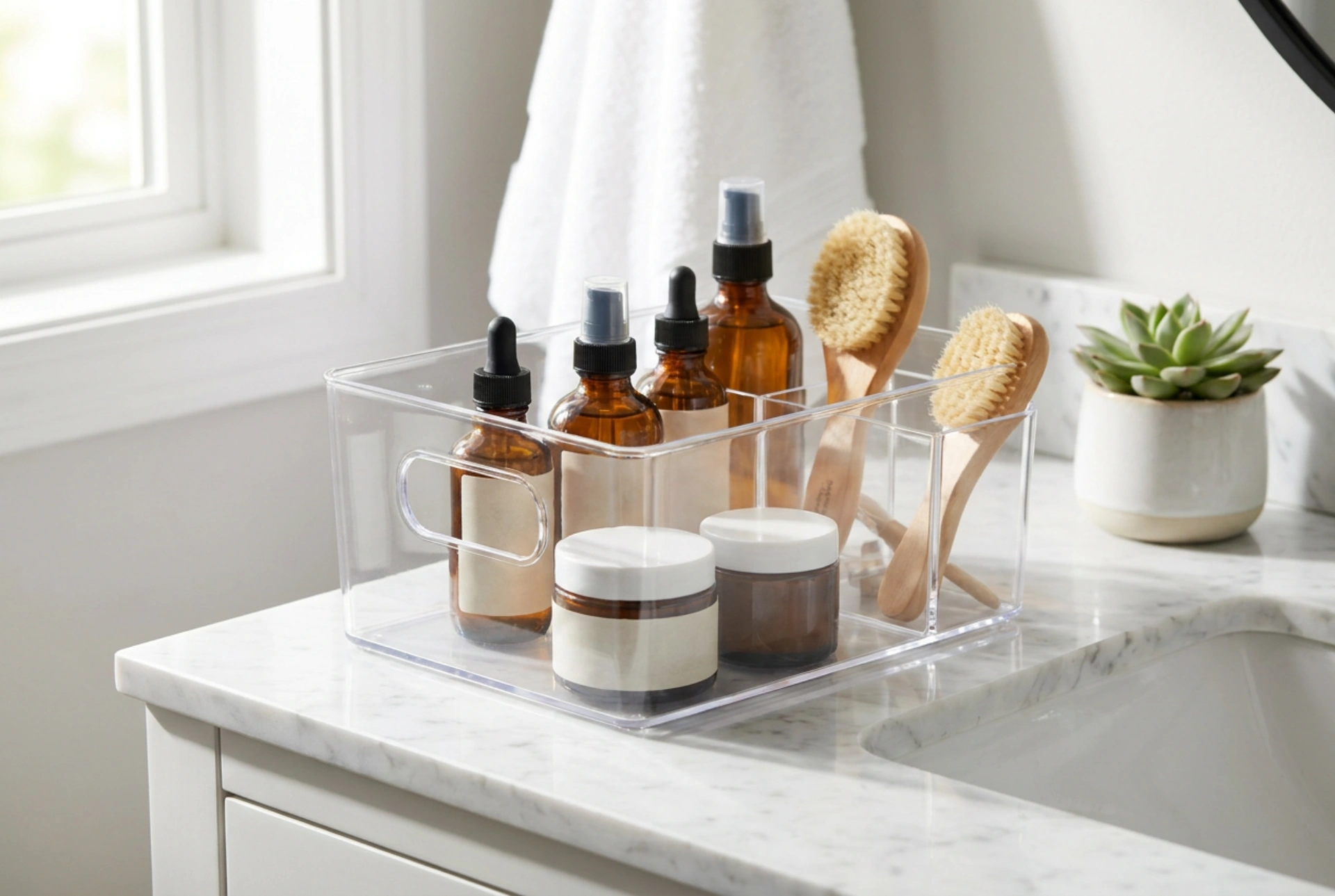
The chemical properties of your organizer must match the environment of the bathroom or vanity. Non-porous materials are essential. Highly polished acrylic is an industry standard because it does not absorb moisture, oils, or pigments. If a liquid foundation leaks, it remains contained on the inert surface of the acrylic without staining or encouraging fungal growth. Silicone liners are equally beneficial; their high coefficient of friction prevents items from sliding even during rapid drawer movements, and they can be thermally sanitized. Wood and bamboo, while aesthetically pleasing, are naturally porous. They absorb ambient humidity and spilled oils, creating a breeding ground for bacteria that can easily transfer back to your makeup brushes and sponges.
The Zoning Principle: Classification by Phase and Frequency
An efficient organizer layout relies on logical zoning. Grouping your cosmetics by their state of matter (solids, liquids, and powders) prevents cross-contamination. Liquids and creams should be stored in upright compartments to minimize the surface area of the liquid in contact with the container's air pocket, reducing oxidation rates. Powders must be kept dry and separated from liquid applicators. Additionally, organize your drawer by frequency of use. Place daily essentials in the shallow, front-most sections of the organizer to minimize the time the drawer remains open, protecting the remaining products from excessive exposure to light and bathroom humidity.
Maintenance and Sanitization Protocols
Organizers require systematic cleaning to maintain hygienic conditions. Cosmetic dust, dead skin cells, and sebum accumulate quickly in small compartments. Every month, empty the organizer and wash it with warm water and a mild surfactant (such as dish soap) to break down lipid-based makeup residues. For acrylic organizers, avoid alcohol-based sanitizers, as they can cause micro-cracking (crazing) in the plastic. Instead, use a diluted oxygen bleach solution or a specialized non-alcohol disinfectant. Ensure every compartment is completely dry before returning cosmetics to prevent moisture trapping, which leads to mold formation under product bases.