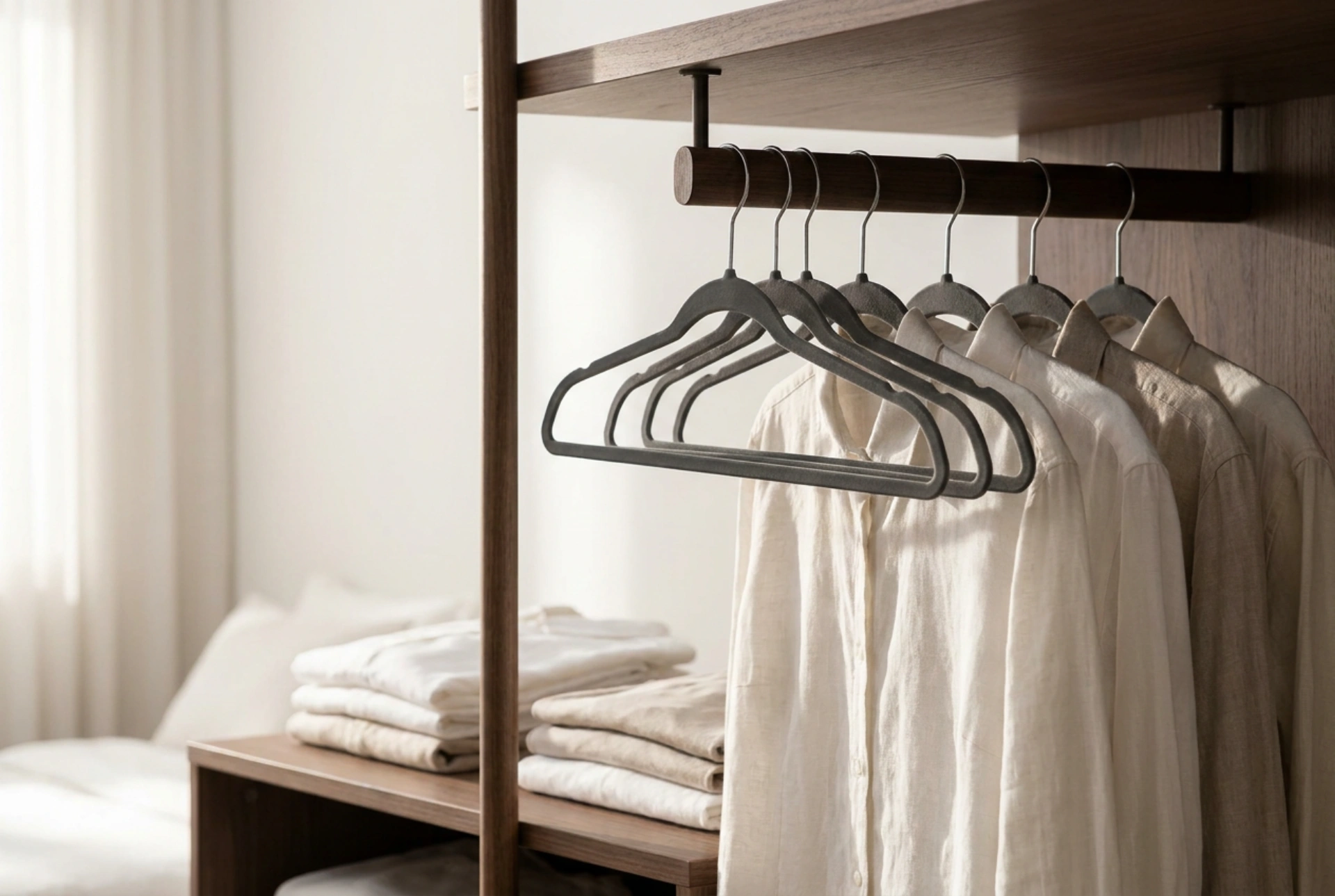


Maximizing a narrow wardrobe requires a strategic approach based on spatial geometry, friction control, and systematic folding methods rather than raw physical force.
The Physics of Friction and Hanger Selection
Standard plastic and wooden hangers are the primary culprits behind wasted wardrobe space. Their thick profiles consume valuable horizontal rail space, while their slippery surfaces allow garments to slide, leading to messy pile-ups. Switching to ultra-thin, velvet-coated hangers immediately reclaims up to forty percent of hanging space. The high-friction velvet surface prevents fabrics from slipping off, allowing you to use thinner hangers safely.
To utilize vertical depth, employ the cascading technique. By adding simple connector hooks to the necks of your hangers, you can suspend multiple garments vertically from a single point on the rail. This shifts the volume from the horizontal plane to the underutilized vertical space beneath the shorter hanging items, such as shirts and jackets.
The Chemistry of Fabric Compression and Folding
Folding clothes horizontally in deep stacks creates a pressurized environment where the bottom items become inaccessible and heavily creased. The solution lies in vertical folding, also known as file folding. By folding t-shirts, sweaters, and trousers into compact, self-standing rectangles and placing them vertically inside drawers or shelf organizers, you distribute the weight evenly.
- Lay the garment flat and fold the outer edges inward to create a neat rectangle.
- Fold the rectangle in half or thirds, depending on the height of your storage container.
- Test the fold: the garment should stand upright on its own without unfolding.
This method eliminates the crushing force of gravity that occurs in vertical stacks, keeping fabrics aerated and instantly visible without disturbing the surrounding items.
Optimal Order of Operations and Weight Distribution
A balanced wardrobe relies on a strict structural hierarchy. Heavy, dense materials like wool and denim should never occupy the upper zones or be hung on delicate rails, as they can warp the structure and compress lighter garments below. Place heavy knitwear folded at the bottom of shelves or in breathable canvas bins. Light, breathable fabrics such as silk, linen, and thin cotton should occupy the hanging rail.
Group your hanging garments by length and bulk. By arranging clothes from longest to shortest, you create an open, asymmetrical floor space at the bottom of the wardrobe. This newly freed floor area can accommodate a small modular drawer unit or a neat row of structured storage boxes for off-season accessories.
Managing Seasonal Rotation and Density
No storage system can function efficiently if it is overloaded beyond its physical capacity. Overcrowding prevents air circulation, leading to musty odors and fabric degradation. Establish a strict seasonal rotation system using vacuum-sealed storage bags for off-season garments. Compressing bulky winter coats and thick blankets down to a fraction of their original volume allows you to store them on the highest, least accessible shelves of your narrow wardrobe, leaving the main functional zone open for daily wear.