

Proper seasonal garment storage is a science of material protection, balancing humidity control, dust prevention, and mechanical protection to preserve delicate fibers.
The physics of fabric preservation and air circulation
When storing textiles for several months, the biggest threat is not dust, but trapped moisture and stagnant air. Organic fibers like wool, silk, and cotton contain natural moisture. If sealed in completely airtight plastic containers without moisture regulators, ambient temperature fluctuations cause condensation inside the container. This micro-condensation creates an ideal breeding ground for mildew and musty odors.
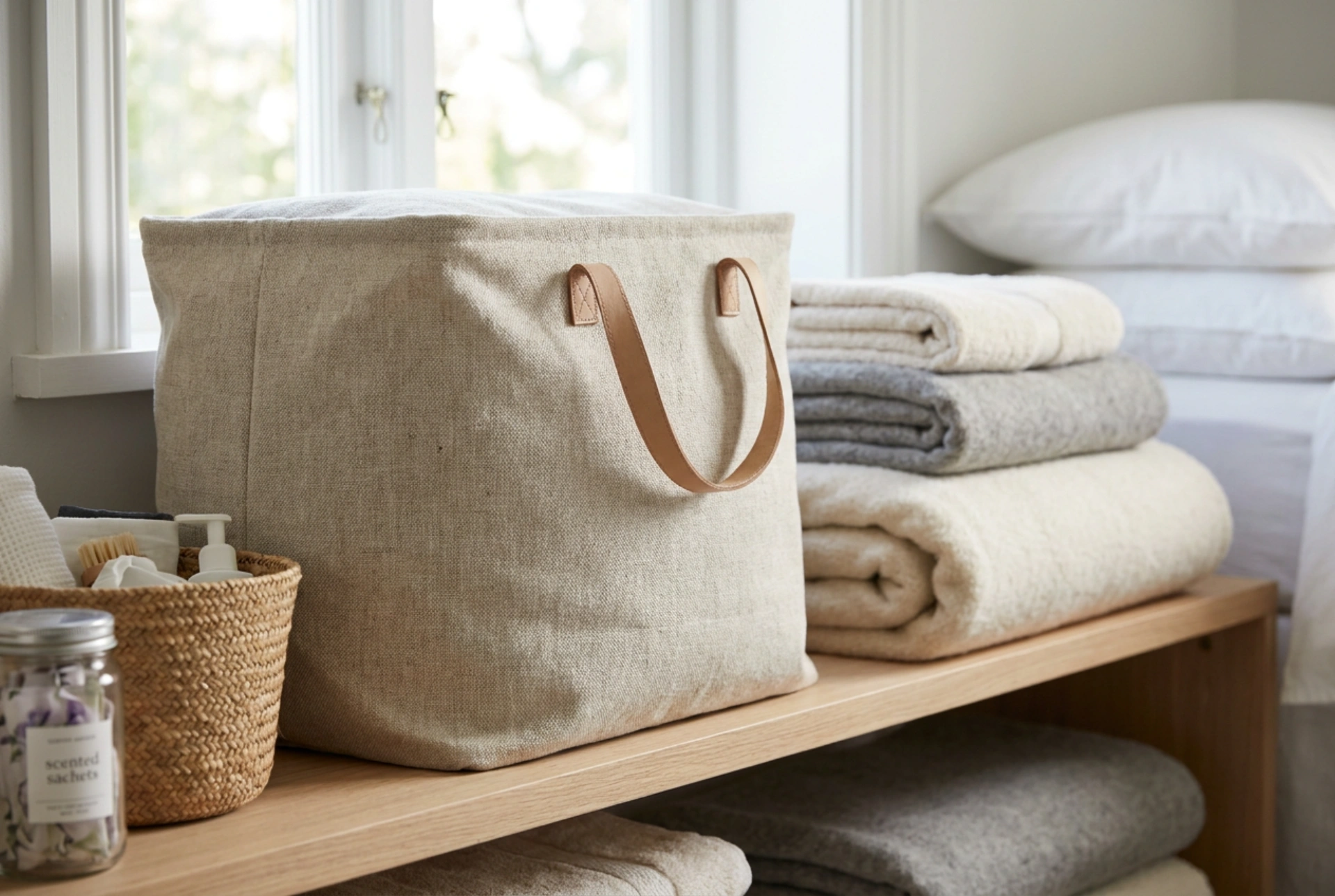
Using breathable storage bags made of non-woven polypropylene or high-density canvas allows air molecules to pass through while keeping dust and insect pests out. These materials maintain a stable relative humidity around the fibers. If you must use vacuum compression bags for space-saving, reserve them strictly for synthetic fabrics like polyester, nylon, or down jackets. Compression can permanently damage the cellular structure of natural fibers like wool and cashmere, leading to fiber breakage and loss of insulation properties.
Preparation: The chemical cleaning phase
Never store garments that have been worn, even briefly, without a thorough wash. Invisible organic residues, such as skin flakes, sebum, and microscopic sweat deposits, act as a primary food source for clothes moths and carpet beetles. Over months, these organic spots oxidize, turning into permanent yellow stains that are nearly impossible to remove.
- Wash and dry fully: Ensure all garments undergo a complete washing cycle. For wool and silk, use a pH-neutral liquid detergent to prevent fiber degradation.
- Eliminate moisture: Before packing, garments must be 100% dry. Even a 2% residual moisture level can trigger fungal growth in a dark closet. Allow clothes to air out for 24 hours after drying.
- Avoid starch: Do not iron clothes with starch before storing, as starch is a simple carbohydrate that actively attracts pests.
Packing techniques and mechanical stress reduction
The way garments are folded and arranged inside a storage bag determines how they will look and wear next season. Overpacking creates permanent creases and weakens the seams of the garments at the bottom of the stack.
Place the heaviest items, such as denim and heavy knits, at the bottom of the bag to create a stable base. Light sweaters and delicate shirts should rest on top. When folding wool and cashmere, avoid sharp creases. Instead, use a soft rolling technique or place acid-free tissue paper between the folds to cushion the fibers and prevent friction. For hanging storage bags, use wide, contoured wooden or padded hangers. Thin wire hangers concentrate the garment's weight on a very small surface area, stretching the shoulder seams and permanently deforming the fabric.
Pest control and natural moisture absorption
Instead of toxic chemical mothballs containing naphthalene, which leaves a persistent, harmful residue on fabrics, utilize natural repellents and mechanical barriers.
Place natural cedar wood blocks or dried lavender sachets inside the storage bags. The volatile organic compounds in cedar oil act as a natural deterrent to moths, though they do not kill existing larvae, making the initial washing phase critical. Sand the cedar blocks lightly every season to reactivate their aromatic properties. To combat potential moisture ingress in humid closets, add a small, food-grade silica gel packet to the corner of the bag. This acts as a passive humidity regulator, absorbing excess moisture without drying out the natural oils inherent to wool and silk fibers.
Optimal storage conditions and long-term placement
Once packed, the storage bags must be kept in an environment with minimal thermal and hygrometric fluctuations. Avoid damp basements, uninsulated attics, or areas near heating vents, as extreme temperature cycles accelerate fiber aging.
The ideal storage location is a dark, dry closet shelf or under-bed storage space with adequate floor clearance. Keep the bags elevated off concrete floors to prevent moisture transfer via capillary action. Every six months, open the bags briefly to inspect the contents and allow fresh air to circulate, ensuring your wardrobe remains in pristine condition for the seasons to come.