

Achieving perfectly smooth clothes in a domestic setting relies on two fundamental physical variables: heat and moisture. While standard irons struggle to balance these factors, steam generator stations utilize high-pressure vapor to penetrate dense fabric fibers instantly, cutting ironing time in half.
The Physics of Steam Penetration
Standard steam irons rely on gravity to drip water onto a heated soleplate, creating low-pressure steam that only dampens the surface of the fabric. In contrast, a steam generator station houses a separate boiler tank that heats water under high pressure, typically measured in bars. When the steam trigger is pressed, this pressurized dry vapor is forced deep into the core of the textile fibers.
When moisture and heat are applied simultaneously under pressure, the polymer chains in natural fibers like cotton and linen temporarily loosen. This allows the fibers to be easily repositioned by the flat, heated soleplate of the iron. As the fabric cools and the moisture evaporates, the fibers lock into their new, flat shape, resulting in a crisp, wrinkle-free finish that lasts much longer than traditional ironing.
Water Quality and Limescale Management
Because steam stations heat water at high temperatures inside a sealed boiler, mineral buildup is the primary threat to the longevity and efficiency of the appliance. Calcium and magnesium carbonates present in tap water precipitate out of solution when heated, forming hard scale deposits on the boiler walls and inside the steam channels.
- Tap Water vs. Demineralized Water: Standard tap water can be used in most modern stations, but mixing it 50:50 with demineralized water is highly recommended in areas with hard water to prevent rapid scaling. Never use 100% distilled or scented water, as the lack of minerals can cause the boiler to boil over or corrode internal sensors.
- Chemical Decalcification: Avoid aggressive chemical descalers unless specified by the manufacturer. Instead, utilize the built-in collector rods or rinsing valves. Regular flushing of the cold boiler under a tap will physically remove the loose scale particles before they bake onto the heating elements.
Optimizing Technique for Different Fabrics
Working with high-pressure steam requires a adjustment in ironing technique to avoid dampening the fabric excessively, which can lead to musty odors when clothes are stored in closed wardrobes.
The Double-Pass Rule
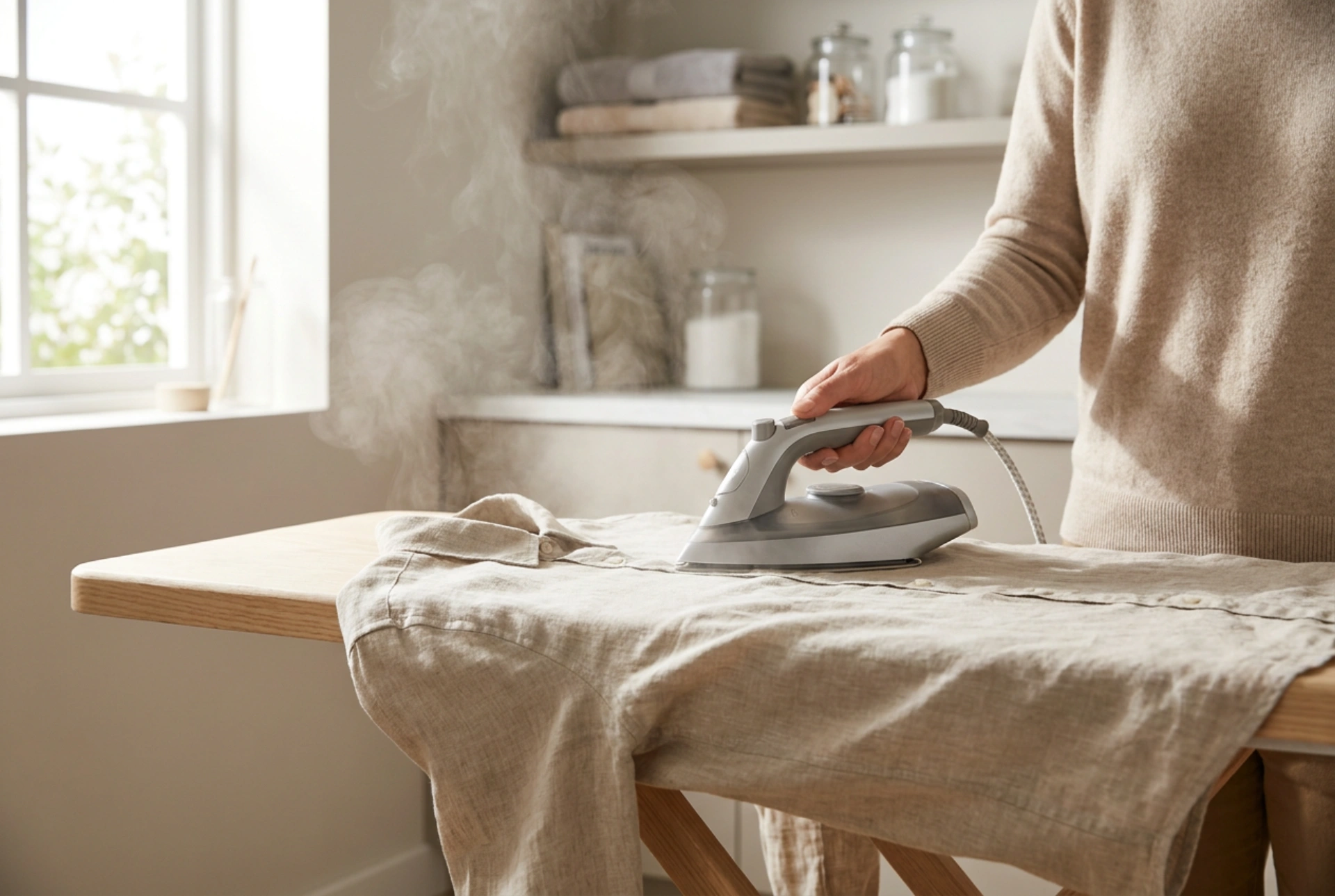
To ensure garments remain dry and crisp, always practice the double-pass technique. On the forward stroke, press the steam trigger to infuse the fibers with heat and moisture, relaxing the wrinkles. On the backward stroke, release the trigger and use only the dry, heated soleplate to evaporate the remaining moisture and set the fibers in place.
Vertical Steaming
The high pressure of a steam station allows for efficient vertical steaming of delicate garments like wool coats, silk blouses, or structured suit jackets. Hang the garment on a sturdy hanger, pull the fabric taut with one hand, and glide the iron soleplate slightly above or gently touching the fabric surface while applying continuous steam. This method relaxes creases without the risk of crushing the pile or creating shiny patches on delicate weaves.
Selecting the Right Ironing Board
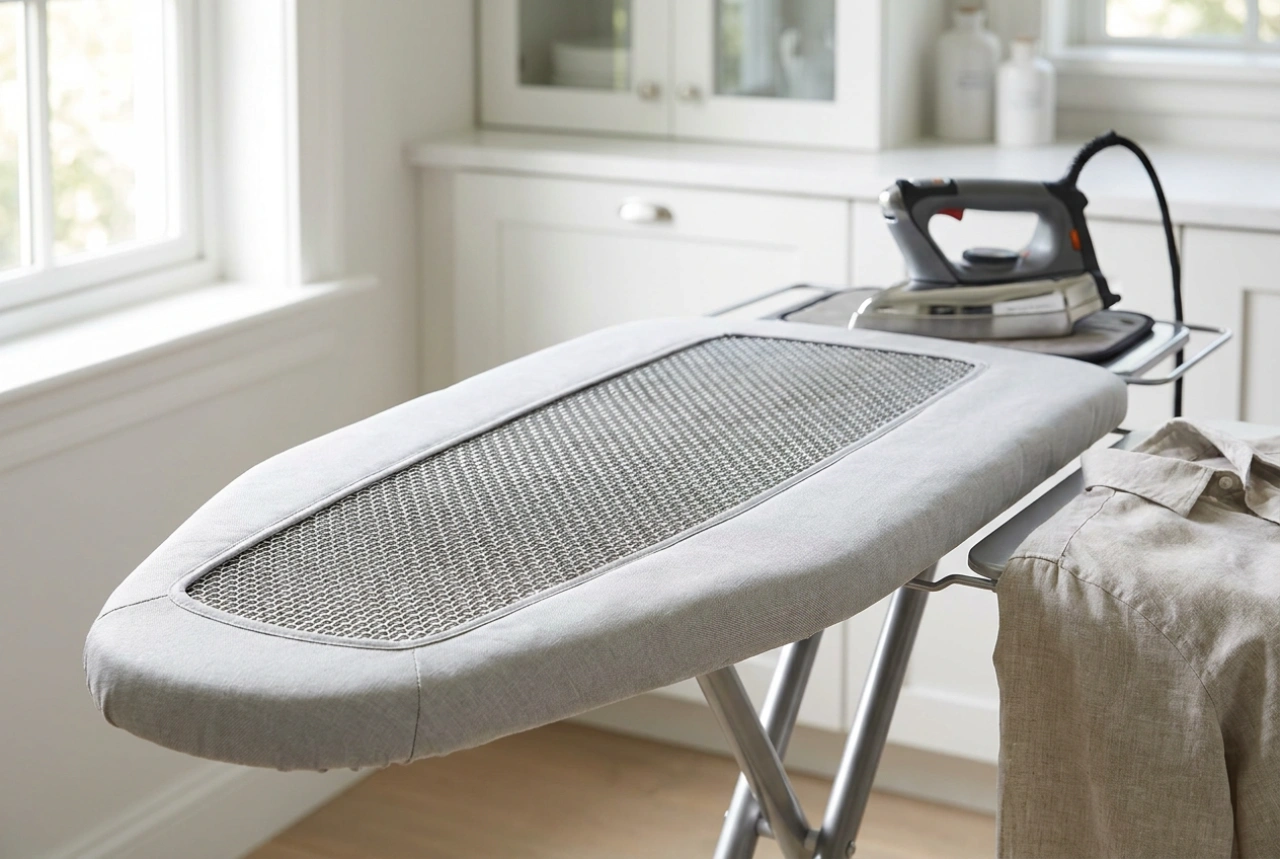
A standard wooden or unventilated ironing board will quickly saturate with water when used with a steam generator. To prevent water dripping onto the floor, use a board with a mesh metal top covered by a thick felt pad and a synthetic cover. This structure allows the high volume of steam to pass completely through the garment and the board rather than condensing beneath the fabric.