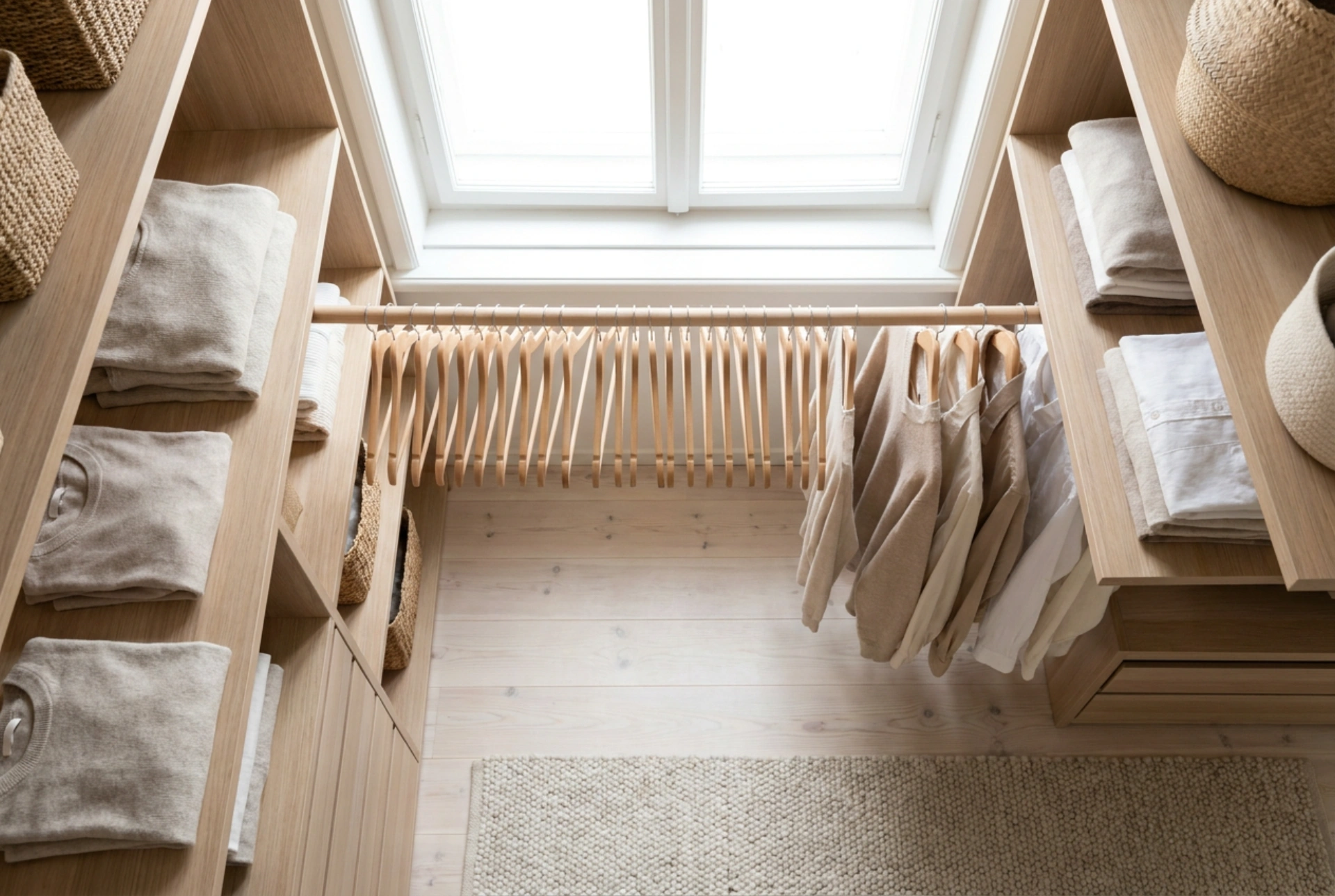


An efficiently designed wardrobe relies on precise spatial planning and ergonomics rather than sheer volume, ensuring every item has a dedicated place based on usage frequency.
The Physics of Wardrobe Ergonomics: Height Zones
To design an optimal wardrobe interior, you must categorize your storage space into three distinct height zones based on physical reach and frequency of use. This approach minimizes physical strain and keeps your daily routine efficient.
- The Active Zone (65 to 180 cm): This is the prime real estate of your wardrobe, located between your thighs and slightly above head height. Items stored here can be accessed without bending down or reaching up on tiptoes. Use this zone for daily wear, active work attire, and frequently used accessories.
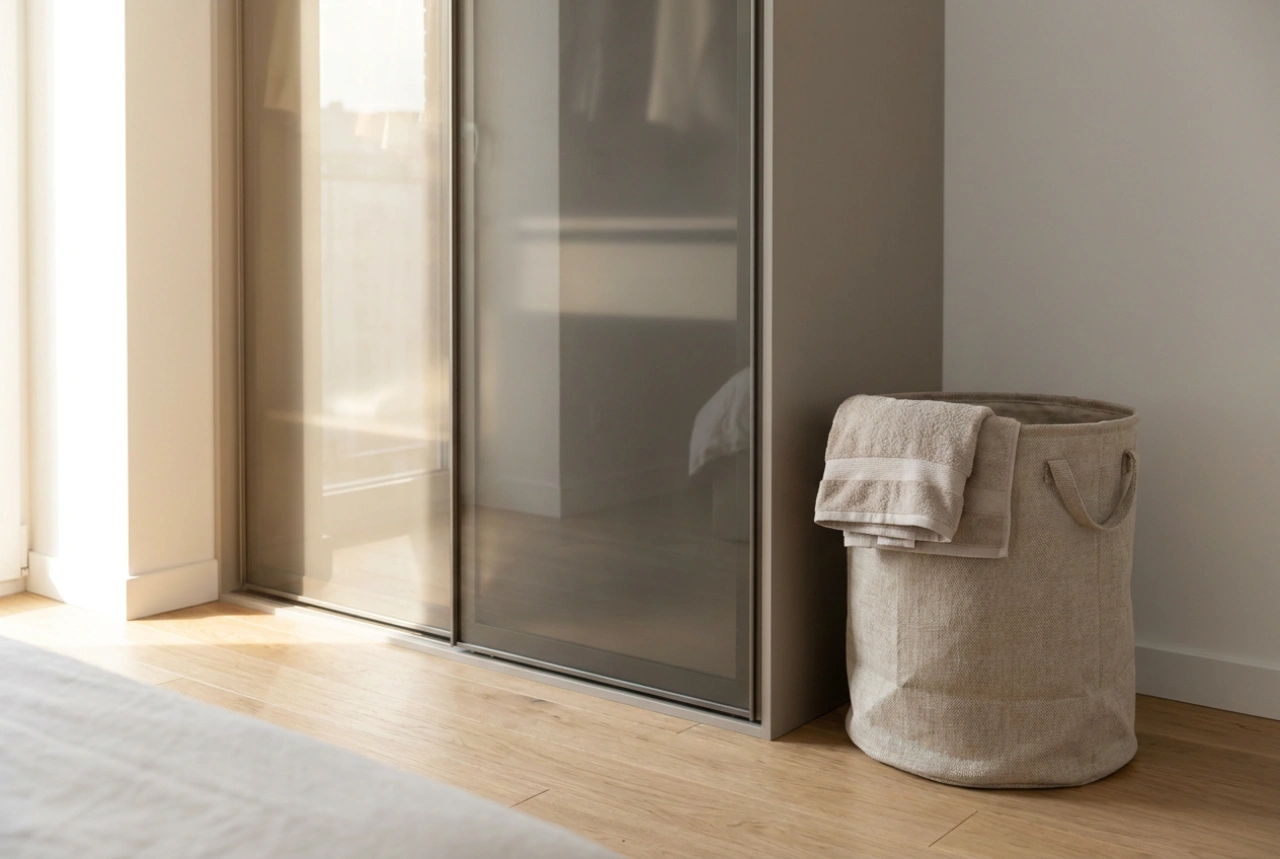
- The Lower Zone (below 65 cm): Requiring you to bend or squat, this area is best suited for shoes, laundry hampers, or heavy items. Utilizing pull-out drawers or wire baskets in this zone is highly recommended, as it allows you to pull the contents into view without crawling on the floor.
- The Upper Zone (above 180 cm): Requiring a stretch or a step stool, this space should be reserved for seasonal clothing, spare bedding, and travel gear.
The Hanging Zones: Calculating clearance
Hanging clothes prevents creasing and maintains the structure of tailored garments, but different clothing types require specific vertical clearances to prevent the bottom edges from crumpling.
Short Hanging Zone
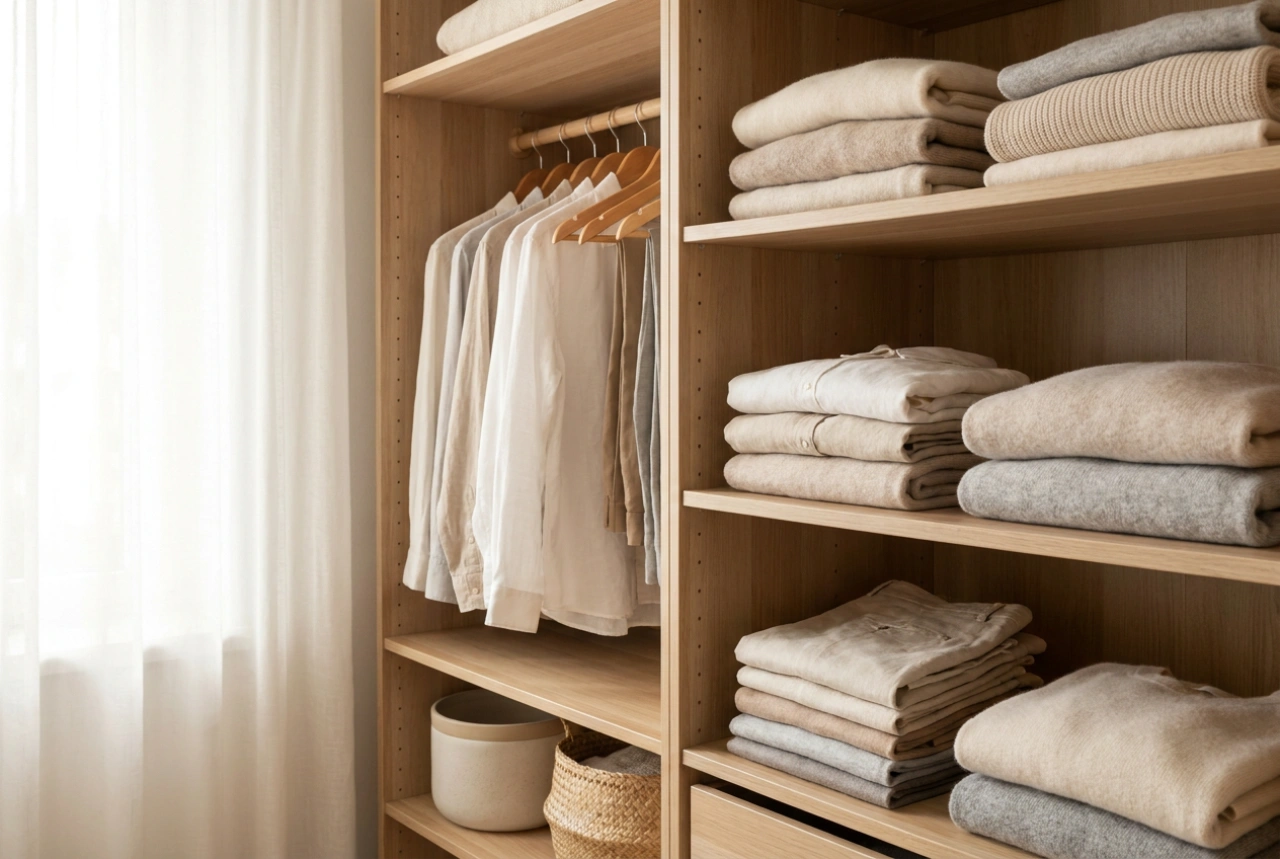
Designed for shirts, blouses, jackets, and folded trousers hung on hangers. This zone requires a vertical clearance of 90 to 110 cm from the hanging rail to the shelf or drawer below. Placing two short hanging rails directly above one another is an excellent way to double your storage capacity in a standard 200 cm high section.
Long Hanging Zone
Essential for long coats, evening dresses, and jumpsuits. This section requires a continuous vertical clearance of 150 to 170 cm. Neglecting this zone forces you to fold long garments over hangers, which damages their shape and causes deep creases at the knees or waistlines.
Shelves versus Drawers: The Material Science of Fabric Care
Deciding whether to store an item on a shelf or in a drawer depends on the fiber structure of the garment. Knitted items, such as wool sweaters, cashmere cardigans, and heavy cotton t-shirts, should never be hung, as gravity will stretch the fibers and distort the shoulder line permanently. Instead, they must be stored flat.
For deep wardrobes (60 cm or more), static shelves often lead to forgotten items at the back. Implementing deep drawers allows you to utilize the full depth of the wardrobe while maintaining perfect visibility. When organizing drawers, file-folding clothes vertically rather than stacking them horizontally prevents the bottom layers from becoming compressed and wrinkled under weight.
The Frequently Overlooked Zones
To maximize efficiency, a wardrobe must accommodate small accessories and transitional items that otherwise create visual clutter.
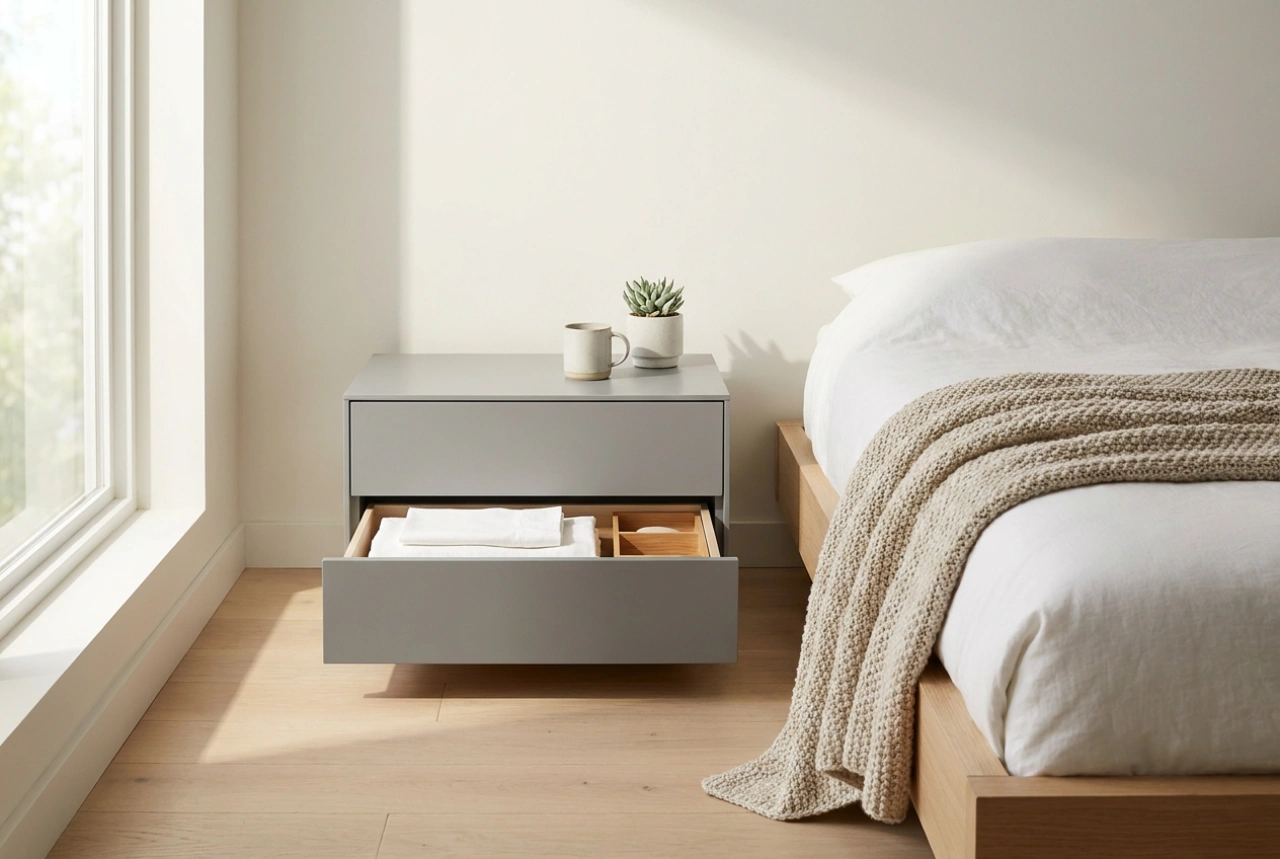
- The Accessory Drawer: A shallow drawer (approx. 10 to 12 cm deep) divided into small compartments is crucial for belts, watches, ties, and jewelry. This prevents delicate items from tangling and keeps small leather goods from losing their shape.
- The Vertical Dead Space: The narrow gaps between hanging sections or at the very end of a wardrobe run can be utilized for slim pull-out racks holding ties, scarves, or trousers.
- The Transitional Area: A designated hook or small rail inside the wardrobe for clothes that have been worn once but are not yet ready for the laundry. Keeping these separate prevents clean clothes from being contaminated by outdoor dust.