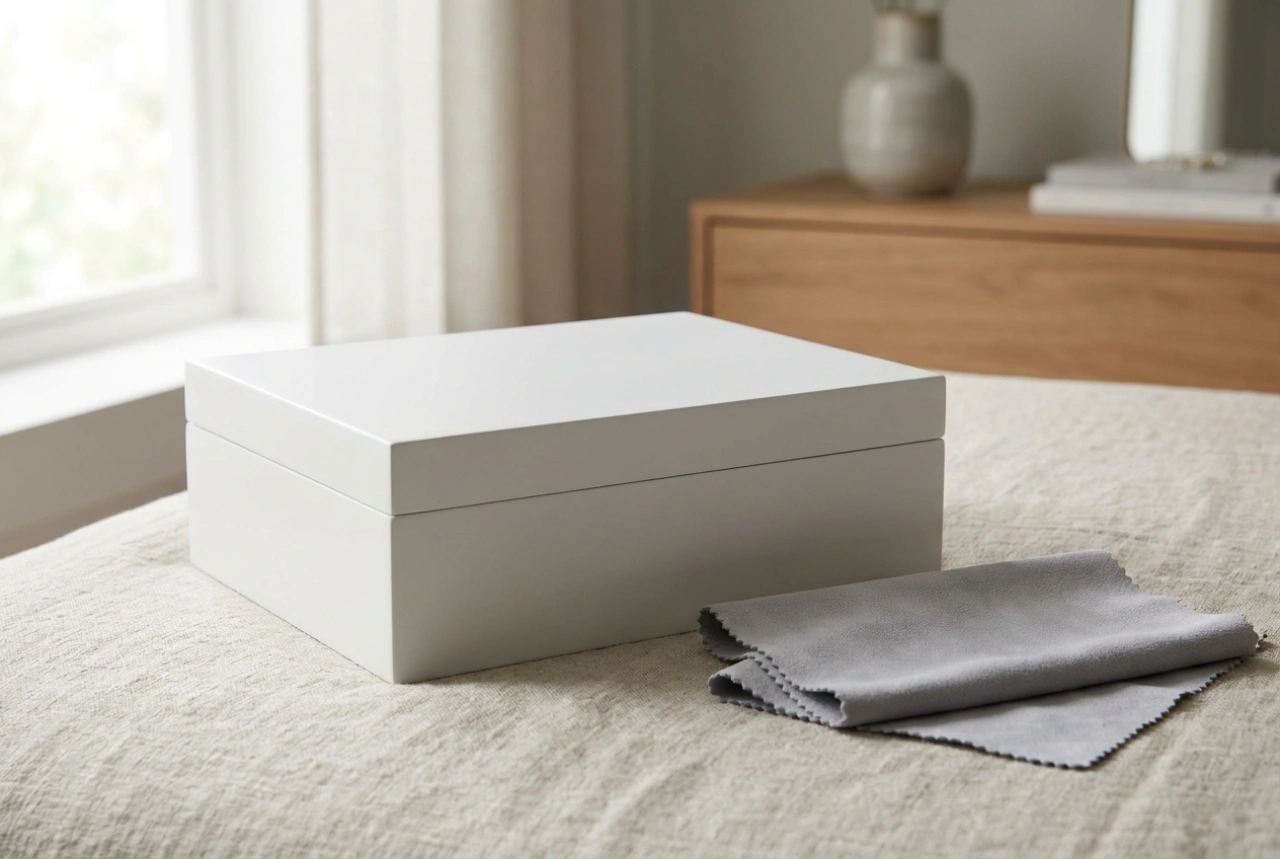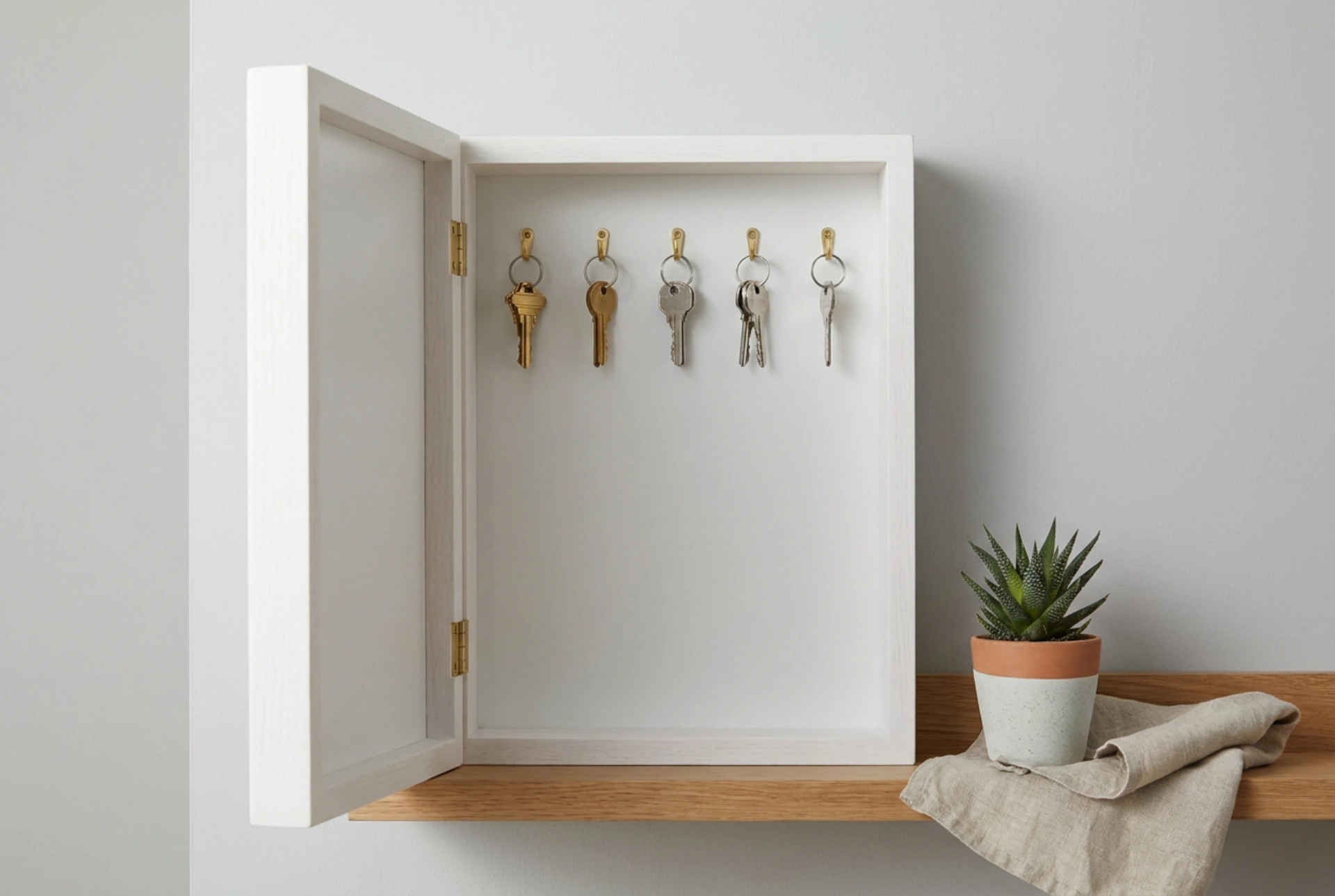


A wall-mounted white key cabinet is a stylish way to organize your entry hall, but its pristine surface quickly reveals clutter and dirt if not managed with a systematic approach.
The physics of contact friction and paint protection
Every time a metal key collides with a painted wooden or metal surface, mechanical abrasion occurs. Over time, brass, steel, and aluminum keys leave greyish-black metallic streaks on white paint. To prevent this, focus on the mechanics of hanging. Install small, transparent polyurethane bumpers on the back wall of the cabinet where the key rings naturally rest. This simple barrier absorbs the impact energy and prevents direct contact between the metal and the white paint. When picking hooks, opt for brass or silicone-coated pegs; raw iron hooks can transfer rust and dark metal dust under high-humidity conditions, permanently staining the white finish.
Chemical cleaning without yellowing the white finish
White painted surfaces, especially those with acrylic or polyurethane topcoats, are highly sensitive to chemical degradation. Avoid using abrasive scrubbing powders, which create micro-scratches that trap dust, making the surface look permanently grey. Never use ammonia-based cleaners or strong solvents, as these strip the protective clear coat and trigger a chemical reaction that turns white paint yellow. Instead, clean the interior using a microfiber cloth dampened with a mild solution of warm water and a neutral, lipid-solvent surfactant like plain dish soap. This effectively emulsifies the oils transferred from human hands onto the keys and the cabinet door without altering the polymer structure of the paint.
De-cluttering and weight distribution
An overloaded key cabinet creates visual chaos and physical damage. Establish a strict categorization system based on frequency of use. Keep active daily keys at eye level, while seasonal or emergency keys should occupy the lower rows or be moved to long-term storage. Heavy keychains accelerate wear on the hinges of the cabinet door. Keep keyrings minimalist; extra decorative fobs add unnecessary weight and increase the surface area that knocks against the white interior walls. Limiting each hook to a single keyring prevents tangles and reduces the fumbling that leads to chipped paint around the pegs.
Managing the microclimate inside the cabinet
Because key cabinets are usually placed near the main entrance, they are subjected to rapid temperature changes and moisture from open doors. Metal keys cold-condense water vapor from the air, which then transfers to the dry wooden cabinet, potentially causing microscopic swelling of the wood fibers and cracking of the white paint. To counteract this, ensure the cabinet has small ventilation gaps or simply leave the door slightly ajar for a few minutes after returning from rainy weather. This allows any residual moisture on the keys to evaporate safely without affecting the cabinet structure.