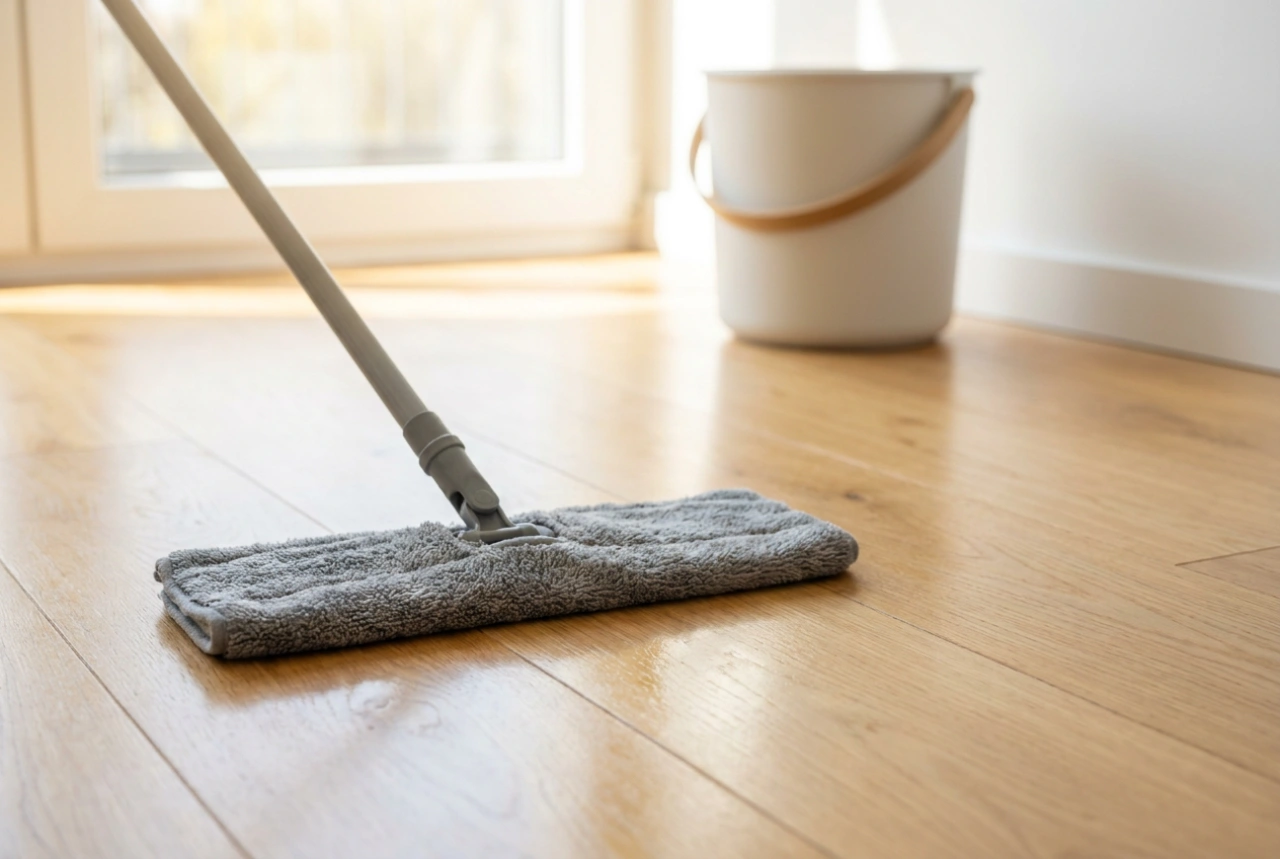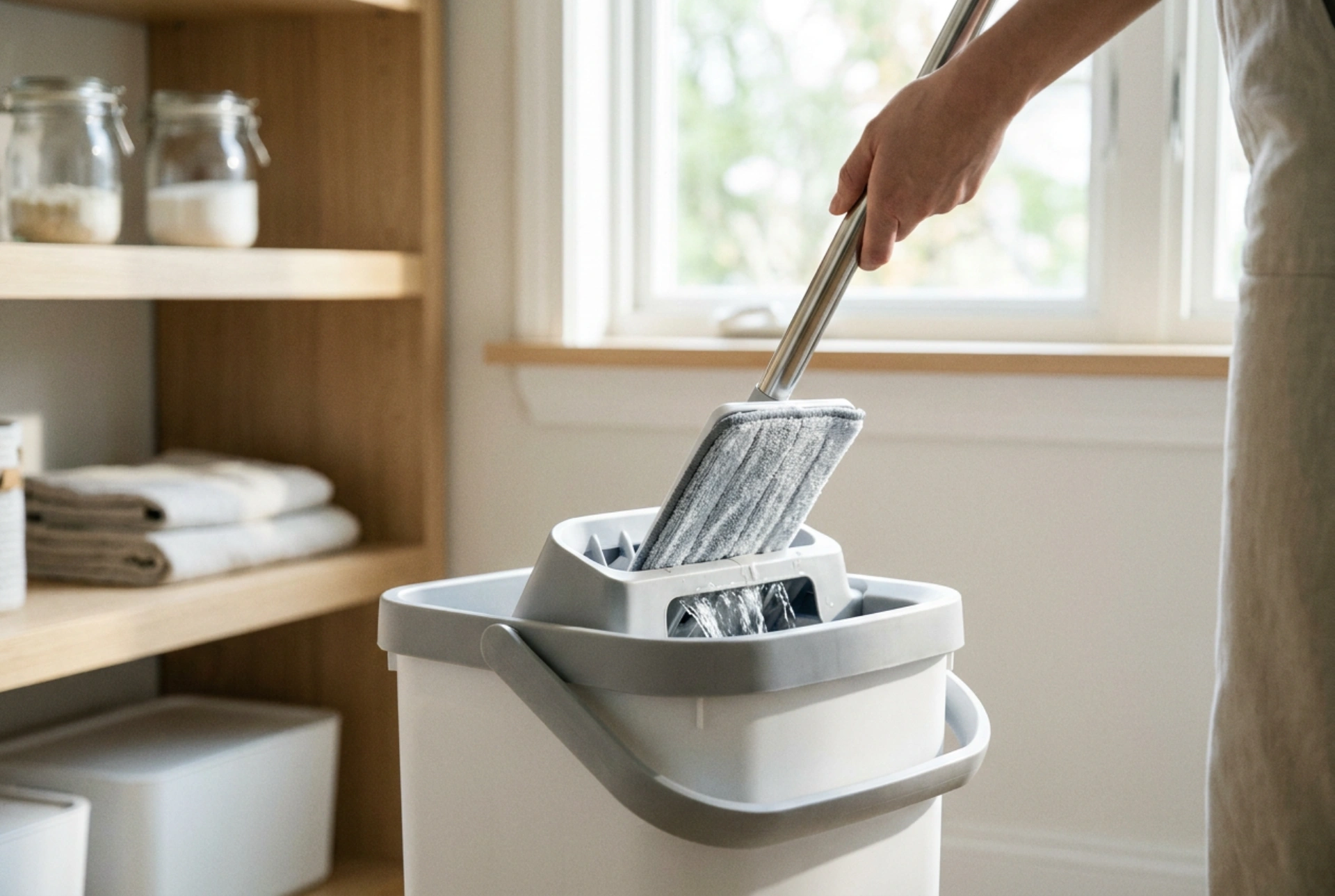


Achieving streak-free floors requires precise control over moisture levels and pressure, which is exactly what a specialized flat mop bucket with an integrated wringing mechanism provides.
The physics of soil removal on hard floors
Moisture control is the most critical variable when cleaning hard surfaces like hardwood, laminate, or porcelain tiles. Excessive water does not clean better; instead, it acts as a vehicle for suspended dirt particles to settle into grout lines and wood joints. As the water evaporates, it leaves behind unsightly mineral deposits and detergent residues. A flat mop system relies on microfibers, which feature microscopic, wedge-shaped polyester and polyamide fibers. These fibers use capillary action to lift and trap grease and soil physically. To maximize this capillary effect, the microfibers must be damp, not saturated. When the cloth is too wet, the water fills the microscopic spaces between the fibers, eliminating their ability to scoop up and hold dirt.
Understanding the wringing mechanism
Modern flat mop buckets utilize either a vertical press, a dual-chamber slot, or a mechanical foot-pedal spin system. The dual-chamber system is highly efficient for domestic maintenance as it separates clean washing water from the extraction zone. As you slide the flat mop head vertically through the narrow slot, mechanical scraper blades compress the microfiber pad. This compression forces out excess water and dislodges trapped hair and larger debris, directing the dirty water into a separate compartment. This prevents the redistribution of contaminated water back onto the floor, maintaining a clean washing solution for longer periods.
Step-by-step operation guide
To operate the system effectively, follow this structured procedure to ensure optimal moisture levels and clean results:
- Preparation: Fill the clean water reservoir with lukewarm water. High temperatures can damage microfiber structures and warp sensitive floor surfaces. Add a minimal amount of a neutral-pH floor cleaner; excess detergent creates a sticky residue that attracts dust.
- Wetting the pad: Submerge the flat mop head completely into the water chamber. Ensure the entire microfiber surface is saturated before the first wring.
- The extraction pass: Align the mop plate parallel to the wringing slot. Insert the head smoothly in a single downward motion. Pull the mop upward steadily; the internal scraper blades will compress the pad. Repeat this action two to three times depending on the floor type. Wood and laminate require a drier pad (three passes), while ceramic tiles can tolerate slightly more moisture (two passes).
- The cleaning stroke: Apply the mop to the floor using a continuous figure-eight pattern. This technique keeps the leading edge of the mop in contact with the uncleaned surface, trapping dirt ahead of the tool rather than pushing it backward.
Maintenance and care of the system
To prevent the buildup of anaerobic bacteria and mold inside the bucket compartments, the system must be cleaned immediately after use. Empty both chambers completely and rinse them with clean water. Remove the microfiber pad from the mop frame and wash it separately. Do not use fabric softeners or chlorine bleach on microfibers, as these chemicals coat or melt the delicate synthetic fibers, destroying their static charge and capillary properties. Allow all components to air dry completely before storing the system in a utility cupboard.