

Vertical steaming offers an efficient way to remove wrinkles from hanging garments, but improper technique often results in frustrating water spots and fabric damage.
The physics of steam condensation on cold fabrics
When hot, gaseous water molecules exit the soleplate of your iron or steamer, they carry thermal energy. As this steam contacts cold fabric, the sudden temperature drop causes the gas to undergo a phase transition back into a liquid state. This rapid condensation is the primary cause of water spots. To prevent this, you must preheat not just the appliance, but also the surrounding air and, to some extent, the fabric itself. Always allow your iron to reach its full operating temperature before bringing it near the garment. Triggering the steam boost too early releases lukewarm, unvaporized water droplets instead of dry, high-pressure steam.
The correct distance and angle of attack
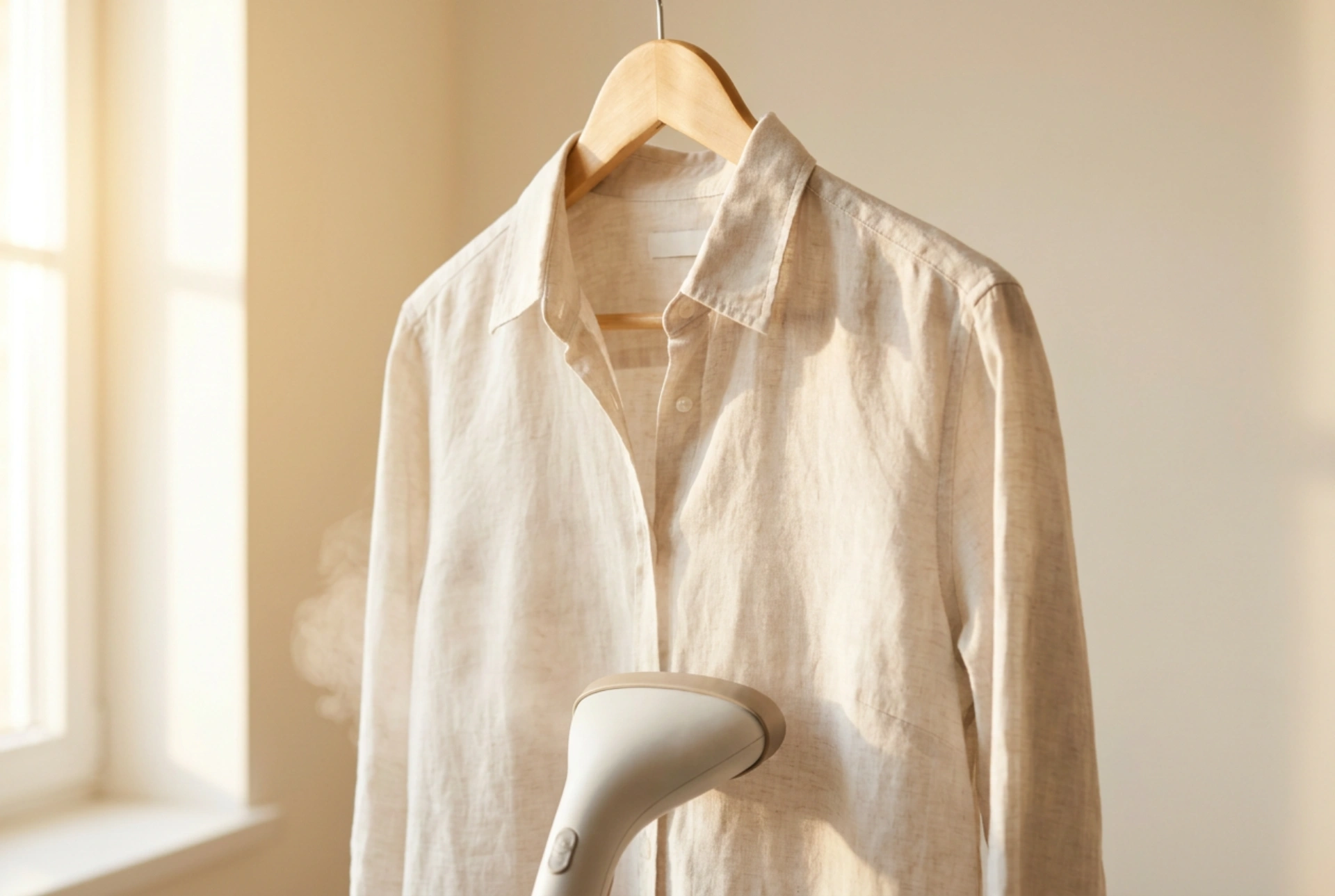
Holding the iron too close to the fabric restricts steam flow, causing moisture to pool on the surface. For delicate fabrics like silk, polyester, or fine wool, maintain a distance of three to five inches between the soleplate and the material. For heavier fabrics like cotton or linen, you can reduce this distance, but the soleplate should never press flat against the fibers without continuous vertical movement. Keep the appliance at a slight downward angle. This ensures that any micro-condensation forming inside the steam chambers runs back toward the internal heating element to be re-vaporized, rather than dripping directly from the steam vents onto your clean clothes.
Tension, movement, and order of operations
Effective vertical steaming relies on mechanical tension combined with thermal energy to relax the fibers. Grab the hem of the garment with one hand, pulling it gently downward to create a flat, taut surface. Move the steamer in slow, continuous, top-to-bottom sweeps. Pausing the iron in one spot concentrates too much moisture in a single area, leading to fiber saturation and water staining. Start with the structured parts of the garment, such as collars, shoulders, and cuffs, before moving to the larger, flatter panels like the back and front. This systematic approach prevents you from re-wrinkling finished sections while handling the rest of the piece.
Water chemistry and appliance maintenance
The type of water in your iron directly influences both steam quality and the lifespan of your appliance. Tap water contains dissolved minerals like calcium and magnesium. When heated, these minerals crystallize, forming limescale deposits inside the steam vents. This scale blocks the proper flow of steam, leading to pressure drops that cause the iron to spit hot, dirty water onto your fabrics. To prevent mineral build-up, use distilled or demineralized water. Additionally, perform regular descaling cycles using a mild solution of citric acid to dissolve existing mineral crusts, ensuring a clean, consistent, and dry steam output.
Post-steaming drying phase
Even with perfect technique, fibers absorb a small amount of moisture during the steaming process, making them temporarily pliable and susceptible to new creases. Always leave the garment hanging in an open, well-ventilated space for at least ten to fifteen minutes after steaming. Placing a freshly steamed item directly into a crowded wardrobe traps the residual moisture, causing the fabric to warp and develop deep, permanent wrinkles under the weight of neighboring clothes.