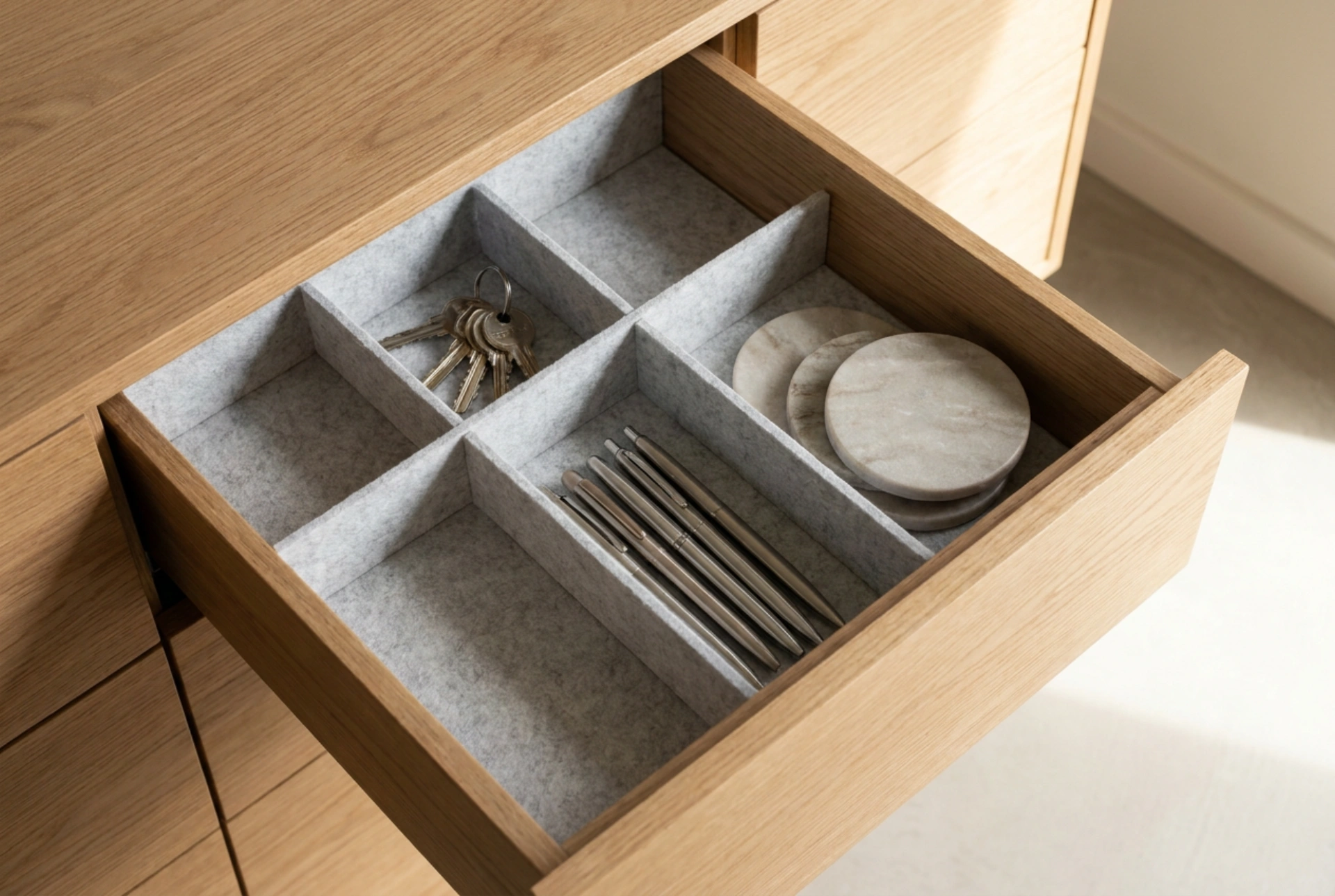


Organizing small items inside a lockable cabinet requires a systematic approach to maximize space while ensuring secure, scratch-free preservation of your valuables.
Understanding the Physics of Cabinet Storage
When storing small items in a confined, locked space, gravity and friction are your main challenges. Without proper categorization, items shift every time the door opens or closes, leading to micro-scratches on delicate surfaces. To prevent this, the kinetic energy of movement must be absorbed. Soft, high-density materials like felt, silicone, or natural cork serve as excellent dampeners. Utilizing modular inserts with high friction coefficients prevents objects from sliding, ensuring they remain exactly where you placed them.
The Categorization and Sorting Process
Before introducing any organizational tools, a strict sorting process is essential. Empty the cabinet completely and group items by frequency of use and material compatibility. Avoid placing hard metals, such as keys or brass coins, next to softer materials like precious metals, fountain pens, or leather goods. Grouping items by weight prevents heavier objects from crushing lighter, fragile pieces when drawers or shelves are accessed.
Implementing Modular Dividers and Inserts
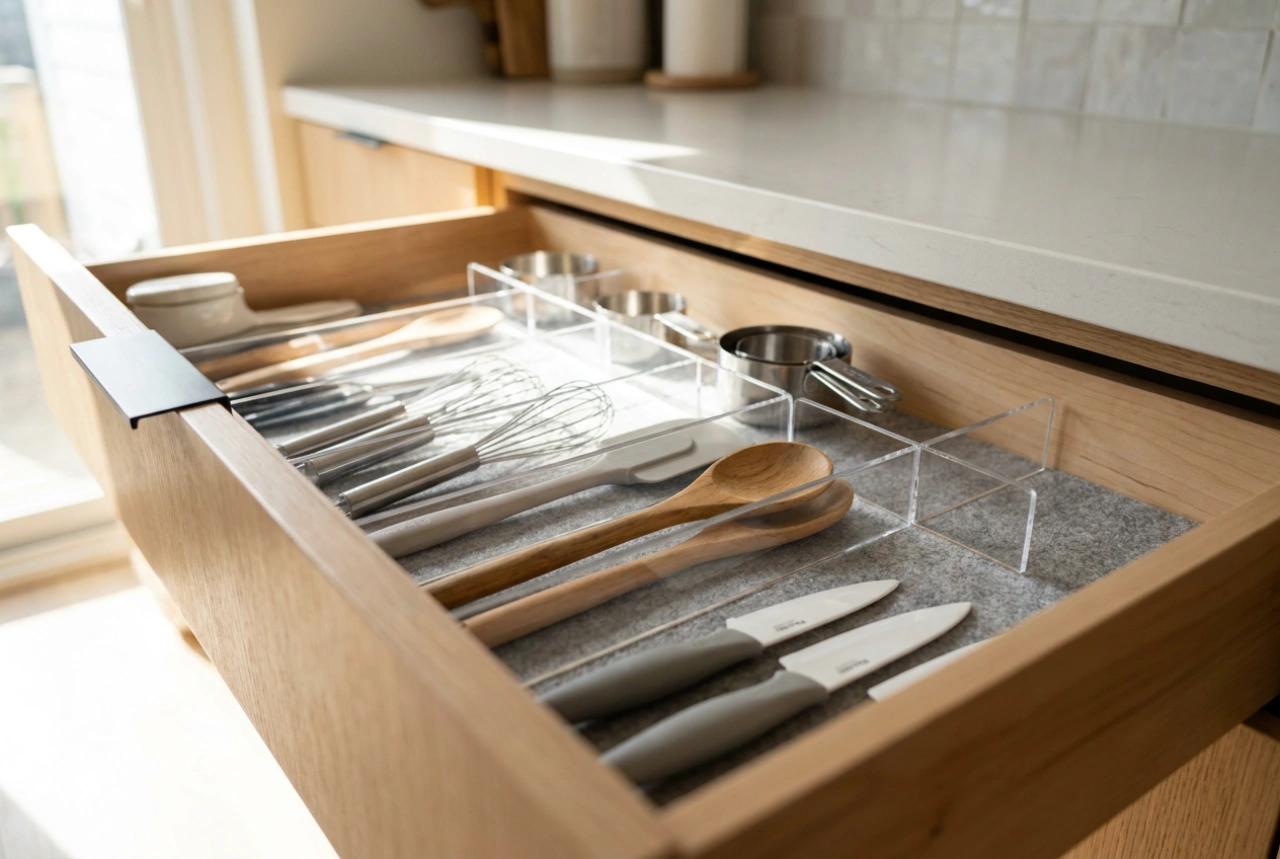
The key to maintaining order is division. Standard shelves allow items to accumulate in chaotic piles. By incorporating custom-fit modular trays, you create dedicated micro-zones for each category of item.
- Felt-lined organizers: Ideal for metallic objects, glasses, and pens, as the soft fibers prevent abrasion.
- Silicone cups: Perfect for small, rolling objects because the material naturally grips items and stops lateral movement.
- Wooden or acrylic grids: Best for structuring larger layouts and maintaining a clear line of sight.
Optimizing Vertical and Horizontal Space
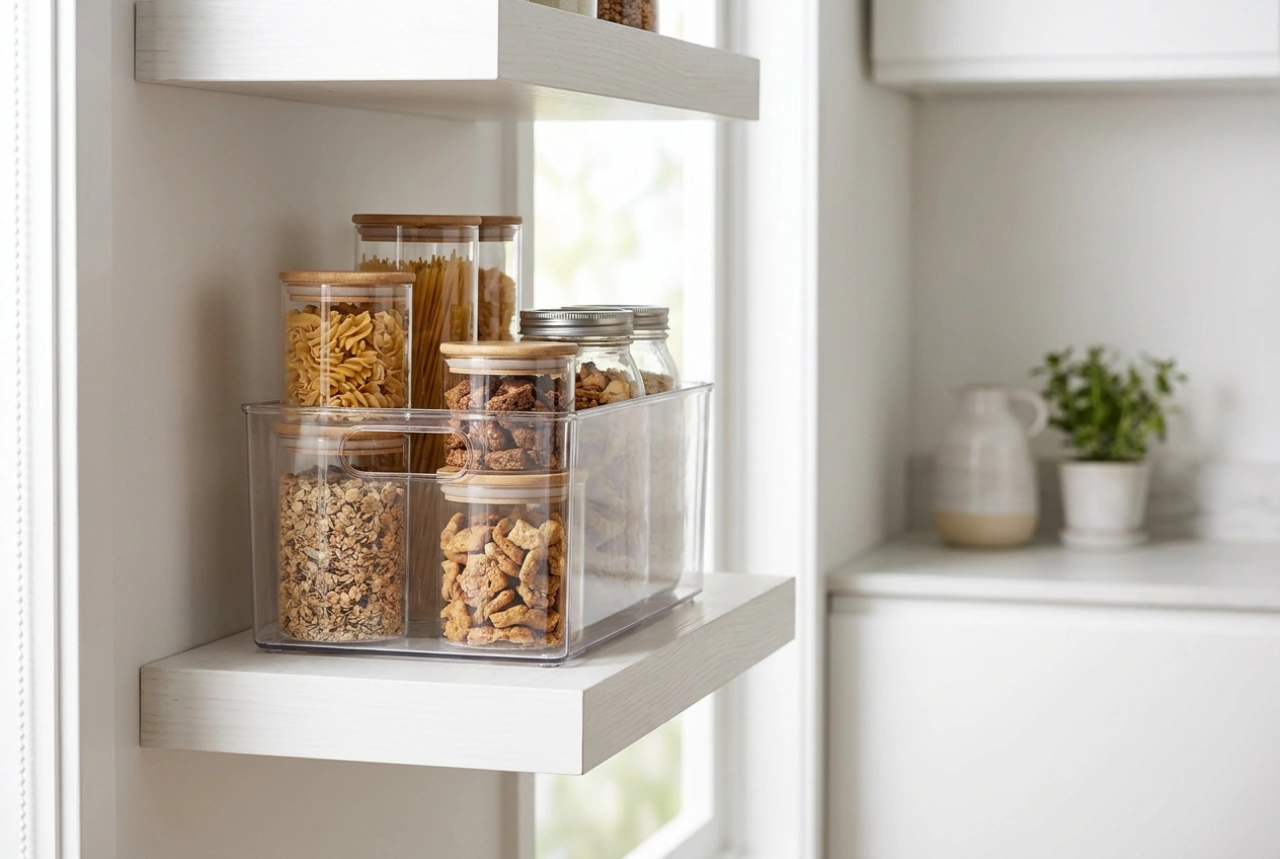
Lockable cabinets often have significant unused vertical space between shelves. To maximize efficiency, utilize stackable tray systems. Ensure the lower trays contain infrequently accessed documents or seasonal items, while the top tray houses daily essentials. When selecting stackable units, choose designs with recessed lids that lock into the base of the unit above to prevent tipping when retrieved.
Maintaining the Climate Inside a Locked Environment
Because lockable cabinets are sealed tightly to ensure security, air circulation is highly restricted. This lack of ventilation can trap ambient humidity, leading to the oxidation of metals or the degradation of paper and leather. To protect your items, place a small, rechargeable silica gel dehumidifier pack in the corner of the cabinet. Avoid using scented moisture absorbers, as chemical fragrances can break down synthetic linings and tarnish sensitive metal finishes over time.