

Rust stains on clothing are notoriously difficult to treat because iron oxides form a strong chemical bond with natural and synthetic fibers, making standard detergents ineffective.
The chemical science of rust stains
Rust is hydrated iron(III) oxide, which is insoluble in water. When a rusty metal object touches wet fabric, these iron particles bind tightly to the microscopic crevices of the textile fibers. Applying standard chlorine bleach to these spots is a critical mistake: chlorine acts as an oxidizer, which actually accelerates the oxidation process, setting the rust permanently into the fabric and turning the stain a deeper, irreversible brown. To lift rust, you must use a chemical reduction reaction or an acid-base reaction that converts the insoluble iron oxide into a water-soluble compound.
The acid-salt reduction method
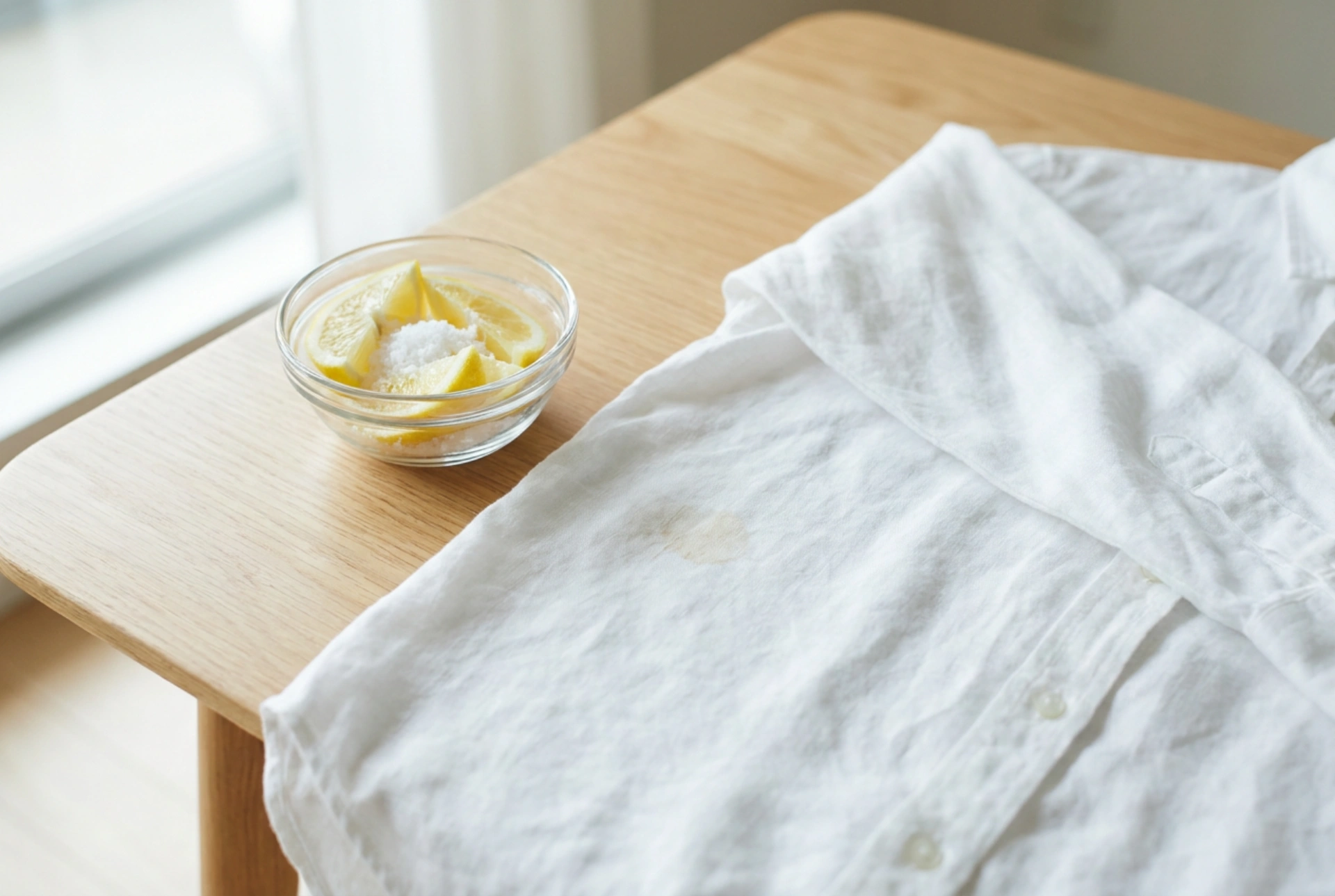
For most durable fabrics like cotton, linen, and robust synthetics, a combination of mild household acid and mild abrasive salt works exceptionally well. This method relies on the chemical properties of citric acid or acetic acid to break the iron bonds.
- Preparation: Lay the stained garment flat on a clean, dry, colorfast towel. This absorbs the dissolved rust as it passes through the fabric, preventing it from spreading to other areas of the garment.
- Application: Pour fresh lemon juice (which contains citric acid) or white distilled vinegar directly onto the stain until the fibers are completely saturated.
- Sorption: Generously sprinkle table salt (sodium chloride) over the wet area. The salt acts as a mechanical abrasive and a desiccant, drawing the dissolved iron particles out of the fibers and holding them in suspension.
- Extraction: Let the garment sit in direct sunlight if possible. The UV light acts as a natural catalyst, accelerating the reaction. Once dry, brush away the salt crust and rinse the area thoroughly with cold water before washing normally.
The targeted solution for delicate fabrics
Delicate textiles such as silk or fine wool cannot withstand harsh scrubbing or highly concentrated acids. For these materials, a gentler chelating agent is required to bind the iron ions without degrading the delicate protein fibers.
Applying cream of tartar
Cream of tartar (potassium bitartrate) is a mild, acidic salt that acts as an excellent chelating agent for iron. Boil a large pot of water, add six teaspoons of cream of tartar, and stir until completely dissolved. Submerge the stained garment in this warm solution and let it soak for one to two hours. The potassium bitartrate binds to the iron molecules, stripping them from the fabric fibers and suspending them in the water. After soaking, gently squeeze out the excess water and wash the garment according to its care label instructions.
Temperature and washing protocol
After treating a rust stain, the temperature of the rinse and wash cycle is critical. Never use hot water during the initial rinse, as heat can cook any remaining trace metals into the fibers. Always rinse the treated area thoroughly with cold water to flush out the loosened iron compounds. Once the stain is completely gone, wash the garment on a standard cycle. Do not place the clothing in a tumble dryer until you are absolutely certain the stain is fully removed, as the intense heat of the dryer will permanently bake any residual iron oxide into the fabric.