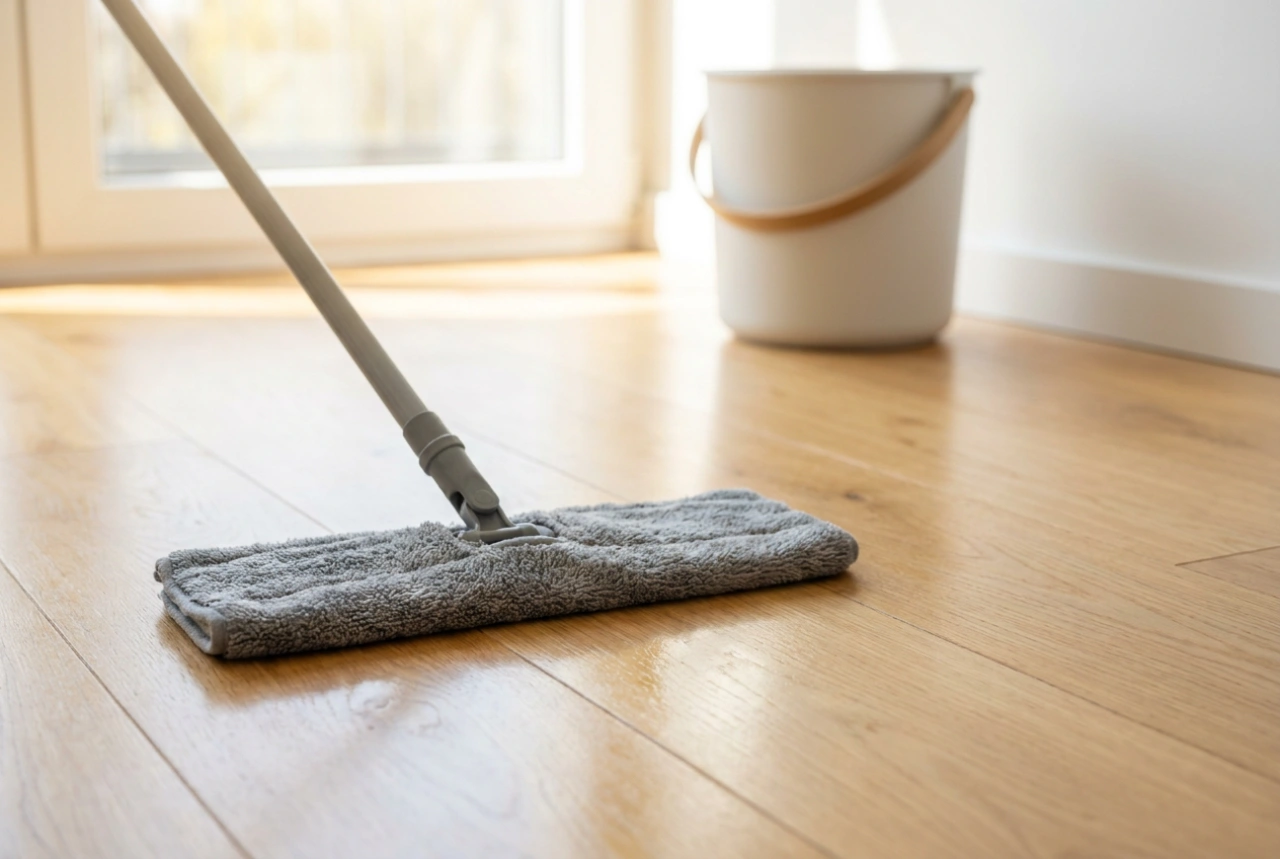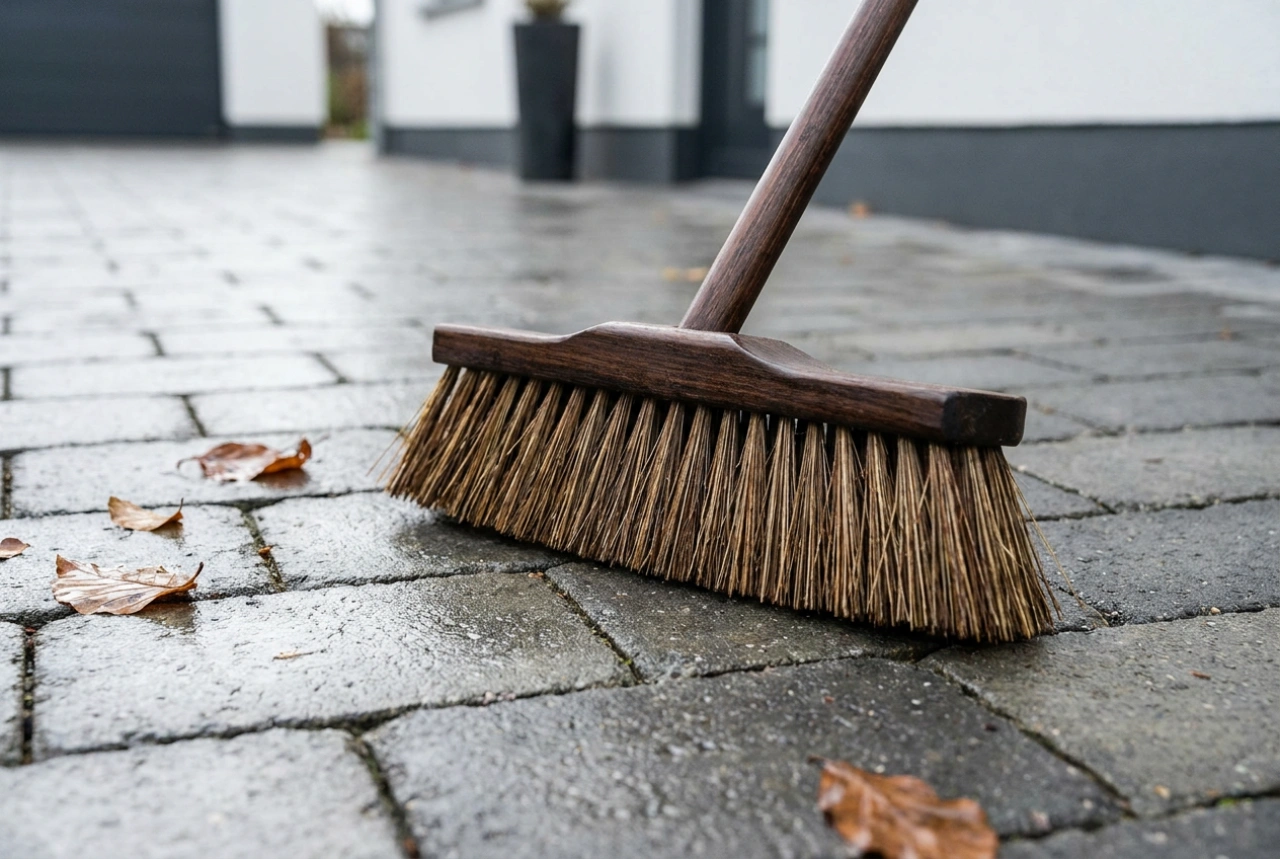


Cleaning uneven floor surfaces like natural stone, rustic tiles with deep grout, or hand-scraped wood requires a cleaning tool that can fluidly adapt its shape to constant elevation changes. Standard flat mops often fail here, bridging over depressions and leaving dirt behind, which is why the classic cotton string mop remains the superior mechanical choice for these challenging surfaces.
Why string mops excel on irregular surfaces
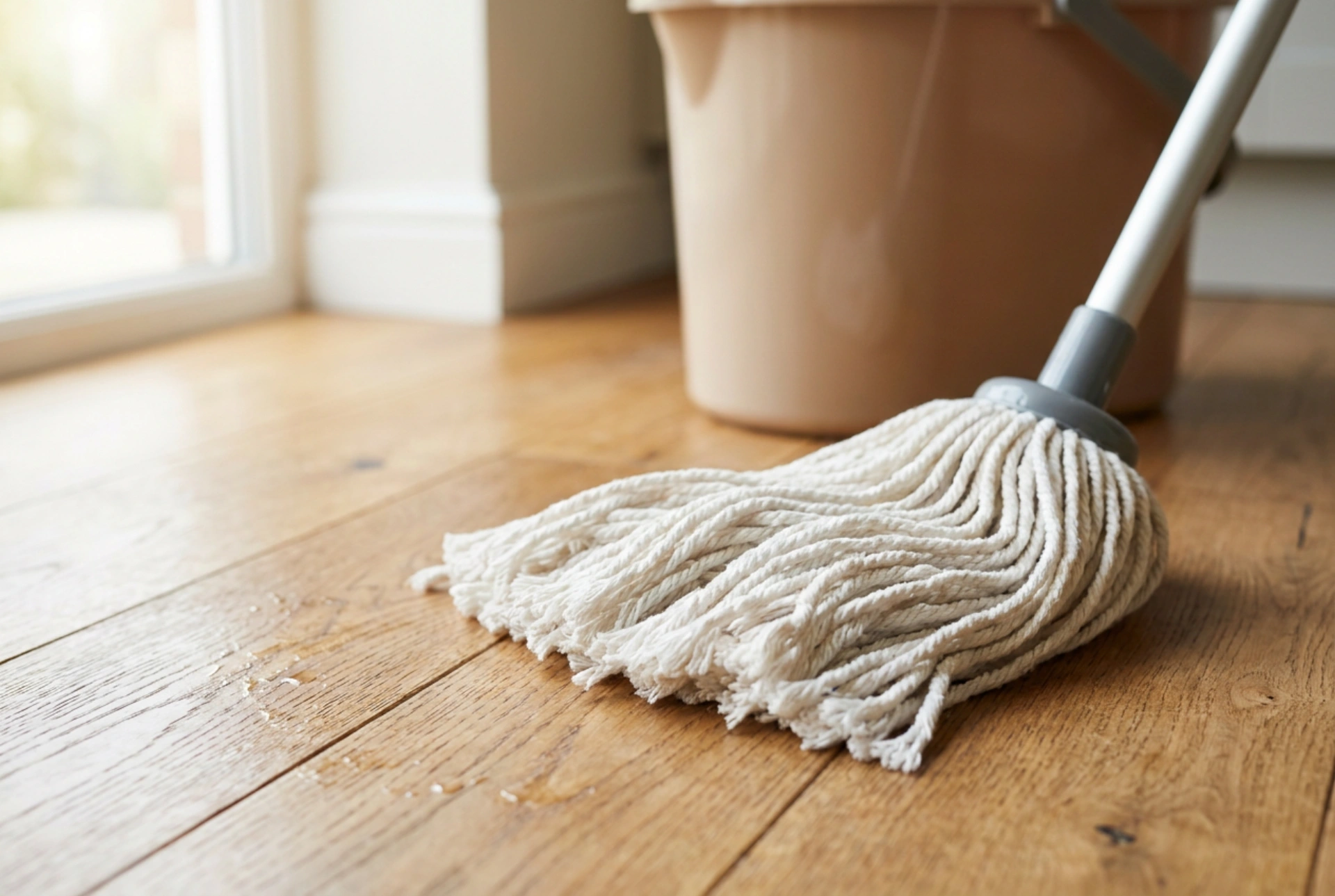
The secret to the string mop’s effectiveness lies in fluid dynamics and surface conformity. Unlike rigid flat frames, a string mop head consists of dozens of independent, highly flexible cotton or blended fiber loops. When pressure is applied, these individual strands spread out three-dimensionally, acting like microscopic fingers that sink into deep grout lines, textured grooves, and uneven natural stone clefts. This maximizes the mechanical contact area between the textile and the floor, ensuring that high spots and low valleys receive equal friction.
Navigating corners and baseboard transitions
Corners are notorious dirt traps where rectangular mop frames often struggle due to restricted rotational angles. A string mop head naturally compresses and molds itself into 90-degree angles. By utilizing a controlled twisting motion, you can force the damp fibers into the tightest corners. The kinetic energy of the rotating strings lifts dust and debris outward from the corner junction, transferring it directly into the absorbent fiber core rather than just pushing it along the baseboard edge.
The importance of a dual-compartment bucket system
To prevent the redistribution of suspended soil back onto textured floors, the selection of the bucket is critical. A single-cavity bucket rapidly becomes a reservoir of contaminated water, which then settles into the deep valleys of uneven flooring as you continue mopping. Using a dual-compartment bucket separates the clean washing solution from the dirty, extracted water. When the mop is pressed or spun in the wringer, the soiled water is isolated, ensuring that only clean, active surfactant solution is reintroduced to the floor fibers.
Material science: choosing the right fiber
The choice of mop string material directly dictates its absorption capacity and release properties. Traditional 100% cotton strings offer exceptional water retention and are highly effective for heavy spill management on durable surfaces. However, cotton requires a break-in period to strip away natural oils before reaching maximum absorbency. For modern residential surfaces, synthetic-cotton blends provide an optimal balance. The synthetic fibers add tensile strength and micro-scrubbing capabilities, while the cotton core retains the necessary moisture to break down dried surface tension without oversaturating sensitive wooden joints.
Step-by-step technique for textured floors
To clean uneven floors effectively without leaving standing water in the depressions, follow a precise physical technique. Begin by dipping the mop and wringing it thoroughly until it is damp rather than dripping. Apply the mop to the floor using a continuous figure-eight pattern. This motion keeps the individual strings active and prevents them from flattening out in a single direction. When approaching corners, lower the mop handle slightly to increase the footprint of the head, allowing the strands to splay outwards and sweep the vertical transition points where the floor meets the wall. Finish by running a dry, wrung-out mop over the damp areas to pull any residual pooled water out of the deeper crevices.