

Managing drawer chaos requires more than just hiding items out of sight; it demands a systematic approach based on physical dimensions, frequency of use, and material compatibility.
The Physics of Drawer Disorganization
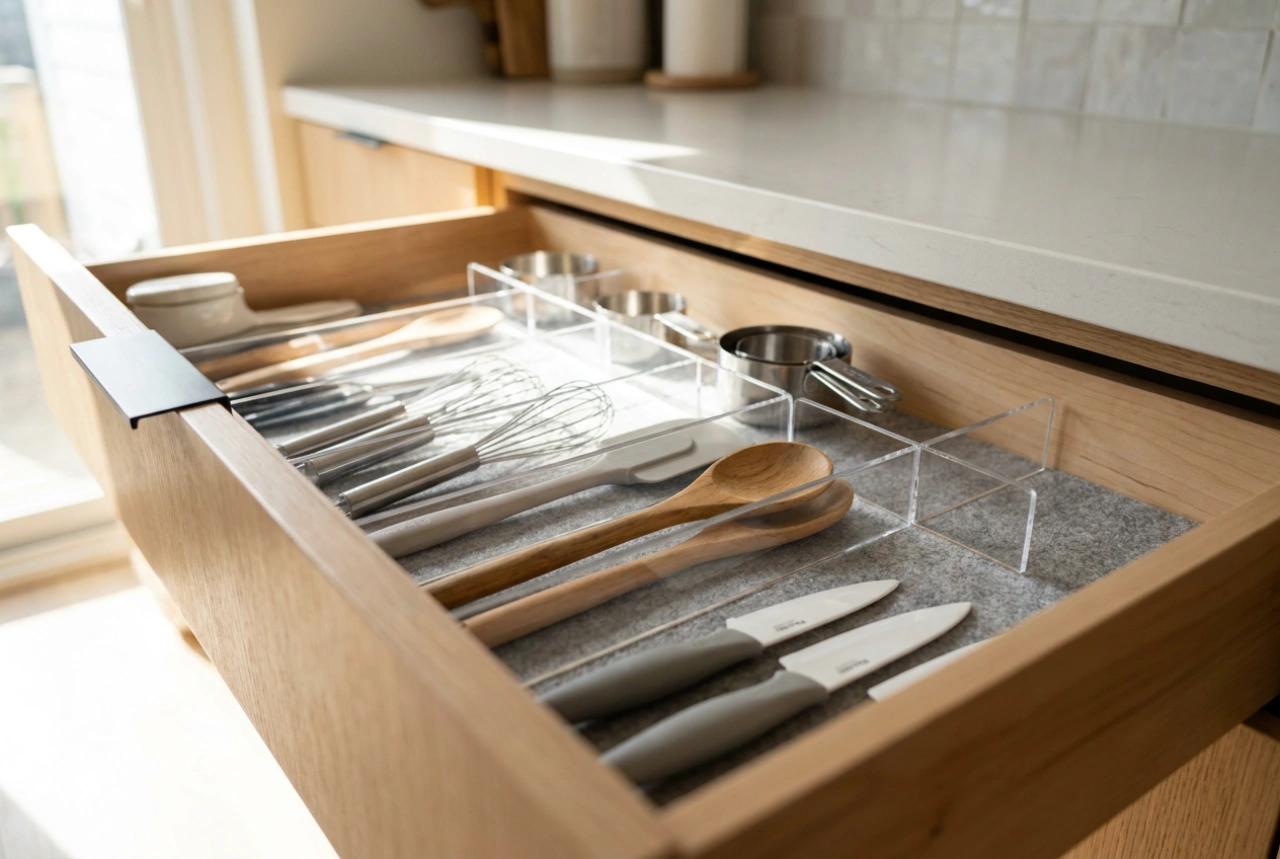
Drawers are subject to kinetic energy every time they are opened and closed. This sudden acceleration and deceleration cause unanchored items to slide, collide, and eventually pile up at the back of the compartment. To counteract this inertial movement, adjustable drawer dividers rely on friction and physical barriers. By reducing the vacant surface area within a drawer, you limit the distance an object can travel, preventing damage to delicate utensils and eliminating the noise of shifting metal and wood.
Choosing the Right Materials for Modular Dividers
When selecting or configuring adjustable organizer systems, material science plays a significant role in long-term durability and cleanliness. Different materials offer distinct mechanical advantages:
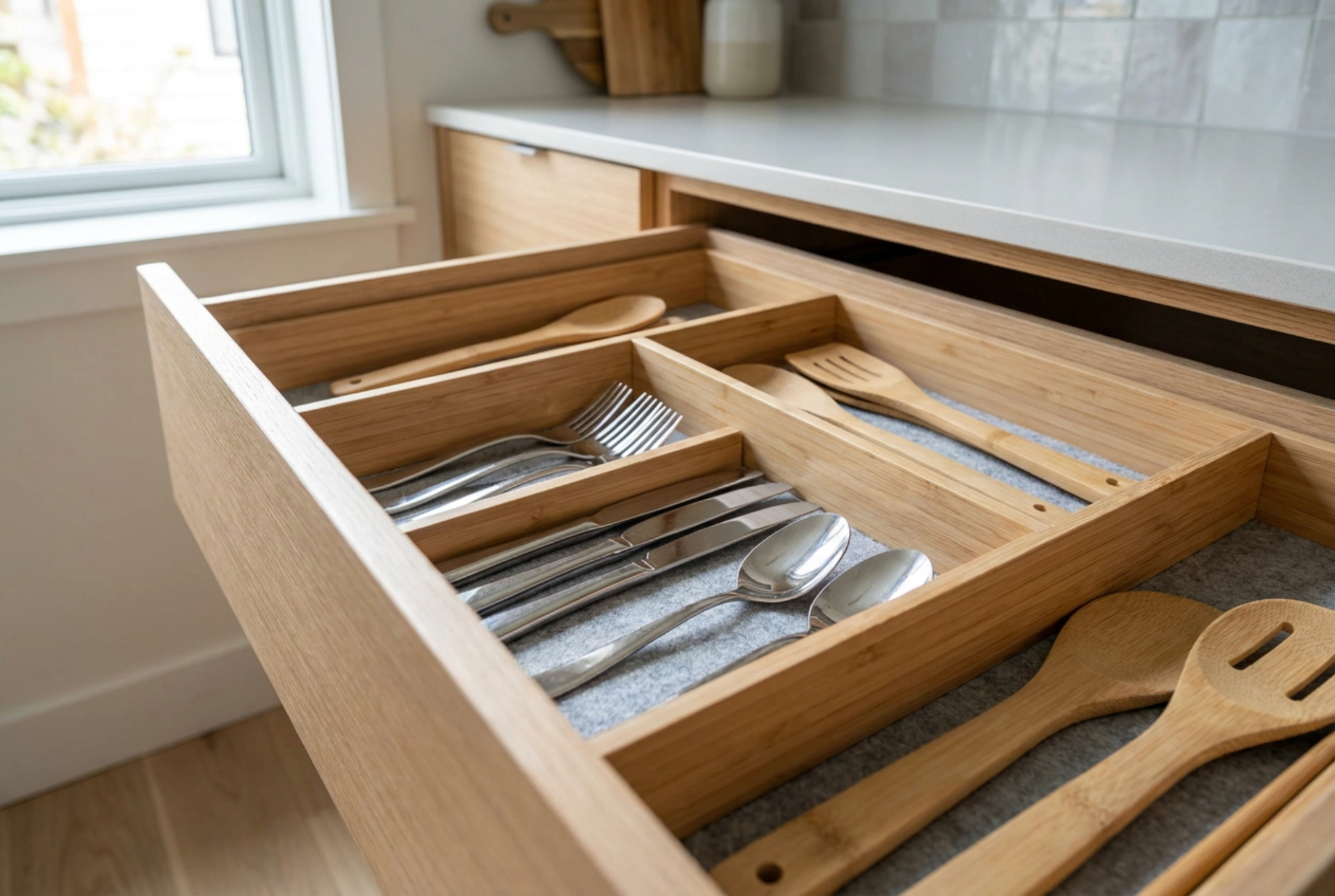
- Tensioned Wood and Bamboo: Excellent for structural rigidity. These dividers often utilize internal steel springs to press rubberized ends against the drawer walls, creating high friction without damaging the wood.
- Anodized Aluminum: Offers a slim profile and high resistance to moisture, making it ideal for kitchen environments where humidity levels fluctuate. Aluminum dividers do not warp or harbor bacteria.
- Felt and Soft Liners: Placing a high-density felt or silicone liner at the base of the drawer increases the coefficient of friction, ensuring that items stay exactly where they are placed even during rapid drawer movements.
Step-by-Step Configuration Strategy
Achieving an optimal drawer layout requires a systematic order of operations. First, empty the drawer entirely and clean the interior surfaces with a damp cloth and mild surfactant to remove dust and grease. Measure the depth, width, and height of the drawer cavity with a precision tape measure.
Next, categorize your items by utility and frequency of use. Group long tools together and smaller gadgets in another cluster. When installing adjustable dividers, place the primary longitudinal dividers first to establish the main lanes. Afterward, insert the transverse sub-dividers to create custom-sized compartments tailored to the exact dimensions of your tools. Ensure there is a two-millimeter clearance around items to allow for easy retrieval without scraping your fingers on the divider edges.
Maintaining Your Modular System
Over time, wood can swell or shrink slightly due to seasonal changes in relative humidity. It is recommended to check the tension of spring-loaded dividers twice a year. If a divider has become loose, readjust the tensioning mechanism or add a thin layer of adhesive rubber padding to the contact points to restore structural stability and prevent sliding.