

Selecting the right ironing board requires understanding the balance between structural physics and materials science to ensure stability, ease of movement, and long-term durability.
The Physics of Stability: Leg Geometry and Base Construction
A stable ironing board prevents tipping and absorbs the kinetic energy of the ironing motion. The stability of a board is determined by its leg design and the footprint it creates on the floor. Look for boards with a wide T-leg or Y-leg architecture. Y-leg designs distribute the downward pressure across four distinct contact points, significantly reducing lateral wobble during rapid iron movements.
Material choice in the frame directly affects both weight and stability. High-tensile steel tubing offers the best structural integrity but can be heavy. To achieve a lightweight profile without compromising rigidity, manufacturers use anodized aluminum alloys or hollowed steel frames with a powder-coated finish. Matte powder coatings do not just protect against rust; they also increase friction at the joint locking mechanisms, preventing the board from slipping or collapsing under pressure.
Surface Engineering: Steam Permeability and Frame Types
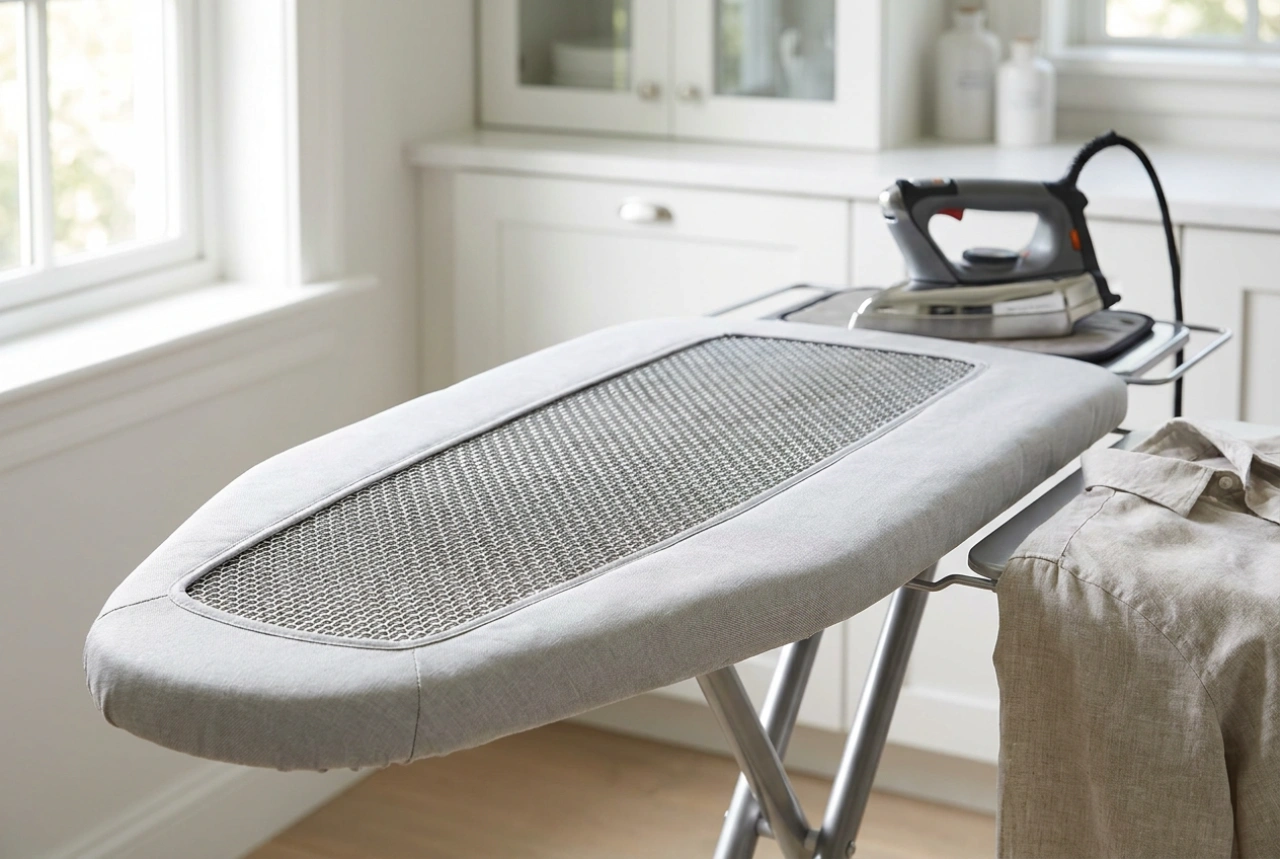
The core plate of the ironing board determines how moisture behaves during the ironing process. Solid wood or particleboard surfaces trap moisture, leading to mold growth and fabric dampness. Modern high-efficiency ironing boards utilize a perforated metal mesh or a specialized thermoplastic technical monoblock.
A perforated steel mesh allows steam from the iron to pass completely through the fabric and the board, preventing condensation from pooling under the cover. Thermoplastic tops, on the other hand, reflect heat back into the fabric, effectively ironing both sides of the garment simultaneously through thermal reflection, which reduces overall ironing time and physical effort.
Ergonomics and Height Adjustment Mechanisms
Comfort during ironing is a matter of joint alignment and spine protection. Prolonged static posture over a board that is too low causes strain on the lumbar spine and shoulders. Opt for a board equipped with a continuous height adjustment system, often controlled by a fluid lever mechanism underneath the frame. This allows you to set the height to your exact physical requirements, ranging from standing heights to a seated position.
The locking mechanism must be robust. Look for a spring-loaded click-stop system or a hydraulic lever that ensures the board remains locked at the chosen height, even when heavy downward force is applied near the narrow nose of the board.
The Layering System of the Cover
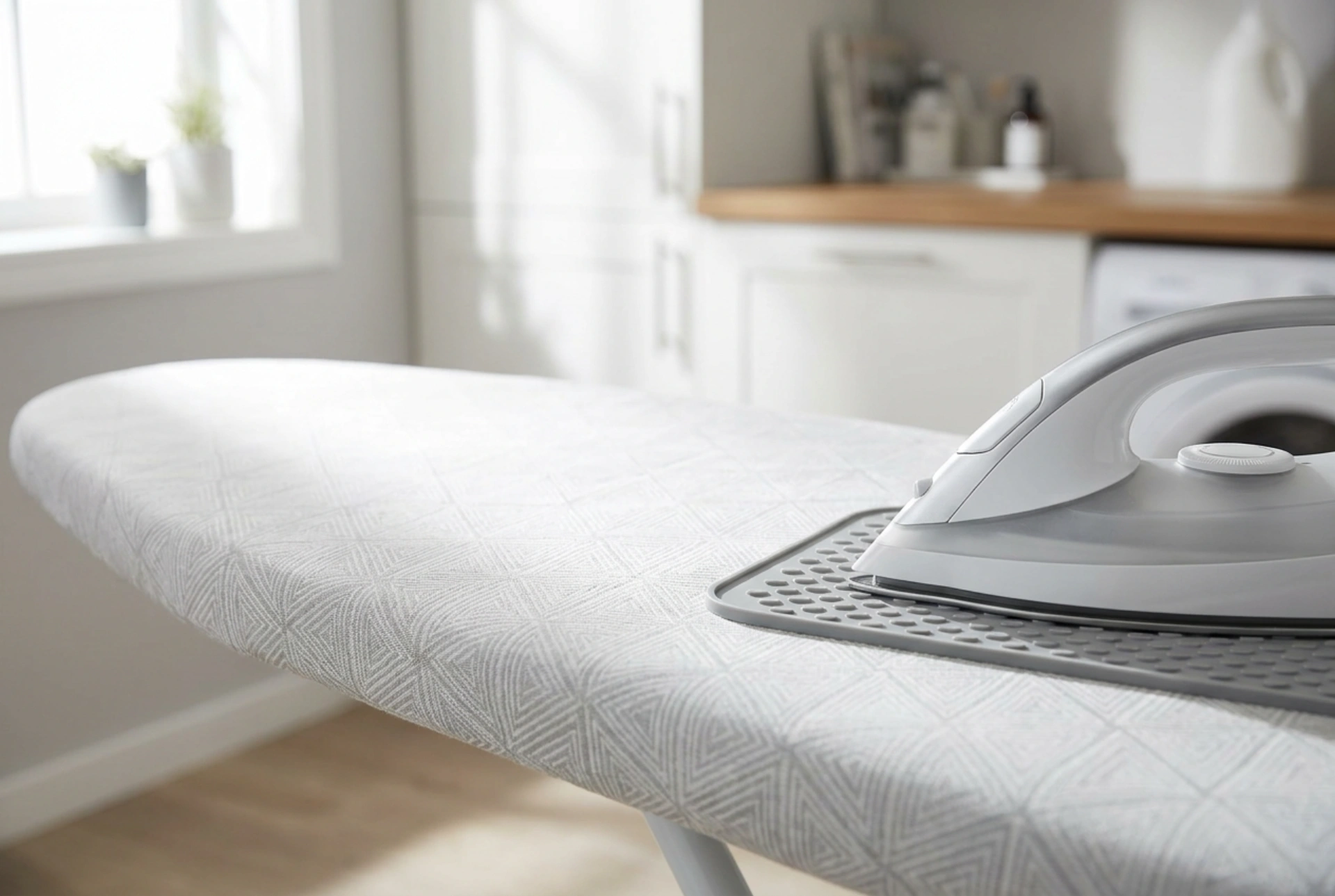
The interaction between the iron, the cover, and the garment relies on friction and thermal dynamics. A high-quality cover consists of at least three functional layers. The outer layer must be made of 100% heat-resistant cotton, which provides the necessary grip to hold fabrics in place without scorching.
Beneath the cotton layer, a thick felt or foam underlayment is essential. A density of at least 400 grams per square meter (GSM) of felt padding prevents the pattern of the underlying metal mesh from transferring onto your garments. Additionally, some advanced covers feature an internal metallic coating or a layer of aluminum powder that reflects steam and heat, enhancing the thermodynamics of the process.
Weight Management and Safe Storage
A board that is difficult to unfold and store will ultimately go unused. A lightweight board should weigh between 4 to 7 kilograms. Any lighter, and the structural integrity under heavy steam irons may be compromised; any heavier, and transport becomes a physical strain.
For storage, ensure the board has a secure transport lock—a mechanical latch that keeps the legs tightly bound to the frame when folded. This prevents accidental unfolding during carrying and allows the unit to be stored vertically in narrow utility closets without slipping.