

Modern window mechanisms rely on a complex network of interlocking steel parts that require regular lubrication to counteract friction, moisture, and dust accumulation.
The Physics of Window Friction and Wear
Windows are subjected to constant mechanical stress, temperature fluctuations, and environmental debris. The hardware, known as peripheral fittings, consists of corner drives, locking cams, hinges, and shears. When these metal components rub against each other without adequate lubrication, dry friction occurs. This leads to the microscopic shearing of steel surfaces, causing the mechanism to stiffen, squeak, and eventually fail. Applying the correct lubricant creates a hydrodynamic barrier. This thin fluid film separates the moving metal parts, redistributing the physical load and preventing direct metal-on-metal contact while sealing out humidity to avert oxidation.
Choosing the Right Lubricating Agent
Using the wrong substance can permanently damage your window fittings. Standard household oils or penetrating fluids containing solvents are highly volatile; they evaporate quickly and wash away existing factory grease. For long-term protection, you must use acid-free, non-resinous lubricants. Synthetic silicone oils or technical vaseline are ideal because they remain chemically stable across a wide temperature range, do not bind dust, and do not degrade the surrounding rubber seals. Mineral-based precision oils designed specifically for fine mechanics also work excellently, as they offer low viscosity for deep penetration while maintaining high shear stability.
Preparation: Cleansing the Moving Parts
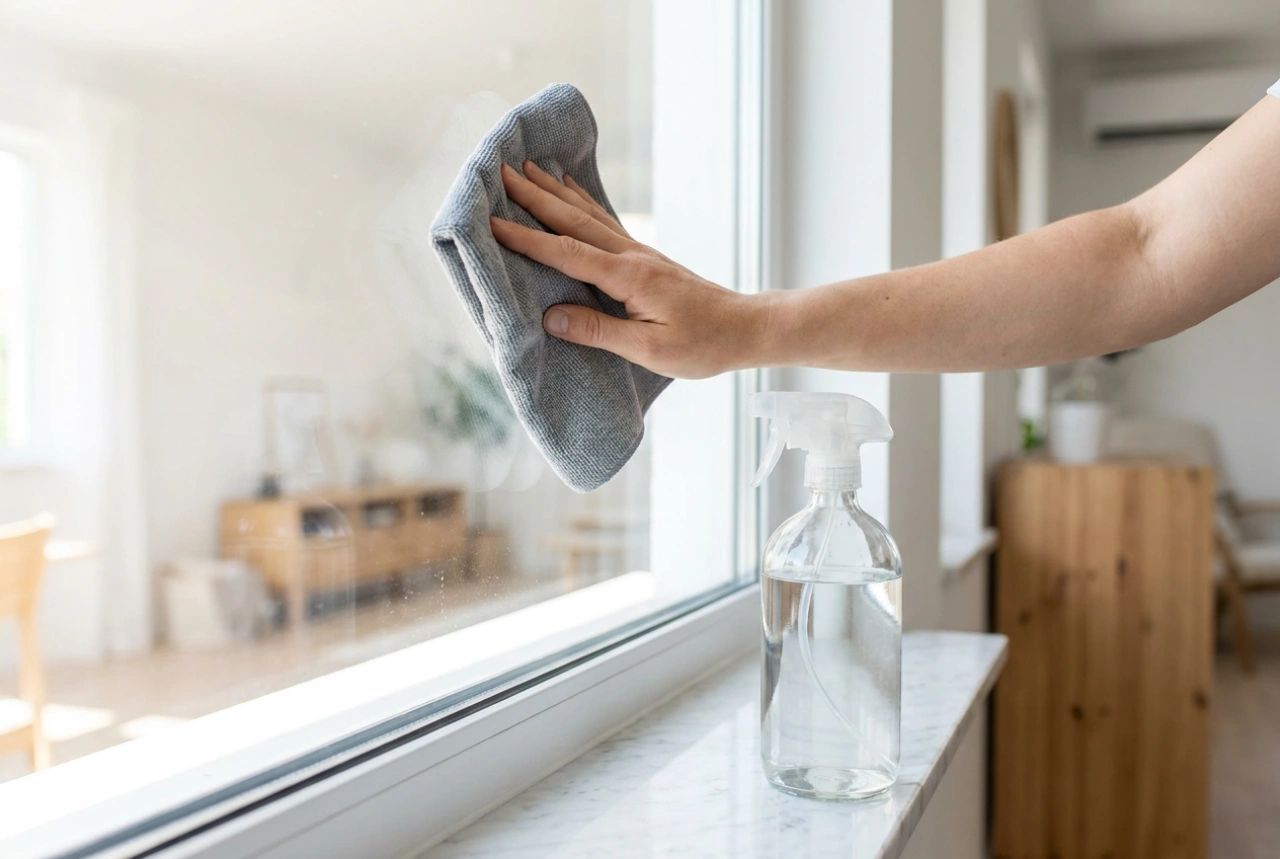
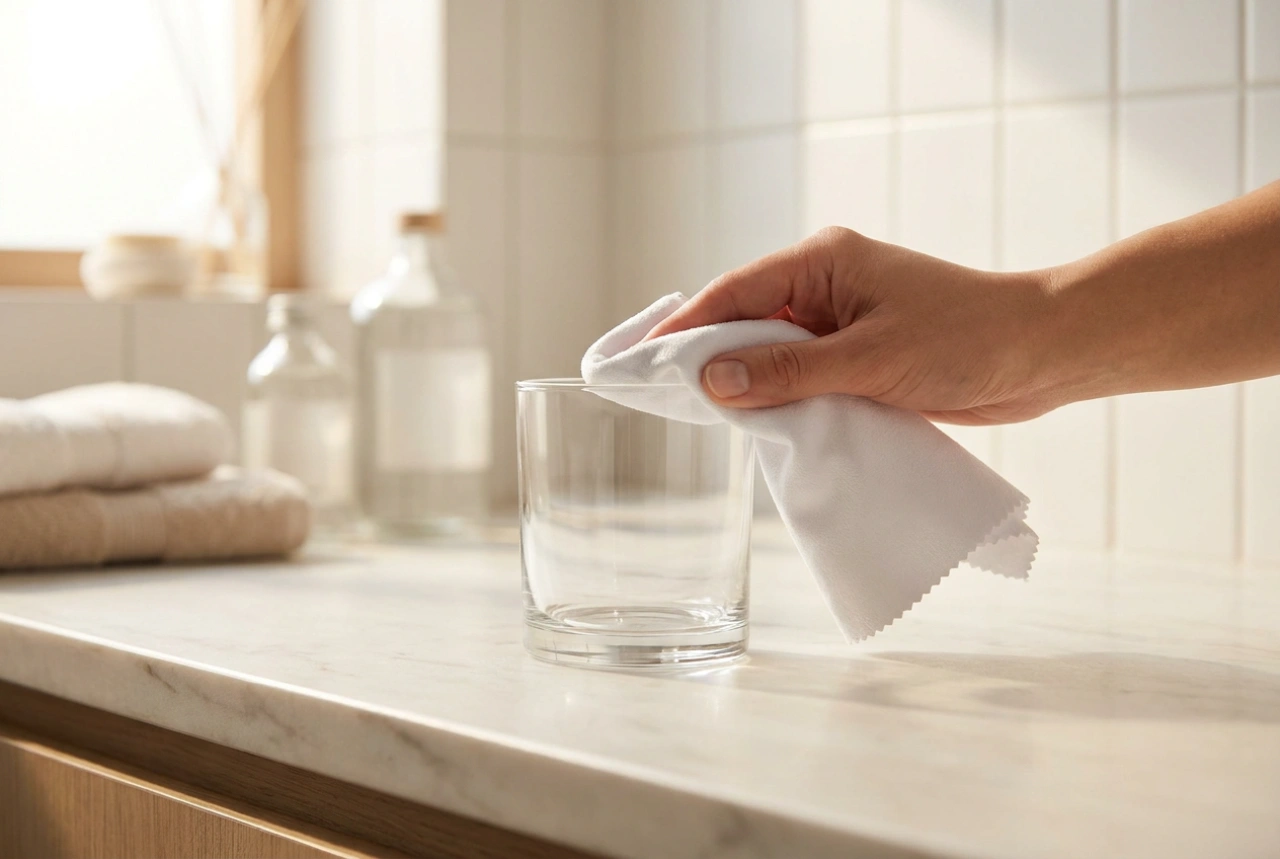
Applying fresh lubricant over old, contaminated grease creates an abrasive paste that accelerates wear. Before lubrication, the fittings must be thoroughly cleaned. Open the window fully to expose the entire perimeter track. Use a dry, lint-free microfibre cloth or a soft-bristled brush to remove loose dust, pollen, and grit. For stubborn, hardened grease residues, apply a small amount of isopropyl alcohol to a cloth and wipe the metal tracks clean. Avoid spraying water or aggressive household detergents directly into the fittings, as this can trap moisture inside the frame profile and initiate internal rust.
Step-by-Step Lubrication Technique
Precision and moderation are key to successful window maintenance. Over-lubricating attracts airborne particles, leading to premature clogging of the mechanism.
- Identify the Friction Points: Locate the locking cams (the small cylindrical rollers that move when you turn the handle), the corner hinges, the scissor stays at the top, and the guide rails. Look for areas showing silver scrape marks, indicating heavy contact.
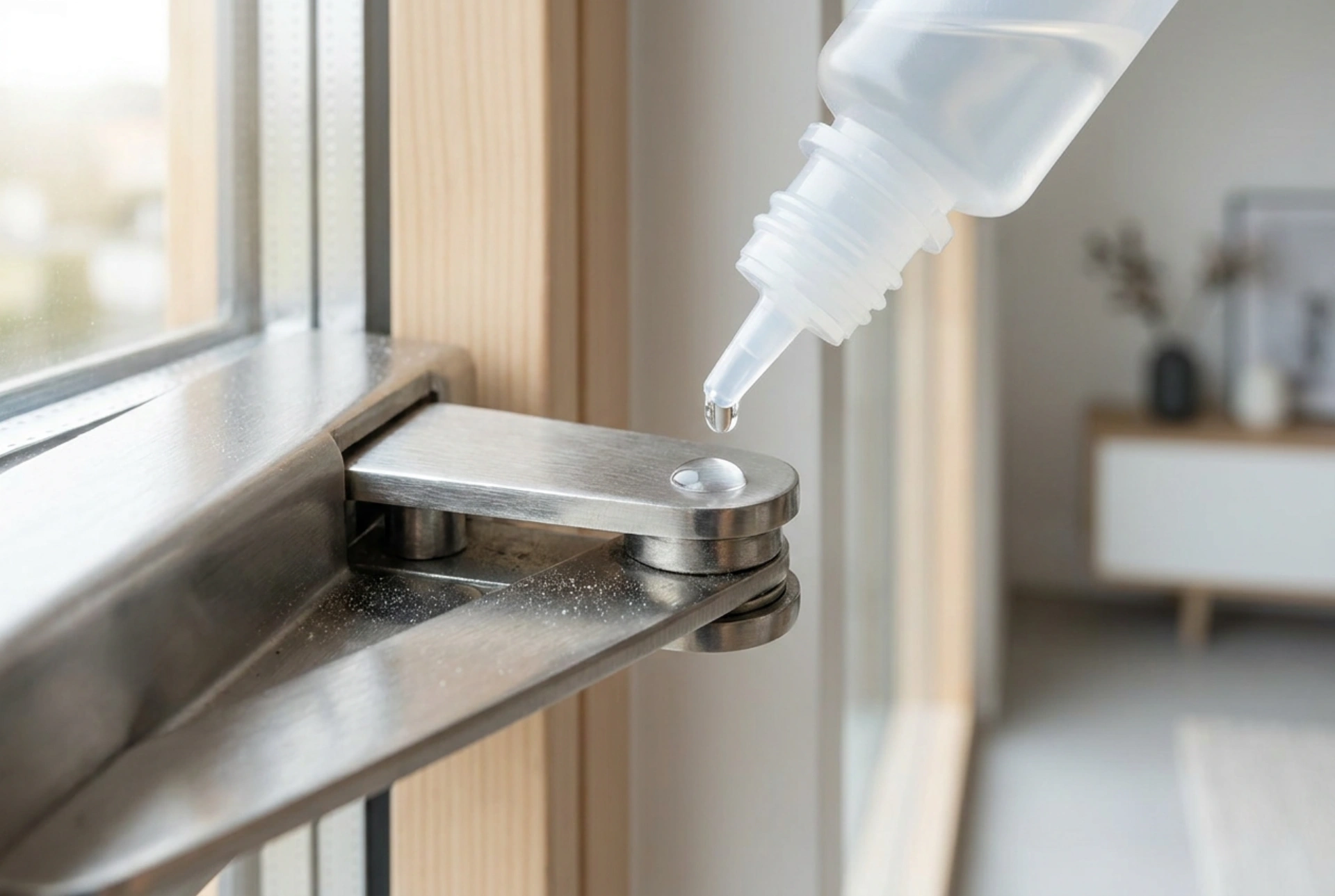
- Apply the Lubricant: Place one or two drops of synthetic oil or a thin smear of technical vaseline directly onto each moving joint, hinge pin, and locking cam. Always apply the lubricant from the top of the component downward, allowing gravity to pull the fluid into the internal pivot points.
- Distribute the Lubricant: Close the window and turn the handle slowly through its full range of motion (from locked to open, and to the tilt position) five to ten times. This mechanical action spreads the lubricant evenly across all internal gears and sliding surfaces.
- Wipe Excess Residue: Use a clean cloth to immediately remove any drips or excess oil from the metal fittings and the PVC or wooden frames to prevent staining and dust attraction.
Maintaining Seal Elasticity
While servicing the metal fittings, always inspect the rubber gaskets surrounding the window frame. Dry, cracked seals allow cold drafts and moisture to enter, forcing you to apply more physical force when closing the window. Wipe the rubber seals with a damp cloth, let them dry, and apply a thin layer of silicone grease or specialized rubber conditioning fluid. This preserves their elasticity, prevents them from sticking to the frame in freezing temperatures, and ensures a perfect, airtight seal with minimal closing resistance.