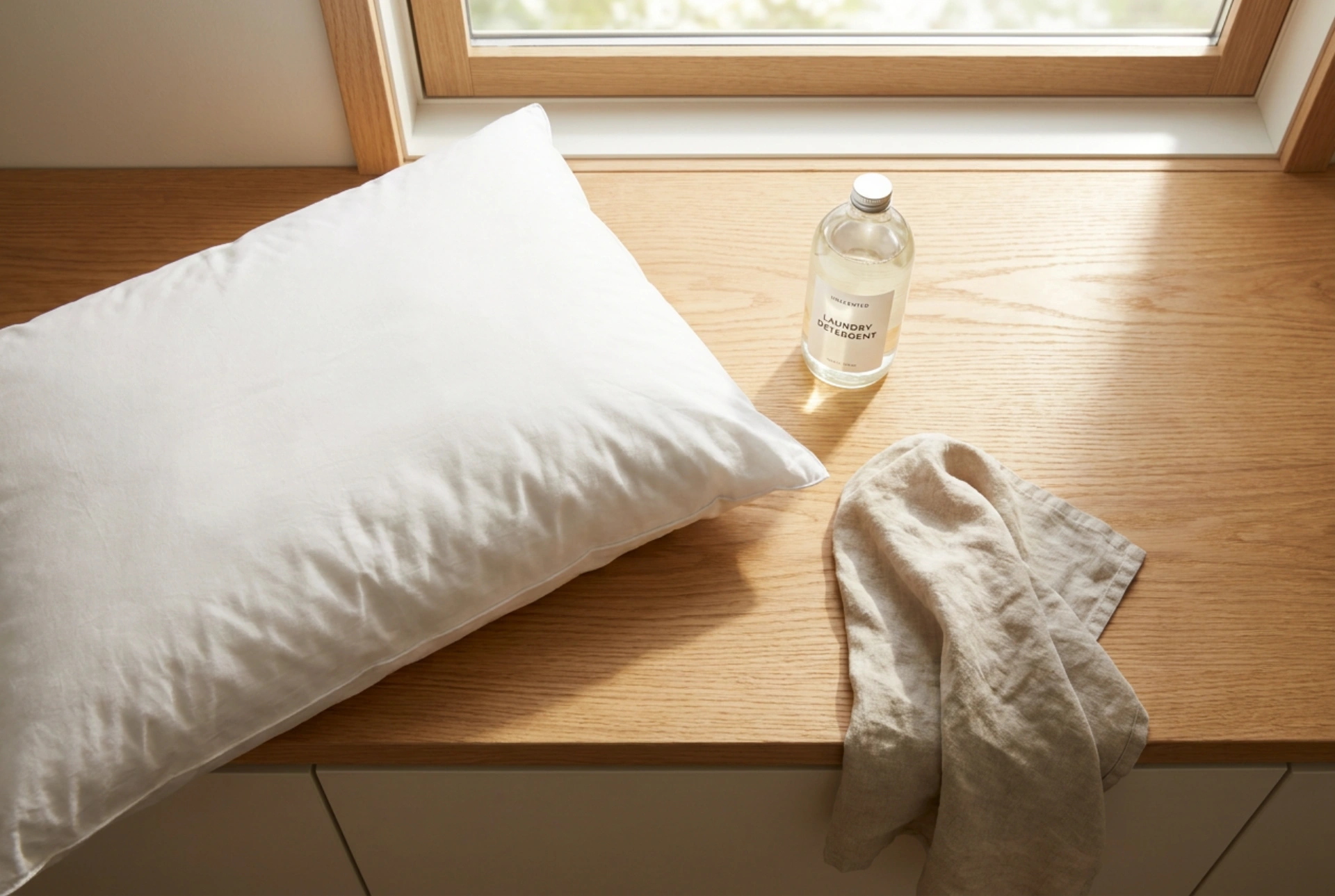


Washing feather pillows at home does not have to result in clumpy, ruined bedding if you understand the physics of down and the chemistry of gentle surfactants.
The Science of Feather Care
Feathers and down are natural keratin proteins, much like human hair. They possess a delicate, natural lipid coating that provides elasticity, loft, and water resistance. Standard laundry detergents contain harsh synthetic surfactants and enzymes designed to break down organic matter, which strip away these natural protective oils, leaving feathers brittle, prone to breaking, and flat. To preserve the structure of the filling, you must use a specialized liquid detergent designed for down or delicate wool, which maintains a neutral pH and keeps the natural protective lipid layer intact.
The Pre-Wash Inspection and Preparation
Before introducing water, a physical inspection of the pillow casing is critical. Feathers have sharp quills that can easily find their way through weakened seams or tiny tears under the pressure of water agitation. If feathers escape during the wash cycle, they can clog your washing machine pump and ruin the pillow entirely. Inspect every seam carefully and sew up any loose threads or small holes. Always wash pillows in pairs; washing a single pillow causes severe imbalance during the high-speed spin cycle, which can damage both your appliance and the feather structure.
Setting the Correct Machine Parameters
To clean feather pillows without damaging them, mechanical action must be kept to a minimum while temperature and water volume must be carefully managed.
- Temperature: Set the water temperature to 30°C or a maximum of 40°C. High heat denatures the keratin proteins in the feathers, leading to structural collapse.
- Cycle Selection: Choose a delicate, wool, or down-specific cycle. These cycles feature a high water level and a gentle cradle motion rather than aggressive agitation.
- Rinsing: program at least two or three extra rinse cycles. Feather structures are highly porous and act like sponges, trapping detergent residues that can later cause odors and attract moisture.
- Spin Speed: Set the final spin to a moderate speed of 800 RPM. This is strong enough to extract the bulk of the water without crushing the wet, fragile feathers against the drum walls.
The Drying Process: Restoring Loft and Preventing Mold
The drying phase is the most critical step in feather pillow maintenance. Wet feathers are a breeding ground for mold and mildew, which can develop within 24 hours if moisture remains trapped in the dense core. The most effective way to dry feather pillows is using a tumble dryer on a low heat setting. High heat will singe the feathers, making them brittle. To physically break up wet clumps of down during the cycle, place three clean tennis balls or dedicated dryer balls into the drum. The mechanical impact of the balls continuously lofts the feathers as they dry. Expect this process to take several hours; pause the dryer every 45 minutes to manually shake and massage the pillows, breaking up any stubborn damp pockets in the corners. If a tumble dryer is not available, dry the pillows flat on a drying rack in a well-ventilated, warm room, shaking them vigorously every hour. Never hang feather pillows by the corners, as gravity will pull the wet clumped feathers to the bottom, matting them permanently.