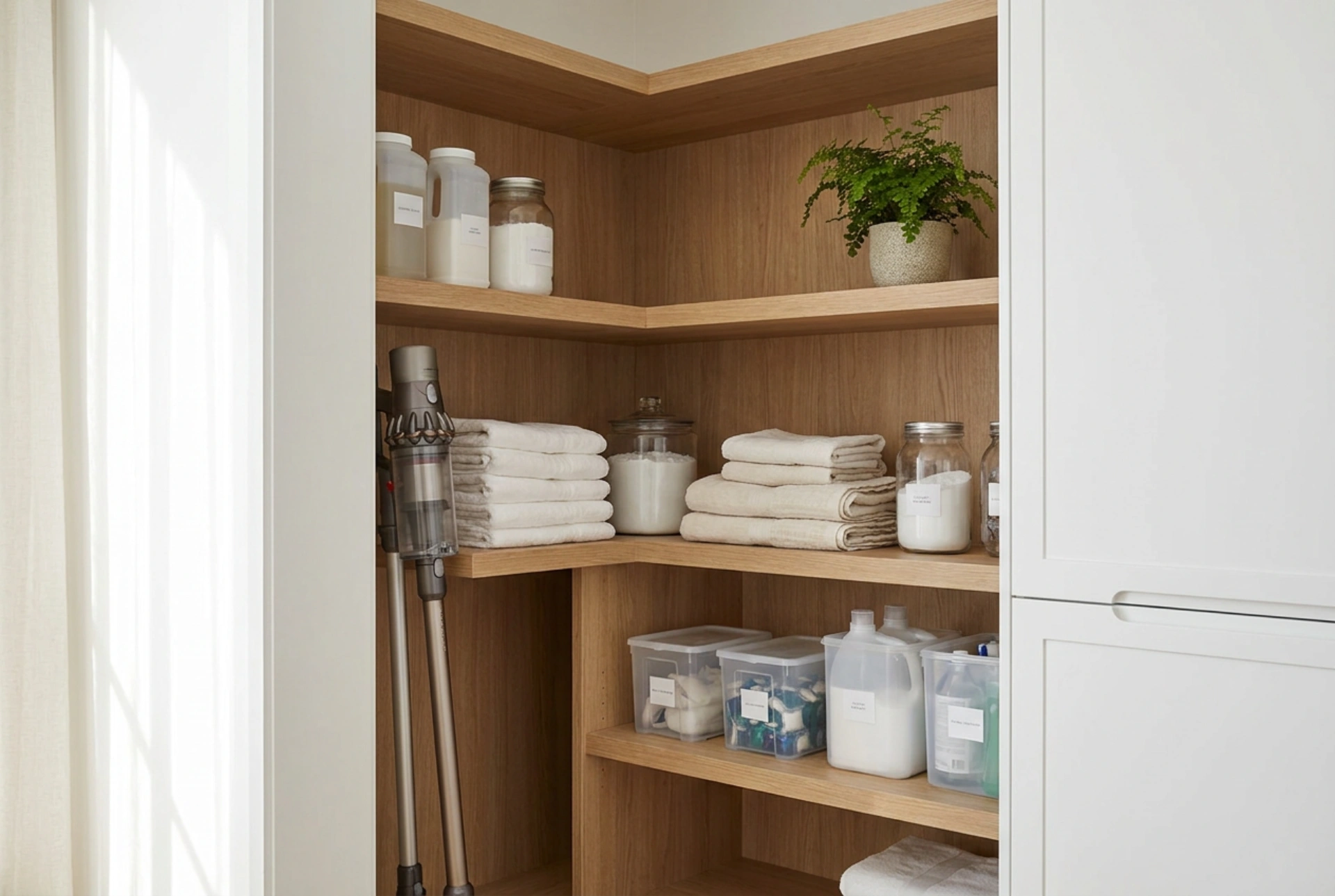


A well-planned hallway utility closet is the backbone of an organized home, keeping cleaning agents, bulky appliances, and household supplies accessible yet completely out of sight.
The physics of zoning and weight distribution
When organizing a utility closet, the laws of gravity and frequency of use dictate the optimal layout. Heavy appliances, particularly vacuum cleaners, steam mops, and filled buckets, belong strictly on the floor level. This minimizes physical strain during retrieval and prevents structural damage to shelving. Middle shelves, positioned between waist and eye level, represent prime ergonomic real estate; this is where daily cleaning sprays, microfiber cloths, and frequently used tools should reside. The highest shelves, which require reaching or a step stool, are reserved for lightweight, seasonal, or bulk items like spare paper towels, lightbulbs, and seasonal textiles.
Managing chemicals and chemical safety
Storing household chemicals requires strict adherence to material compatibility and temperature stability. Never store liquid products directly above dry powders; a slow leak from a bottle of liquid detergent can ruin boxes of powdered oxygen bleach or dishwasher tablets underneath. Group your cleaning agents by chemical family. Acidic descalers (containing citric or sulfamic acid) must be separated from chlorine-based bleaches, as accidental mixing releases toxic chlorine gas. Always use airtight, transparent plastic containers for powders to shield them from hallway humidity, which causes clumping and degradation of active enzymes.
Optimizing vertical space for long-handled tools
The narrow, tall nature of a hallway closet makes vertical wall space highly valuable. Dedicate one side wall to a heavy-duty, wall-mounted tool organizer utilizing friction grips or gravity hooks. This elevates brooms, mops, and dustpans off the floor, preventing the warping of bristles and allowing damp mop heads to air-dry properly without breeding mold. If you use a cordless vacuum cleaner, install the charging dock on this wall, ensuring access to a safe, professional-grade electrical outlet. Keep the floor clear of cables to prevent tripping hazards when reaching into the dark corners of the closet.
Ventilation and moisture control
Because utility closets house damp mops, wet sponges, and chemical concentrates, they are prone to trapped moisture and stagnant air. Without proper ventilation, this microclimate quickly fosters mold growth and musty odors. Ideally, the closet door should feature ventilation grilles or a small gap at the bottom to encourage passive airflow. To actively combat humidity, place reusable silica gel canisters or calcium chloride moisture absorbers on the middle shelves. Never store completely wet items inside; allow mops and cleaning cloths to dry fully in a well-ventilated room before sealing them inside the enclosed closet space.