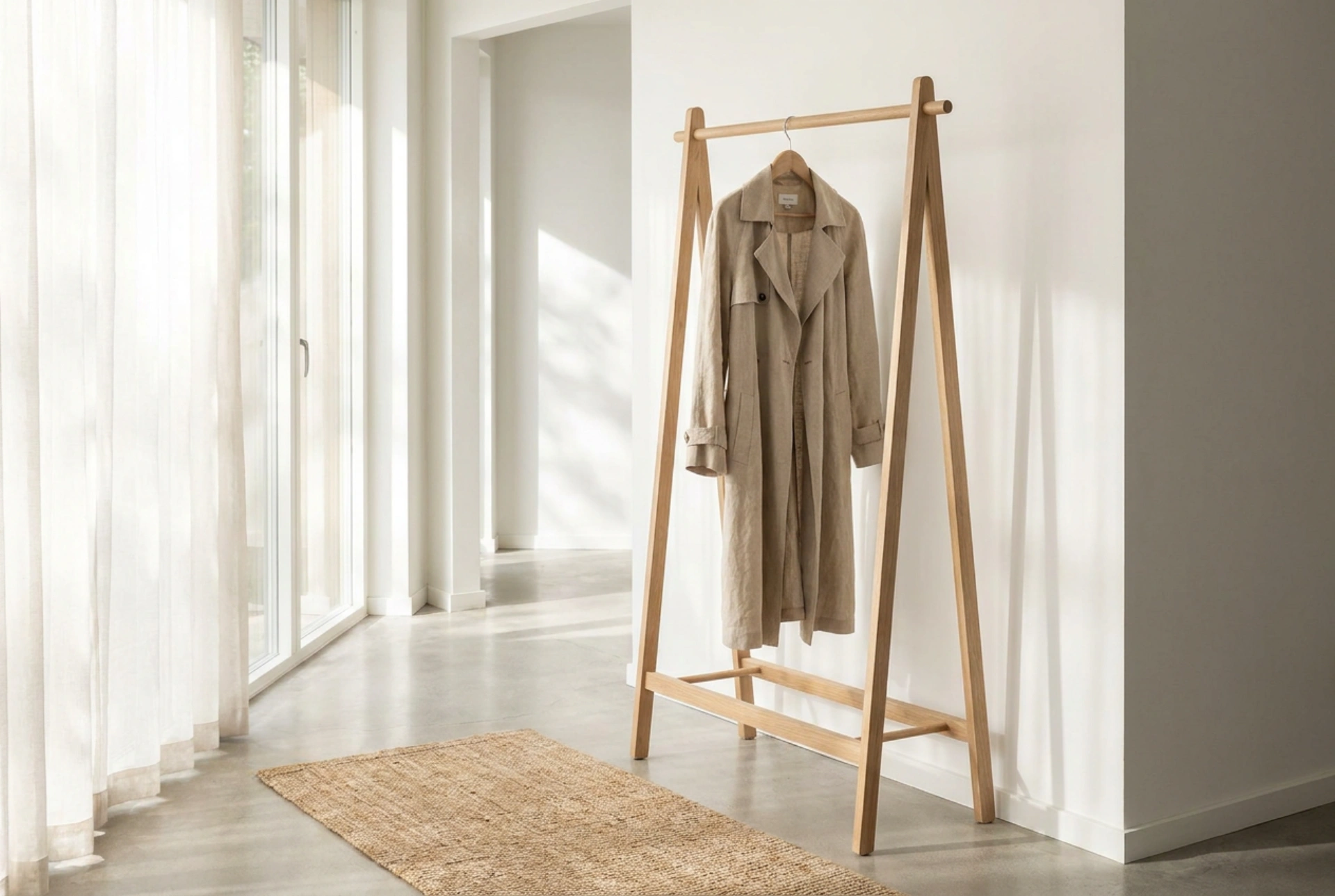


A freestanding coat rack is a highly functional piece of hallway furniture, yet it quickly becomes an unstable, unsightly mountain of outerwear if not managed with a systematic approach.
The Physics of the Freestanding Coat Rack
To prevent a coat rack from tipping over or looking cluttered, you must understand its physical limits. Every freestanding rack operates on a central gravity axis. When you load one side heavier than the other, the center of gravity shifts outside the footprint of the base, causing instability. Gravity and leverage work against the structure when heavy winter coats are hung on the outermost tips of the hooks. To maintain physical equilibrium, always hang the heaviest items closest to the central pole and lower down, while keeping lighter items like scarves or lightweight jackets on the higher, outer hooks. This simple distribution of mass keeps the base firmly planted on the floor.
Implementing the Seasonal Rotation Rule
The primary reason coat racks become overloaded is the accumulation of out-of-season garments. A strict one-in, one-out policy prevents this buildup. Limit the capacity of the rack to a specific number of active garments per household member—ideally no more than two items per person. At the end of each season, transfer heavy woolen coats, rain gear, and winter parkas to a closed wardrobe or vacuum storage bags. Only garments currently matching the weekly weather forecast should occupy the entryway rack. This keeps the visual weight of the hallway light and ensures that air can circulate freely around the wooden or metal frame.
The Structural Organizing Strategy
An organized coat rack relies on a deliberate order of operations. When returning home, follow a specific sequence to maintain order:
- Empty pockets of heavy items like keys, phones, and wallets before hanging a coat, as this uneven weight pulls on the fabric and the rack.
- Hang coats by their internal collar loops rather than the hood to distribute the fabric weight evenly along the hook.
- Utilize hangers for structured garments like blazers or trench coats to preserve their shape and prevent them from overlapping other items.
- Assign specific hooks to specific family members to create personal accountability for the items left in the shared space.
Material Care and Air Circulation
Hanging damp or wet garments directly onto a crowded coat rack creates a microclimate of trapped moisture, which can damage both the clothing fibers and the rack material itself. Wooden racks can warp or suffer from finish degradation, while metal components may rust over time. When coming inside from the rain, hang wet coats separately in a well-ventilated area until dry before placing them on the main rack. Ensure there is at least a two-inch gap between hung items to allow ambient air to circulate, which aids in natural deodorization and moisture evaporation.